Table of Contents
- Key Takeaways
- Why Freight Forwarding SEO Matters in Kenya
- The Freight Forwarding SEO Strategy
- Your Freight Forwarding SEO Roadmap
- Related Content
- Frequently Asked Questions
- What is freight forwarding SEO?
- Why is SEO important for freight forwarders in Kenya?
- How do I target local keywords for Kenya?
- Which services should I create pages for?
- How do I improve my Google Business Profile?
TL;DR: Improve freight forwarding SEO ranking for import services by targeting Kenyan location keywords and creating service-specific pages.
Last Updated: March 2026
Key Takeaways
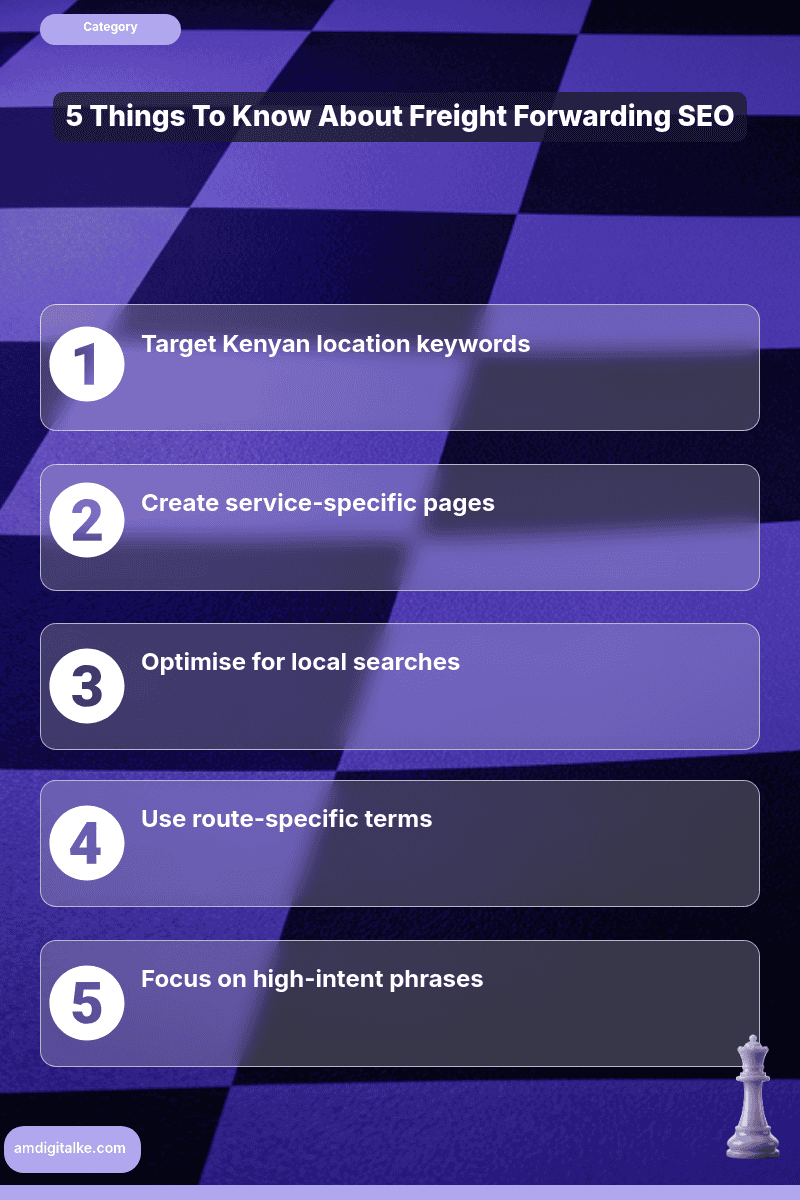
- Target Kenya-specific keywords
- Optimise for local searches
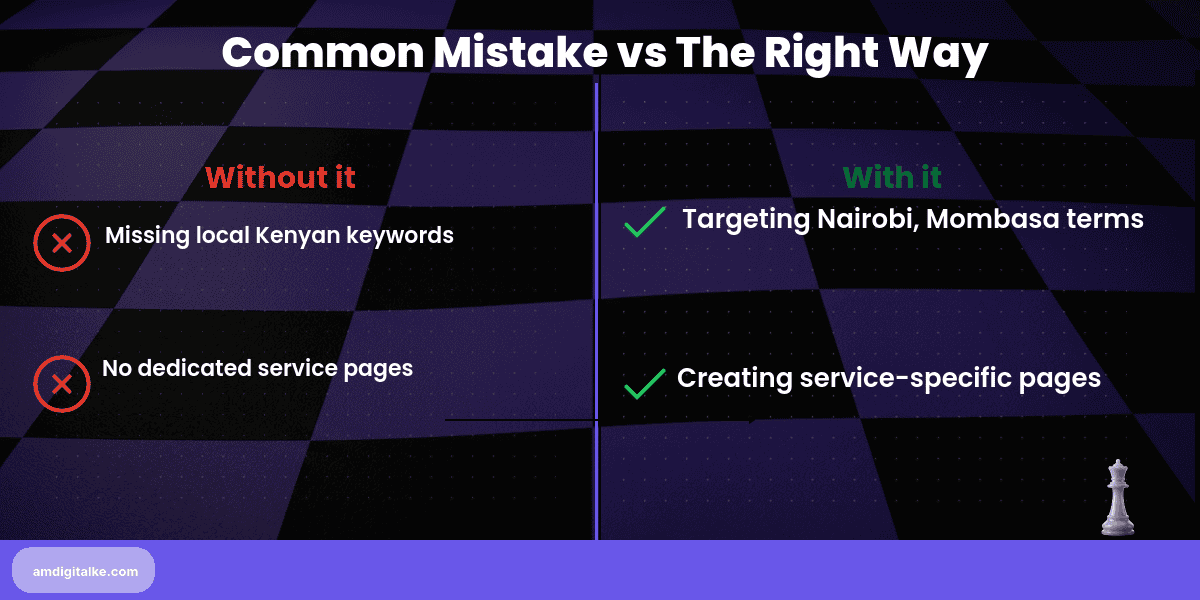
- Create dedicated service pages
- Use route-specific terms
- Focus on high-intent phrases
Your freight forwarding company moves containers from Mombasa to Nairobi every week.
You handle customs clearance, warehousing, and last-mile delivery better than anyone.
But when Kenyan importers search “freight forwarder Mombasa” or “customs clearance agent Kenya,” they’re calling your competitors instead.
Your expertise isn’t translating to online visibility.
Why Freight Forwarding SEO Matters in Kenya
The logistics industry in Kenya is growing fast.
The Port of Mombasa handles over 30 million tons of cargo annually. Nairobi remains East Africa’s distribution hub.
Most shippers now start their freight forwarder search on Google, not through referrals alone.
If you’re not ranking for critical search terms, you’re missing qualified leads actively looking for your services.
A single long-term shipper can mean millions in revenue.
But they’ll never find you if you’re buried on page three of Google results while competitors with inferior services rank higher. Understanding what SEO in Kenya really means helps you capture these high-value clients.
The Freight Forwarding SEO Strategy
1. Target High-Intent Service Keywords
Freight forwarding involves multiple specialised services.
Each needs its own optimised landing page. Create dedicated pages for:
Core Services:
- Sea freight forwarding Kenya
- Air freight forwarding Nairobi
- Customs clearance services Mombasa
- Container freight station (CFS) services
- Warehousing and distribution Kenya
- Door-to-door delivery services
Specialised Services:
- Temperature-controlled logistics Kenya
- Hazardous cargo handling
- Project cargo management
- Cross-border freight East Africa
Each page should explain the service, your process, typical timelines, and include a quote request form.
Use specific route keywords like “China to Kenya freight” or “Mombasa to Kampala shipping” if you handle those corridors regularly. Implementing proper keyword research strategies helps you identify the exact phrases shippers use.
2. Optimise for Location-Specific Searches
Freight forwarding is intensely local.
Shippers search by port, city, and route. Your SEO must reflect this.
Google Business Profile Setup:
- List your primary category as “Freight Forwarding Service”
- Add secondary categories: “Logistics Service,” “Customs Broker,” “Warehousing”
- Include all office locations (Mombasa port office, Nairobi headquarters, Eldoret branch)
- Upload photos of your warehouse facilities, trucks, and team in action
- Post weekly updates about shipping schedules, port congestion alerts, or new routes
Optimising your Google Business Profile properly ensures you appear in local freight searches.
Create Location Pages: If you serve multiple cities, create individual pages for each.
A Mombasa page should highlight port proximity, customs expertise, and CFS facilities. A Nairobi page should emphasise upcountry distribution capabilities and warehousing.
3. Build Authority Through Educational Content
Most shippers are confused about the freight process.
Documentation, Incoterms, customs duties, transit times. Educational content positions you as the expert they want to work with.
Blog Topics That Rank:
- “Complete Guide to Importing Goods into Kenya: Documentation Required”
- “How to Calculate Customs Duty in Kenya: Step-by-Step Breakdown”
- “FOB vs CIF vs DDP: Which Incoterm Should Kenyan Importers Use?”
- “Mombasa Port Congestion: Real-Time Updates and Alternative Solutions”
- “Clearing Goods Through KRA Customs: Timeline and Costs”
Write detailed guides (1,500+ words) that answer every question a shipper might have.
Include cost breakdowns, timelines, and sample documentation. This builds trust and captures long-tail search traffic. Creating valuable content marketing consistently establishes you as the go-to freight resource.
Check out my SEO FAQs page for a glossary of logistics terms to include in your educational content.
4. Earn Backlinks from Trade and Logistics Platforms
Google trusts freight forwarders with authoritative backlinks from industry sources.
Link-Building Targets:
- Get listed on the Kenya International Freight and Warehousing Association (KIFWA) directory
- Submit your company to the Freightos marketplace
- Create partnerships with Kenya Ports Authority and reference their cargo handling guidelines
- Guest post on Business Daily about logistics challenges in East Africa
- Get featured in The Loadstar or JOC.com for regional shipping insights
Local Business Directories:
- PigiaMe (Business Services category)
- BrighterMonday (for freight recruitment content that links back)
- Kenya Trade Portal
- Mombasa Chamber of Commerce directory
Each quality backlink signals to Google that you’re a legitimate player in the freight industry.
Building quality backlinks strategically strengthens your domain authority.
5. Leverage Schema Markup for Freight Services
Schema markup helps Google understand your services and display them properly in search results.
Implement LocalBusiness schema with:
- Service areas (Mombasa, Nairobi, Kisumu, cross-border)
- Operating hours
- Customer reviews and ratings
- Contact information for quotes
Also, add Service schema for each freight type you offer, making it easier for Google to match your services to specific searches.
6. Capture Trade-Specific Long-Tail Keywords
Shippers search for very specific phrases based on what they’re importing.
These leveraging long-tail keywords properly have less competition but high conversion rates:
- “How to ship furniture from China to Kenya”
- “Import electronics from Dubai customs clearance”
- “Coffee export logistics from Kenya to Europe”
- “Shipping spare parts to Kenya from India”
Create FAQ pages or blog posts targeting these niche queries.
Each piece should walk through the process, costs, and timelines for that specific cargo type.
Download this complete SEO Checklist to track your freight forwarding SEO progress.
Case Study: Mombasa Freight Forwarder
A mid-sized Mombasa freight forwarder came to AM Digital KE struggling with online visibility.
They had excellent port relationships and customs expertise but were invisible to shippers searching online.
Before Optimisation:
- ❌ Ranking page 5+ for “freight forwarder Mombasa”
- ❌ 200 monthly website visitors
- ❌ 5-8 quote requests per month from search
After 6 Months with AM Digital KE:
- ✅ Position 2 for “freight forwarder Mombasa”
- ✅ Position 3 for “customs clearance Kenya”
- ✅ 2,400+ monthly website visitors
- ✅ 60+ qualified quote requests from organic search
The Strategy: Created 15 service-specific landing pages, published weekly logistics guides, earned backlinks from KIFWA and trade publications, and optimised Google Business Profile with real-time port updates.
Your Freight Forwarding SEO Roadmap
Quick Wins (This Month):
- Claim and optimise your Google Business Profile with all locations and services
- Create dedicated landing pages for your top 5 services (sea freight, air freight, customs clearance, warehousing, distribution)
- Get listed in the KIFWA directory and Kenya Trade Portal
Long-Term Strategy (3-6 Months):
- Publish 2-3 comprehensive logistics guides per month, targeting shipper questions
- Build relationships with Business Daily and logistics publications for guest posts
- Implement schema markup across all service pages
- Create location-specific pages for each city/port you serve
Freight forwarding is competitive.
But most companies in Kenya still rely on word-of-mouth alone.
The systematic SEO approach we’ve outlined puts you in front of shippers the moment they start searching, before they ever call a competitor.
Want shippers to find you when they search for freight services?
Check out our Logistics SEO Services in Kenya and learn how we help freight forwarders dominate port-specific and route-based searches that capture qualified leads.
Losing shipping contracts to competitors with better visibility?
Let’s run a free SEO analysis where we’ll assess your service page optimisation, identify high-value freight keywords you’re missing, and show you searches sending shippers to competitors instead.
Related Content
Curious to learn more about freight forwarding SEO? Check out the posts below:
- B2B SEO for Logistics – Long Sales Cycles and Content Strategy — B2B freight clients have long decision cycles requiring content at every stage from awareness to contract negotiation.
- Service Route Pages – Optimising for ‘Nairobi to Mombasa Transport’ — Learn how to create location-specific pages that capture route-based searches like “Mombasa to Nairobi cargo transport.”
- How to Improve Your Local SEO – A Kenyan Expert’s Approach — Local SEO tactics help you dominate “freight forwarder near me” and city-specific searches that shippers use daily.
- What is Link Building (By Kenya’s SEO Authority) — Understanding link building fundamentals helps you earn the industry backlinks that boost freight forwarding credibility.
These articles will walk you through the basics of building authority in Kenya’s competitive logistics market.
Have more SEO questions? Our SEO FAQs Kenya page answers the most common ones.
Frequently Asked Questions
What is freight forwarding SEO?
SEO for freight forwarding helps Kenyan businesses rank higher for terms like ‘freight forwarder Mombasa’ or ‘customs clearance Kenya.’
Why is SEO important for freight forwarders in Kenya?
Most shippers in Kenya search for services online. Good SEO ensures your company appears first in search results.
How do I target local keywords for Kenya?
Use terms like ‘Nairobi freight forwarding’ or ‘Mombasa customs clearance’ to attract Kenyan clients searching for local services.
Which services should I create pages for?
Create pages for core services like sea freight forwarding Kenya and specialised services like hazardous cargo handling.
How do I improve my Google Business Profile?
List your primary category as ‘Freight Forwarding Service’ and include accurate Kenya location details for better local SEO.