Table of Contents
TL;DR: To leverage long-tail keywords, use specific phrases like ‘family safari Masai Mara September’ to rank higher and attract Kenyan customers searching for exactly what you offer.
Last Updated: March 2026
Key Takeaways
- Long-tail keywords have lower competition.
- They attract high-intent customers.
- Include location modifiers like ‘Kilimani’.
- Use question-based keywords like ‘how much’.
- Create dedicated pages for each keyword.
Long-tail keywords are specific 3-5 word search phrases with lower competition.
They help you rank faster and capture high-intent customers.
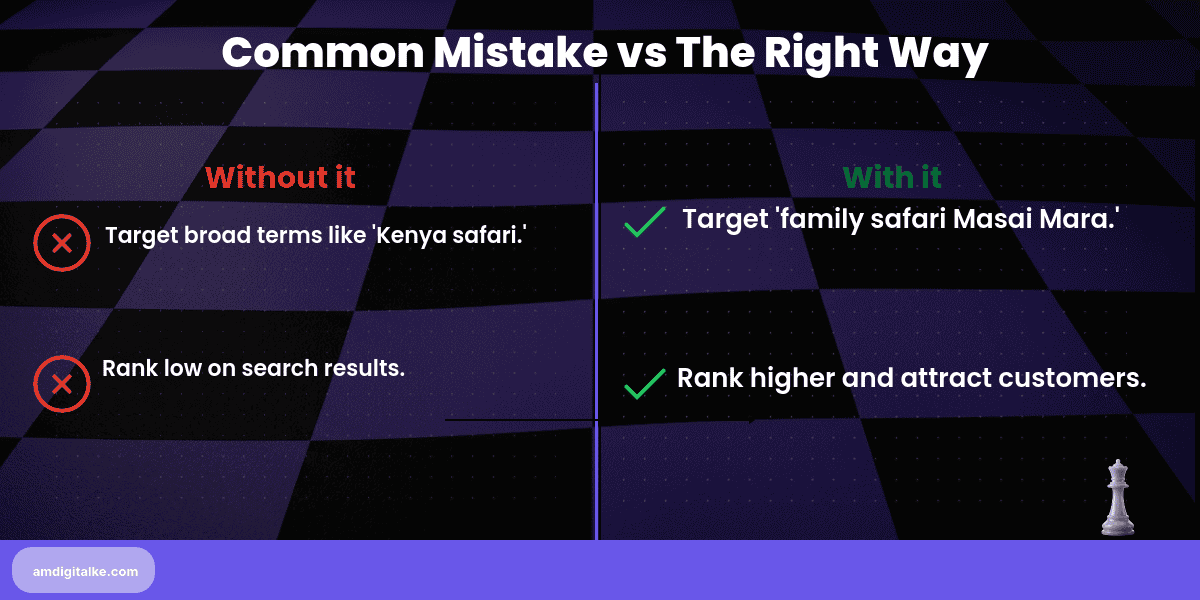
For Kenyan businesses competing with established competitors, targeting phrases like “family safari Masai Mara September” is more effective than competing for “Kenya safari.”
You’ll rank higher and capture travellers actively searching for exactly what you offer.
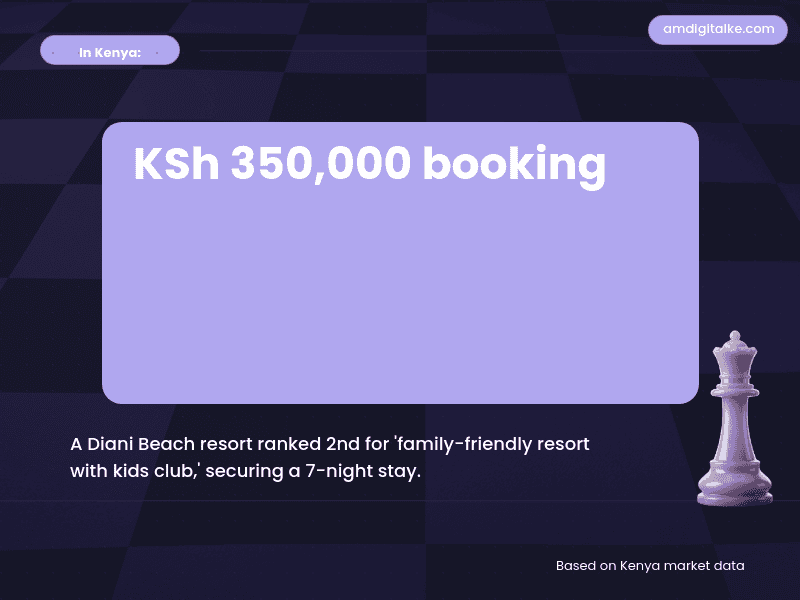
Imagine you own a luxury beach resort in Diani.
A tourist searches “family-friendly resort Diani Beach with kids club” on Google.
Your competitor targets the broad term “Diani hotels” and ranks on page 5.
You optimised for that specific long-tail phrase and appear in position 2.
The family booked a 7-night stay worth KSh 350,000 because your listing matched their exact needs.
Steps to Leverage Long-tail Keywords for Your Kenyan Business
Step 1: List 10 specific services or features your business offers
Understanding what keywords really mean helps you identify them.
Write down concrete details like “conveyancing services Westlands” or “Japanese used SUVs under 2M” instead of generic terms.
Step 2: Add location modifiers to each phrase
Combine your service with neighbourhoods.
“Tax compliance services Kilimani” ranks easier than “tax services Kenya.”
Implementing keyword research properly reveals which locations customers actually search.
Step 3: Include question-based keywords
Use “how much does” or “where to find” phrases.
Like “how much does business registration cost in Nairobi” for a law firm.
Understanding search intent behind queries improves targeting accuracy.
Step 4: Target 3-5 word phrases with buyer intent
Focus on keywords showing purchase readiness.
“Book Maasai Mara safari September” beats “Kenya safari information.”
Reading about why search intent beats volume explains this strategy.
Step 5: Create dedicated pages for your top 5 long-tail terms
Build separate landing pages.
Don’t stuff multiple long-tail keywords on one page.
When creating valuable content marketing assets, one keyword per page works best.
Step 6: Use Google’s “People also ask” and autocomplete
Type your main keyword in Google.
Note the suggested completions and related questions.
These reveal what Kenyans actually search.
Check our local SEO services for location-based optimisation.
✅ Your Long-tail Keyword Checklist:
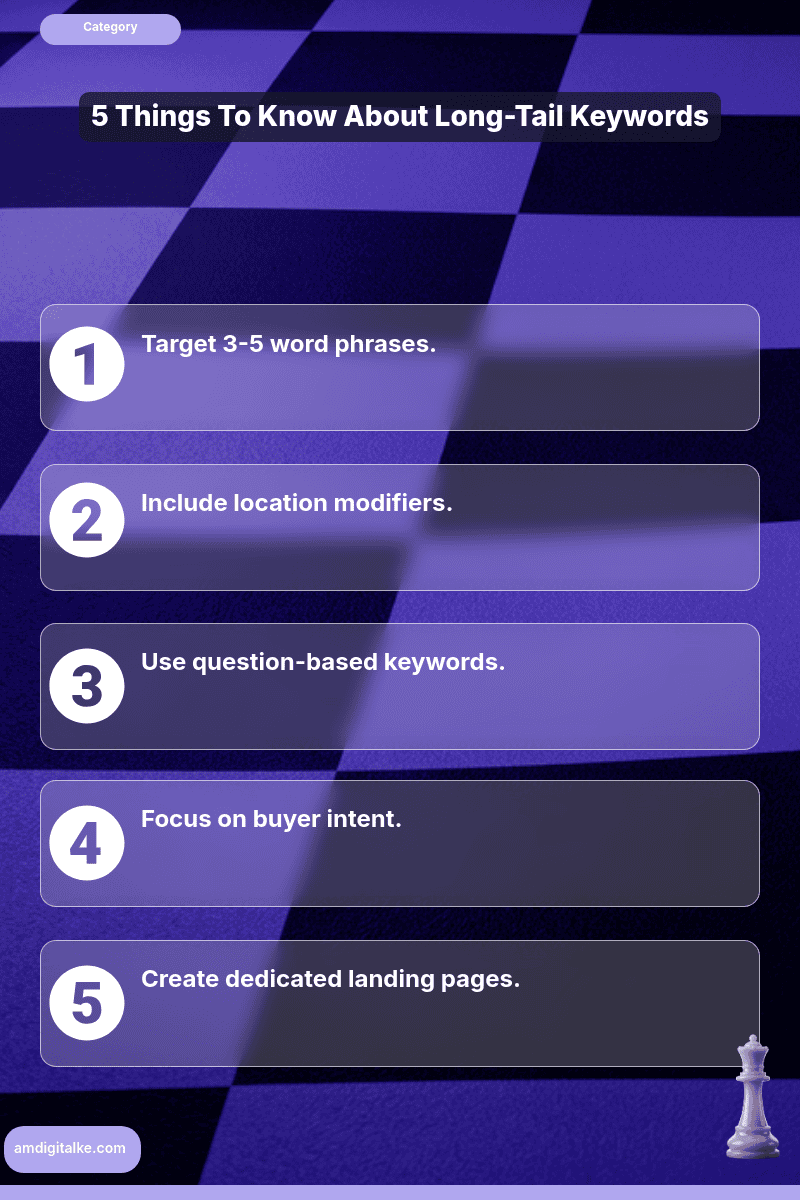
- ☐ List 10 specific services
- ☐ Add neighbourhood/city names
- ☐ Include 3-5 question phrases
- ☐ Check Google autocomplete suggestions
- ☐ Create 5 dedicated landing pages
- ☐ Use buyer-intent modifiers
- ☐ Test phrases in Google Search
Start with your best-selling service and build an optimised page this week.
Based on AM Digital KE client data across Kenyan accounts, you’ll rank within 2-3 weeks for specific phrases.
This attracts customers actively searching for exactly what you provide.
If you’re confused about which keywords to target, check out my SEO FAQs page for keyword selection guidance.
Before creating landing pages, download this complete SEO checklist to ensure proper on-page optimisation.
Ready to identify your best long-tail opportunities?
Let’s run a free SEO analysis to discover untapped keyword potential.
Related Content
Curious to learn more about keyword targeting and search behaviour? Check out the posts below:
- What is Keyword Density — Keyword density reveals how often to use your long-tail phrases without triggering Google’s spam filters in your content.
- How to Leverage Search Intent for SEO — Matching search intent ensures your long-tail keywords attract visitors who convert into paying customers, rather than just browsers.
- How to Execute Content Marketing — Learn how to build content around long-tail keywords that establishes authority while driving qualified traffic to your Kenyan business.
- Legal SEO Services — See how Kenyan law firms use long-tail keywords like “divorce lawyer Westlands cost” to dominate hyper-specific local searches.
These articles will walk you through the basics of mastering keyword strategy for better rankings.
Have more SEO questions? Our SEO FAQs Kenya page answers the most common ones.
Frequently Asked Questions
What are long-tail keywords?
Long-tail keywords are specific 3-5 word phrases used to target niche searches, like ‘family safari Masai Mara September.’
Why are long-tail keywords important in Kenya?
They help Kenyan businesses rank higher by targeting specific searches like ‘luxury beach resort Diani Beach with kids club.’
How do I find long-tail keywords?
Use tools like Google’s ‘People also ask’ and autocomplete to find phrases like ‘tax compliance services Kilimani.’