Table of Contents
- Key Takeaways
- Optimising for Search Intent: The Essential Steps
- Your Search Intent Checklist:
- Search Intent in Action: A Kenyan Safari Example
- Related Content
- Frequently Asked Questions
- What is search intent in SEO?
- Why is search intent important in Kenya?
- How do I find search intent for keywords?
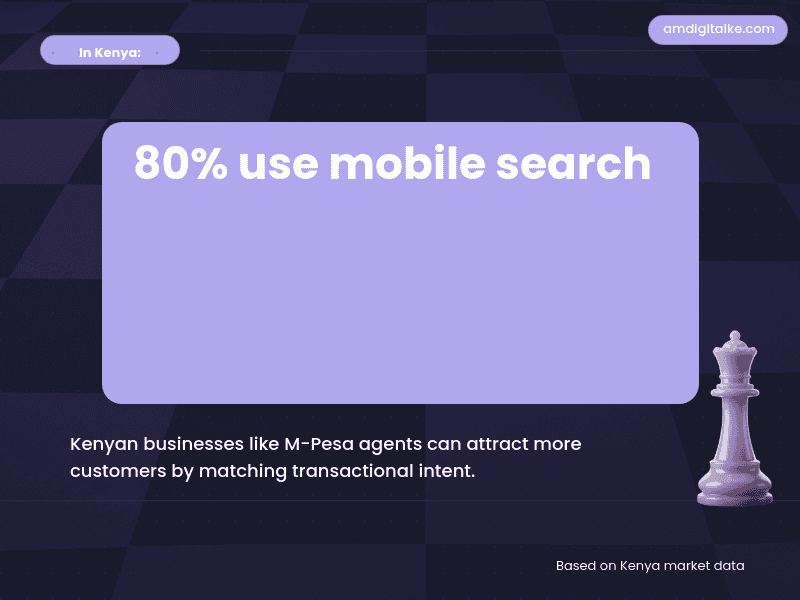
- Can I use search intent for M-Pesa services?
TL;DR: Learn how to match your content to what Kenyans search for to rank higher and attract customers ready to act.
Last Updated: March 2026
Key Takeaways
- Understand the 4 search intent types
- Analyse top Google results
- Match content to intent
- Use intent-specific keywords
- Answer searchers’ questions immediately
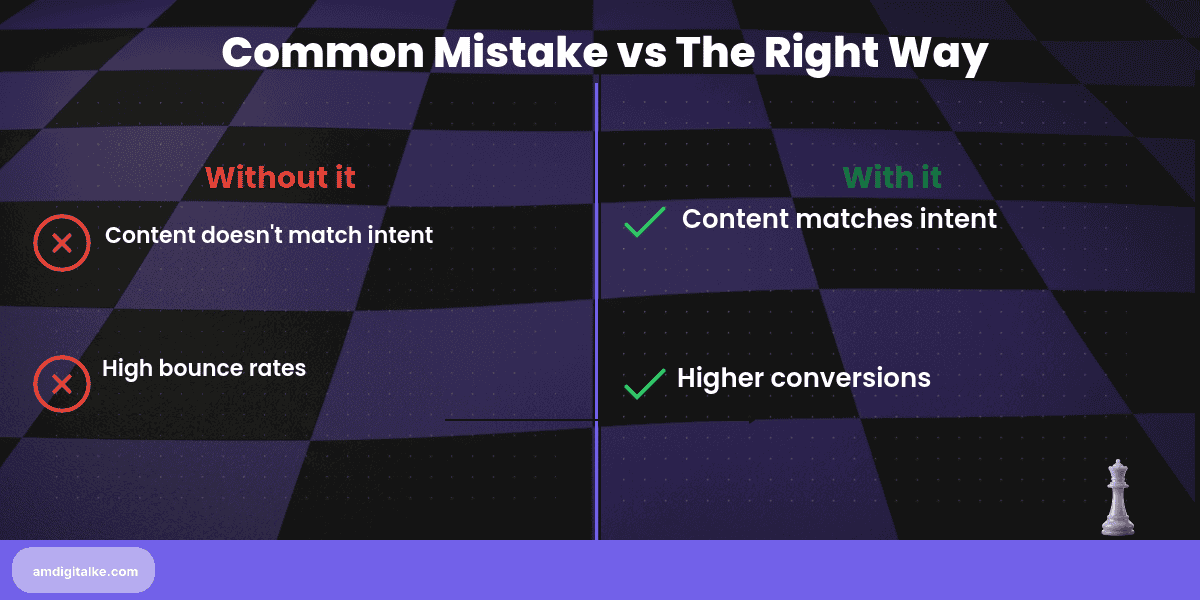
Understanding what users really want when they search helps you create content that ranks higher and converts better.
By matching your pages to what search intent really means, you’ll attract more qualified visitors who are ready to book, buy, or contact you.
Imagine you run a law firm in Nairobi. Someone searching “business registration Kenya” wants step-by-step guidance and pricing, not a homepage about your firm’s history.
But someone searching “corporate lawyers Nairobi” wants to hire an expert right now. If your content matches their intent perfectly, you’ll rank higher and win more clients than competitors who ignore this difference.
Optimising for Search Intent: The Essential Steps
Step 1: Identify the four search intent types your keywords fall into
When you’re implementing keyword research properly for your business, categorise each term as informational, navigational, transactional, or commercial investigation.
Informational means learning. Navigational means finding your site. Transactional means ready to buy. Commercial investigation means comparing options.
Step 2: Google your target keyword and analyse the top 5 results
If Google shows blog posts, users want information. If it shows product pages, they want to buy.
This reveals what types of SEO approaches actually work for each query.
Step 3: Match your content format to the dominant intent
Create guides for informational searches. Build service pages for transactional searches. Write comparison articles for commercial investigation.
Executing a content marketing strategy effectively ensures your pages satisfy searchers immediately.
Step 4: Use intent-specific keywords in your content
Informational uses “how to” and “guide.” Transactional uses “buy,” “book,” and “hire.” Commercial uses “best” and “vs.”
These natural phrases help Google understand your page purpose.
Step 5: Structure your page to answer the searcher’s question immediately
Put your main answer in the first paragraph. Then expand with details below.
This matches how understanding what on-page SEO principles improve user experience and rankings.
Step 6: Add appropriate calls-to-action based on intent
Informational content needs “Learn More.” Transactional needs “Book Now” or “Get Quote.”
Different intents require different conversion strategies aligned with where customers are in their journey.
Your Search Intent Checklist:
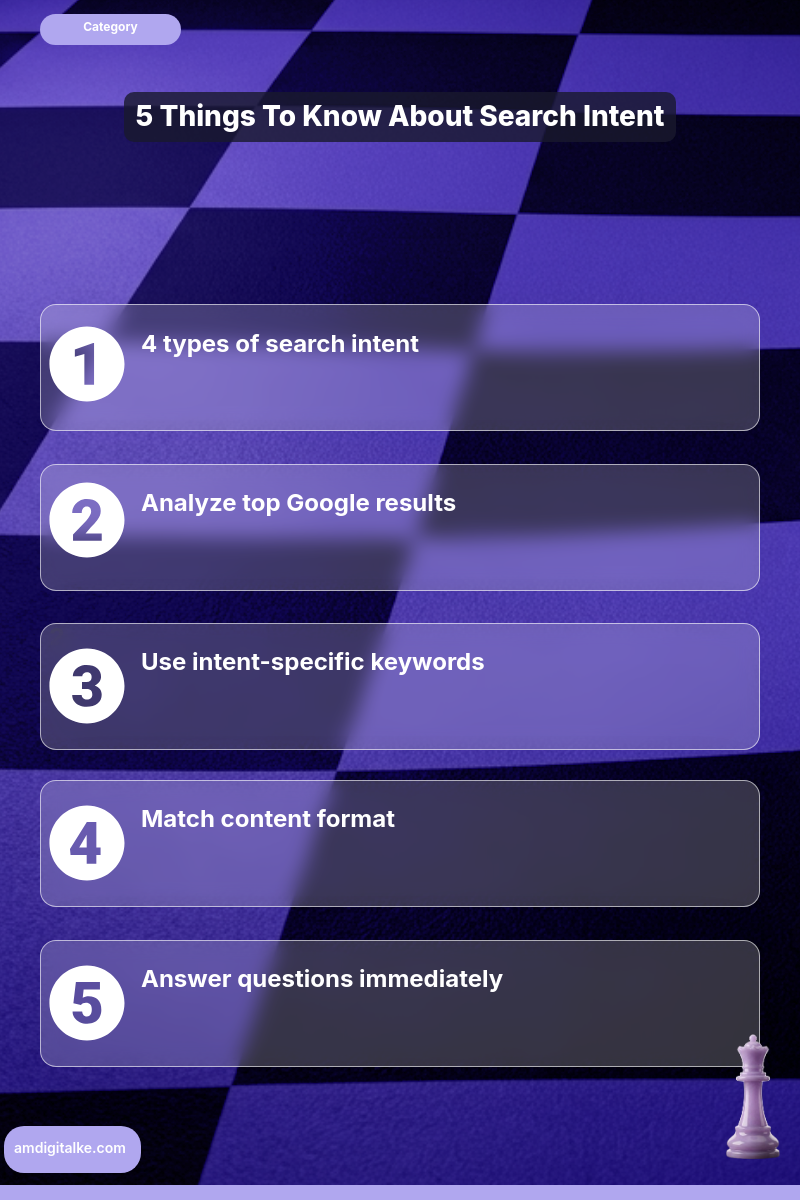
- ☐ Identify intent type for each keyword
- ☐ Analyse the top 5 Google results
- ☐ Match content format to intent
- ☐ Use intent-specific language
- ☐ Answer questions immediately
- ☐ Add appropriate CTAs
Implement these search intent optimisations this week. Based on AM Digital KE client data across Kenyan accounts, you’ll see Google reward your pages with higher rankings for matching what searchers actually want.
Looking for more comprehensive SEO strategies? Download this complete SEO Checklist to cover every technical detail.
Ready to dominate search results? Let’s run a free SEO analysis on your site to identify which pages need better search intent alignment.
Search Intent in Action: A Kenyan Safari Example
A Nairobi safari company noticed their homepage ranked poorly for “Maasai Mara safari packages.” They were targeting transactional intent with informational content.
They created a dedicated packages page with pricing, booking options, and availability. Within three weeks, they jumped from page 3 to position 4 on Google.
Their blog post “How to plan a Maasai Mara safari” now ranks for informational queries. Their packages page captures ready-to-book customers.
Related Content
- Why Search Intent Beats Search Volume: The Strategic SEO Move — This strategic post explains why targeting the right intent drives more qualified traffic than chasing high-volume keywords.
- What is Keyword Research (For the Kenya Market) — Understanding keyword research fundamentals helps you identify which search intents your target audience actually uses.
- How to Leverage Long-tail Keywords – A Kenyan Expert’s Handbook — Long-tail keywords naturally reveal specific search intents, making it easier to match content to user needs.
- What is Content Marketing (from a Kenyan Expert) — Content marketing strategy connects directly to satisfying different search intents across your customer journey.
- Legal SEO Services — See how Kenyan law firms apply search intent matching to capture clients at every stage of their decision process.
These articles will walk you through the basics of aligning your content with what searchers actually want.
Have more SEO questions? Our SEO FAQs Kenya page answers the most common ones.
Frequently Asked Questions
What is search intent in SEO?
Search intent is the reason behind a user’s search, like finding info or buying a product.
Why is search intent important in Kenya?
It helps Kenyan businesses rank higher by creating content matching local searchers’ needs.
How do I find search intent for keywords?
Google your target keyword and see if top results are blogs, product pages, or services.
Can I use search intent for M-Pesa services?
Yes. Match transactional intent for M-Pesa top-ups, informational for tutorials.