Table of Contents
TL;DR: Keyword research helps Kenyan businesses understand what customers search for online. It’s like knowing popular matatu routes to pick more passengers.
Last Updated: March 2026
Key Takeaways
- Know what Kenyans search online
- Target right customer phrases
- Avoid wasting marketing budget
- Boost website traffic effectively
- Stay ahead of competitors
Keyword research is the process of finding and analysing the specific words and phrases your potential customers type into search engines when looking for products or services like yours.
It’s the foundation of successful digital marketing that helps your Kenyan business appear in front of the right people at the right time.
Picture your business like a matatu on Thika Road during rush hour.
Without knowing which routes your passengers want to take, you’d drive around aimlessly, burning fuel with empty seats.
Keyword research is like understanding the most popular routes.
It tells you exactly where your customers want to go online so you can position your business right where they’re looking.
Just as matatu conductors shout destinations that passengers recognise, keyword research helps you speak your customers’ language.
Why It Matters for Your Business
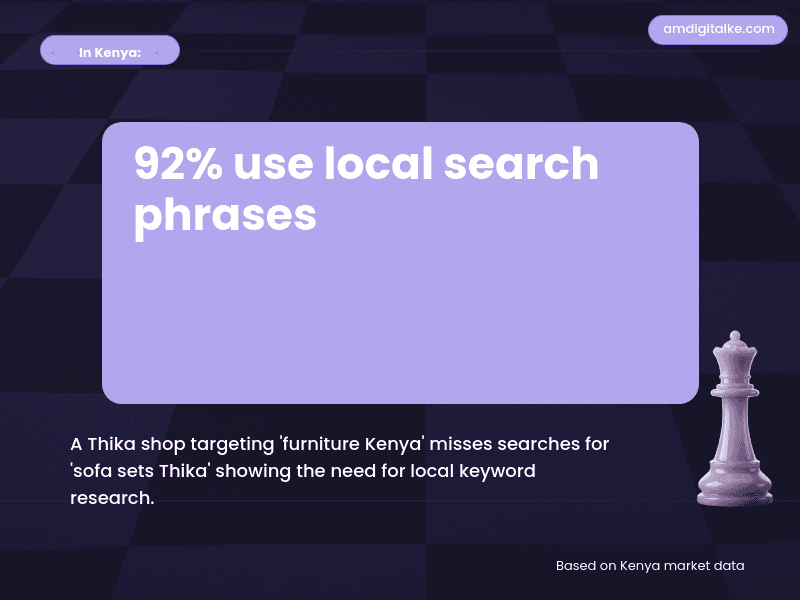
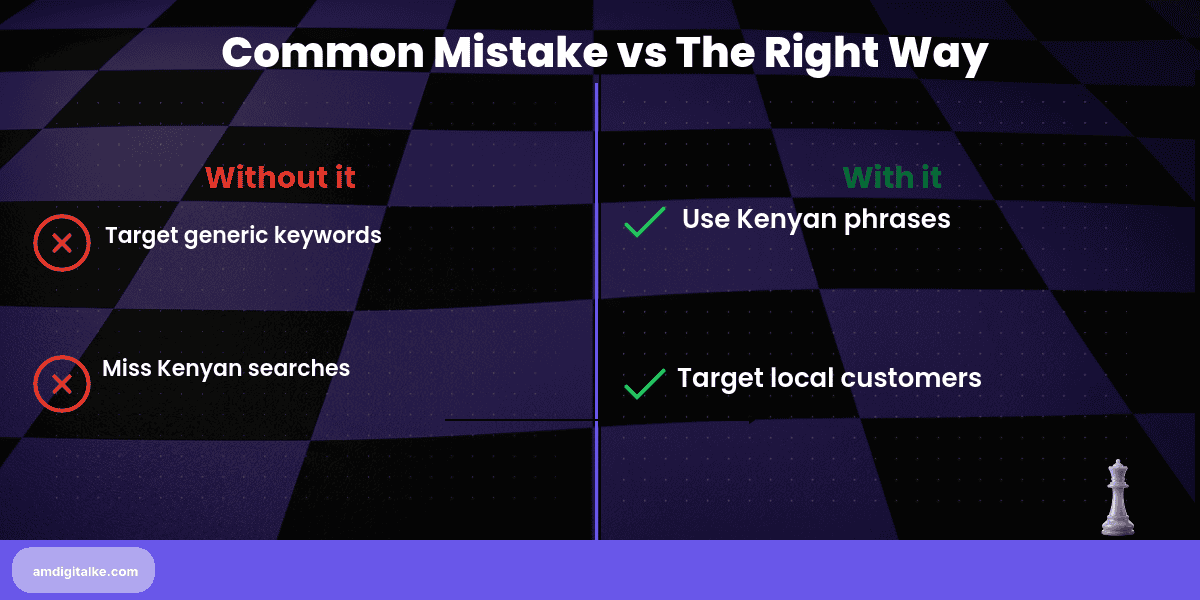
Without proper keyword research, your website is invisible to potential customers searching online.
A Nairobi restaurant owner might think people search for “fine dining establishment.”
But customers actually search for “best nyama choma Westlands” or “affordable family restaurant Kilimani.”
This disconnect costs you customers every day.
Consider two competing electronics shops in Nairobi CBD.
One targets “electronic devices” while the other researched and found customers search for “smartphone repair Nairobi” and “laptop prices Kenya.”
Based on AM Digital KE client data across Kenyan accounts, the second shop gets ten times more website visitors because they speak their customers’ language.
We help you understand these search patterns so your marketing budget works harder, not just harder to spend.
How It Works (With Examples)
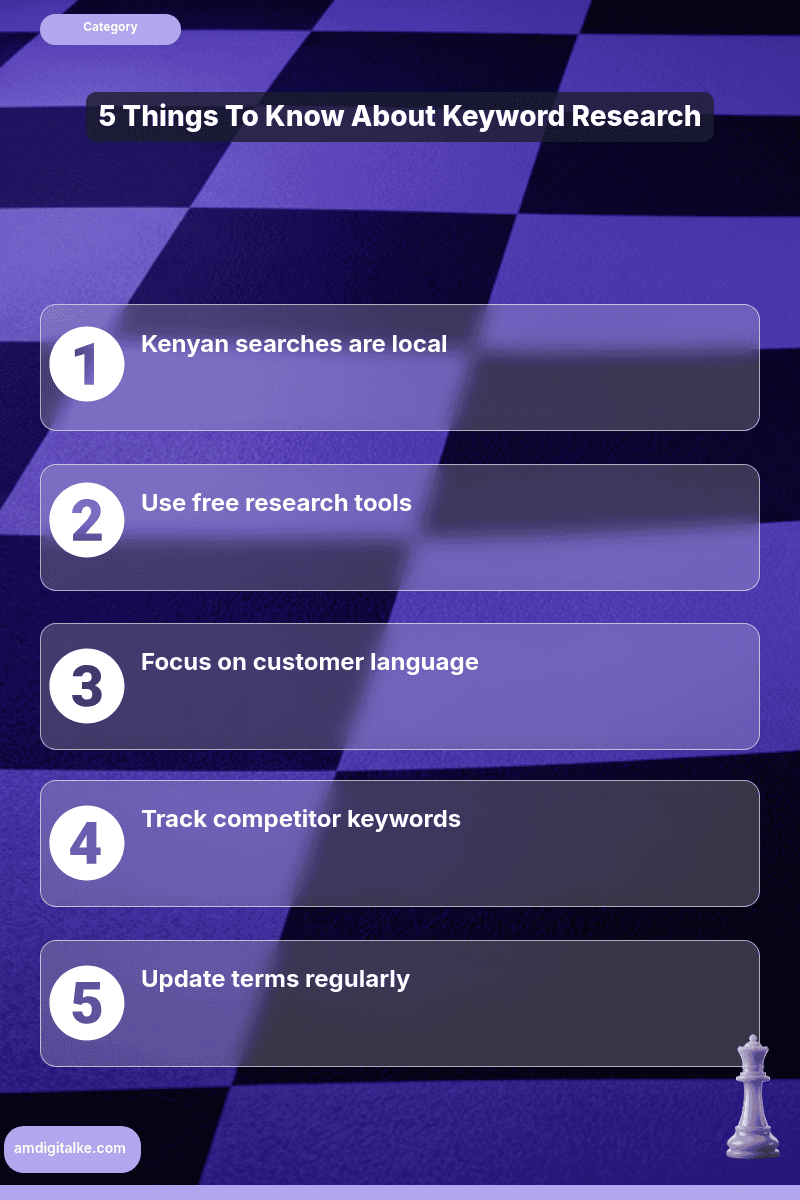
Keyword research involves several systematic steps:
Research Process:
- Brainstorm seed keywords – Start with obvious terms like “hotel Nairobi” if you run an accommodation
- Analyse search volume – Tools show “cheap hotels Nairobi” gets 2,400 monthly searches vs “budget accommodation” with only 480
- Check competition levels – Some keywords are dominated by large companies, others offer opportunities for local businesses
- Study user intent – Someone searching “wedding photographer prices Kenya” is closer to booking than someone searching “photography.” These are called long-tail keywords.
Local Examples:
- A Mombasa tour company discovered that “dhow sunset cruise” outperformed “boat tours” significantly
- A Nakuru salon found that “natural hair salon Nakuru” brought more bookings than generic “hair salon”
- An Eldoret farm supply store learned that customers search “maize seeds prices Kenya” not “agricultural products”
To learn more about terms like these, check out my SEO FAQs page for Kenyan Businesses.
Plus, also check out how to carry out proper keyword research.
Quick Action Checklist
Here’s your keyword research action checklist:
- ☐ List 10 terms your customers might use to find your business right now
- ☐ Check Google autocomplete by typing your main service + “Kenya” to see what appears
- ☐ Visit competitor websites and note which terms they emphasise on their homepage
- ☐ Use Google’s “People also ask” section when you search for your main keywords
- ☐ Track which terms currently bring visitors to your website using Google Analytics
- ☐ Research monthly search volumes using free tools like Google Keyword Planner
Need a complete walk-through?
Download this complete SEO Checklist for everything you need to do.
Ready to discover the exact terms your ideal customers use when searching online?
We offer a free SEO audit to help analyse your specific market and competitors to build a keyword strategy that drives real business growth in Kenya.
Want to do the most effective keyword research? Check out the posts below
- Best Free SEO Tools to Help You Research Keywords
- Why Search Intent Beats Search Volume: The Strategic SEO Move
- Should You Use the Keyword as an Anchor Text
- Getting Started with SEO in Kenya For Free: Your First Steps
These articles will walk you through the basics of how to fully utilise keyword research.
Have more SEO questions? Our SEO FAQs Kenya page answers the most common ones.
Frequently Asked Questions
What is keyword research in Kenya?
It’s finding Kenyan search terms like ‘cheap hotels Nairobi’ or ‘phone repair Mombasa’ to help businesses appear in relevant searches.
Why is keyword research important in Kenya?
It helps Kenyan businesses target real customer searches like ‘best nyama choma Nairobi’ not generic terms that few people use.
How do I start keyword research in Kenya?
List terms like ‘apartment Nairobi’, use free tools to check search volume, and study competitors to find opportunities.