Table of Contents
TL;DR: Search intent is what people want to find when they search online. For Kenyan businesses, it’s crucial for creating content that matches customer needs.
Last Updated: March 2026
Key Takeaways
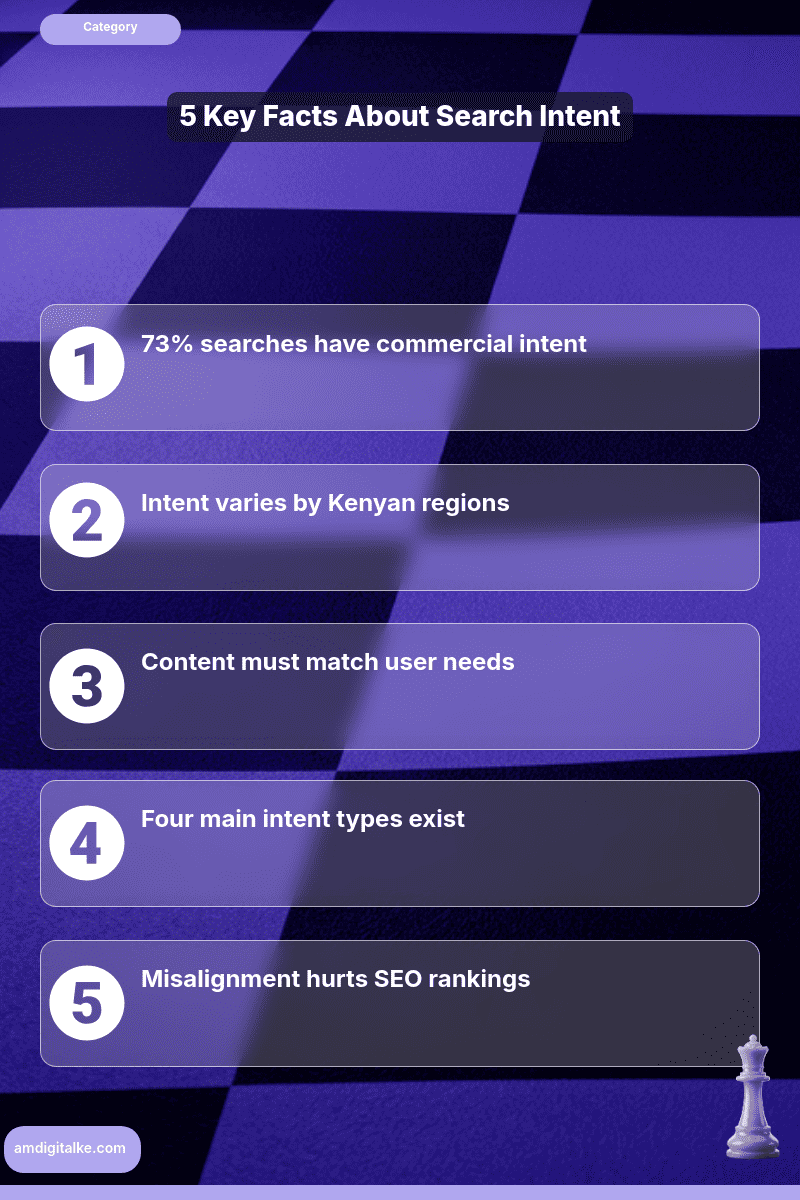
- Customers search with specific goals
- Misaligned content hurts SEO rankings
- Four main intent types exist
- Kenyan examples show local relevance
- Content must match user needs
It’s what your potential customers are really looking for when they search for your business, products, or services online.
Search intent is the reason why someone types a specific query into Google.
Understanding search intent helps Kenyan businesses create content that matches what people actually want to find.
Imagine you’re walking down Tom Mboya Street in Nairobi and someone asks you for directions to “a good place to eat.”
Are they looking for a quick mandazi and chai spot, a sit-down nyama choma restaurant, or something in between?
Without knowing their intent, you might send them to the wrong place entirely. Search intent works the same way.
The same keyword can mean completely different things to different people.
Why It Matters for Your Kenyan Business
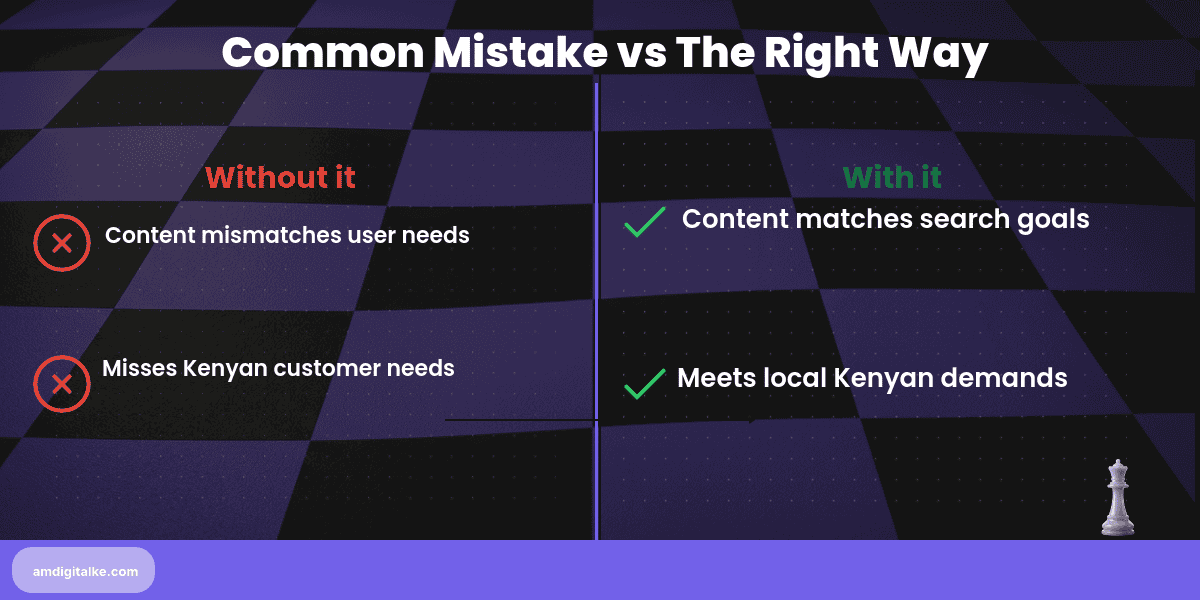
When your website content doesn’t match search intent, it’s like opening a hardware store but only stocking office supplies.
Google notices this mismatch and stops showing your site to searchers.
For Kenyan businesses competing in local markets, this is costly.
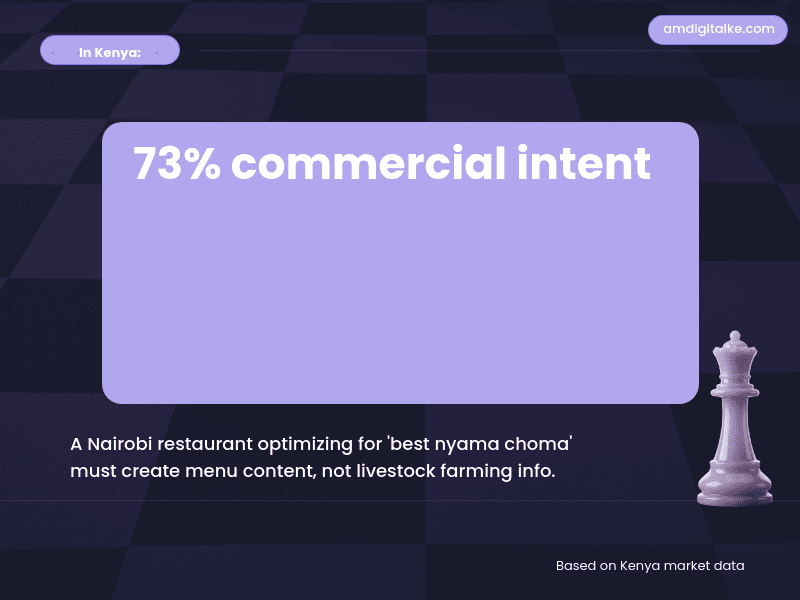
A Nairobi restaurant optimising for “best chicken” might create a page about chicken breeds instead of their grilled chicken menu. They miss potential customers entirely.
Most searches have commercial intent, meaning people are ready to buy. Based on AM Digital KE client data across Kenyan accounts, misunderstanding intent means losing these ready customers to competitors who create content that directly answers what searchers want.
How It Works (With Examples)
Search intent falls into four main categories:
Informational Intent: People seeking knowledge
- “How to start a business in Kenya”
- “Mpesa charges 2024”
Navigational Intent: Looking for a specific website or location
- “KCB online banking login”
- “Java House Sarit Centre”
Commercial Intent: Researching before buying
- “Best smartphones under 20000 Kenya”
- “Nairobi web design companies reviews”
Transactional Intent: Ready to purchase or take action
- “Buy a Samsung phone in Nairobi”
- “Book a flight from Nairobi to Mombasa”
A Westlands electronics shop targeting “iPhone Kenya” needs different content for someone researching versus someone ready to buy today.
To learn more about SEO terms like these, check out my SEO FAQs page for a glossary. What’s more, I teach you how to understand search intent and capitalise on it.
Next Steps for Your Kenya Business
Here’s your search intent action checklist:
- ☐ List your top 10 business keywords and identify the likely intent behind each
- ☐ Check your current pages – do they match what searchers actually want?
- ☐ Research your competitors’ content for the same keywords to spot intent gaps
- ☐ Create different content types for different intents (guides for informational, product pages for transactional)
- ☐ Track which pages get visitors but low engagement – these likely have intent mismatches
- ☐ Test new content approaches based on search intent analysis
Need a complete walk-through?
Download this complete SEO Checklist for everything you need to do.
Ready to create content that actually converts searchers into customers?
Our free SEO Audit for Nairobi businesses analyses your current content strategy and identifies exactly what your Kenyan market is searching for.
Curious to learn more about search intent? Check out the posts below
- Why Search Intent Beats Search Volume: The Strategic SEO Move
- SEO Services in Kenya Vs Social Media Ads in Kenya
- What is Dwell Time
- How to Lower Your Bounce Rate
These articles will walk you through the basics of how to get started with SEO.
Have more SEO questions? Our SEO FAQs Kenya page answers the most common ones.
Frequently Asked Questions
What are types of search intent?
Four types: Informational (seeking knowledge), Navigational (finding specific sites), Commercial (researching purchases), Transactional (ready to buy).
Why does search intent matter in Kenya?
It helps Kenyan businesses create relevant content. For example, Nairobi restaurants must know if customers want menus or locations.
How can I find search intent?
Analyze search terms and results. Study what appears for keywords like ‘Mpesa charges Kenya’ versus ‘buy phones Nairobi’.
What happens if I ignore search intent?
Your Kenyan site loses rankings. If searching ‘bus booking Kenya’, users expect fares and schedules, not bus types.