Table of Contents
- What Is a Marketing Channel?
- Why Does a Marketing Channel Matter for Kenyan Businesses?
- How Marketing Channels Work 🎯
- Marketing Channel Examples in Kenya 📍
- Common Mistakes to Avoid ⚠️
- ✅ Quick Action Checklist
- Ready to Master Your Marketing Channels?
- Frequently Asked Questions
- Additional Resources
- Take the Next Step
TL;DR: A marketing channel is any platform or method you use to reach, engage, and convert your customers. For Kenyan businesses, the most effective channels are those where your specific customers already spend their time—whether that’s WhatsApp, Google Search, Facebook, email, or face-to-face. Choosing the right channels and using them consistently will generate more revenue than spreading yourself thin across every platform available.
What Is a Marketing Channel?
A marketing channel is the path or platform you use to communicate with potential and existing customers.
Think of it like the roads a matatu uses to reach passengers. A matatu doesn’t drive everywhere at once. It follows specific routes where people wait and need transport.
Your marketing channels work the same way. You choose specific platforms where your customers are most likely to find you or hear from you.
These include Google Search, WhatsApp, Facebook, your website, email, SMS, or even a physical shop. A channel is not a tactic. A tactic is something you do within a channel.
For example, “running a Facebook ad campaign” is a tactic. Facebook itself is the channel.
The channel is the medium. The tactic is the action.
Every marketing channel has three characteristics. It reaches a specific audience.
It allows you to deliver a message or offer. It gives you a way to measure whether people responded.
When a customer finds you through Google Search, that’s a channel. When someone sees your WhatsApp Business message, that’s a channel.
When a customer walks into your shop in Nairobi because a friend told them about you, that’s also a channel. It’s called word-of-mouth or referral, and user generated content reviews and qas that boost rankings work the same way online.
Channels are the backbone of any business strategy. Without clear channels, you are hoping customers find you by accident.
With clear channels, you are meeting customers where they already are.
The Five Types of Marketing Channels
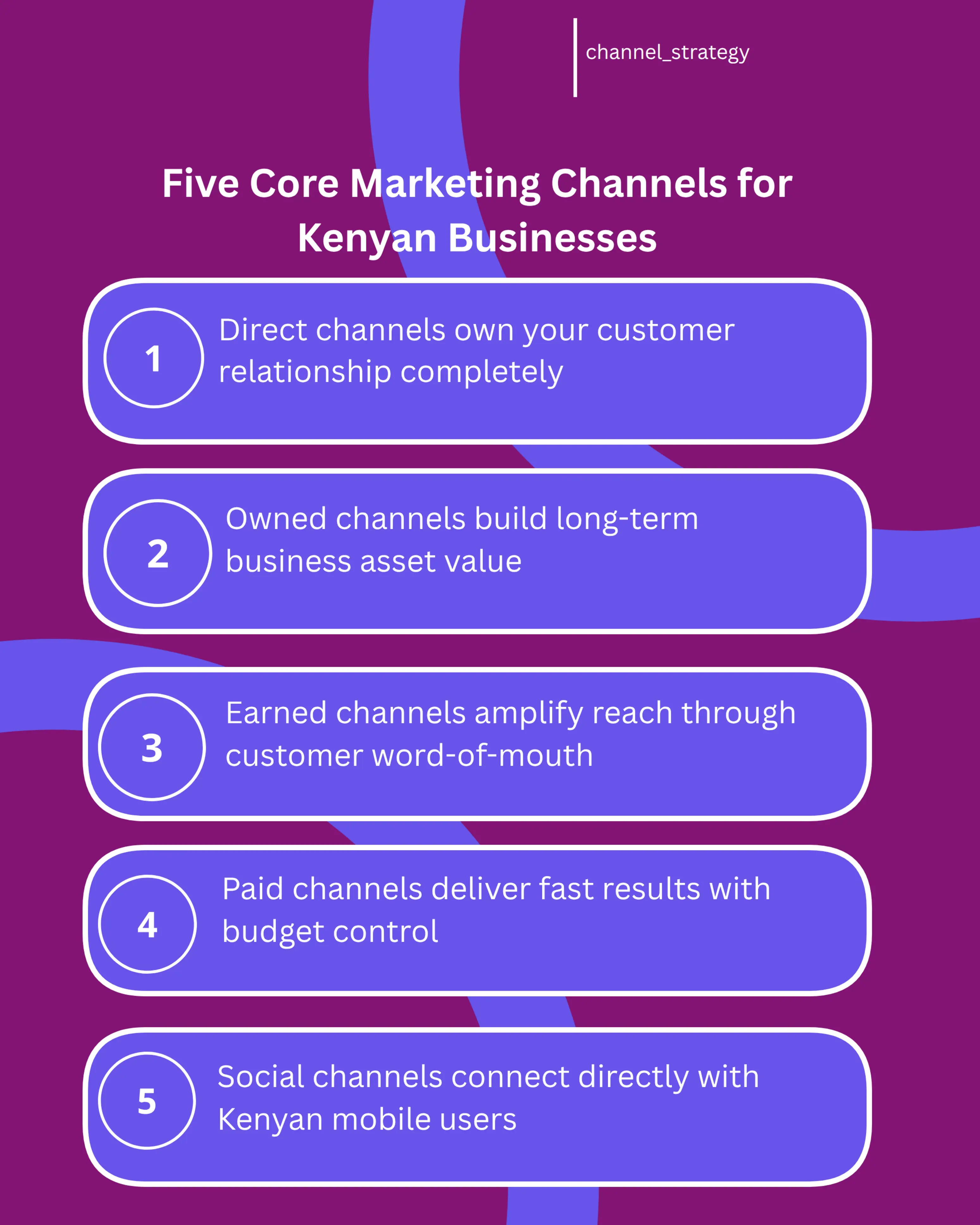
Marketing channels fall into five broad categories. Understanding each one helps you build a complete strategy.
Owned channels are platforms you control completely. Your website, email list, blog, WhatsApp Business account, and SMS subscriber list are all owned channels.
Earned channels are platforms where customers talk about you without you paying them. Customer reviews on Google, word-of-mouth referrals, and mentions on social media count as earned channels.
Paid channels are platforms where you pay to reach people. Google Ads, Facebook advertising, Instagram ads, and sponsored posts are all paid channels.
Social channels are platforms built for sharing and conversation. WhatsApp, Facebook, Instagram, TikTok, and LinkedIn are social channels.
Direct channels are ways customers come to you without intermediaries. This includes customers who call you directly, walk into your shop, or type your website URL into their browser.
Why Channels Matter More Than You Think
Most Kenyan business owners think about marketing as one big bucket. They post on Facebook, hope for Google traffic, send random emails, and wonder why nothing works.
The problem is they are not thinking in channels. They are thinking in activities.
When you think in channels, you understand that each platform reaches different people at different times with different levels of trust. A customer who finds you on Google Search is further along in their buying journey than someone who sees a random Facebook ad.
A customer who receives an email from you has already given you permission to contact them. A customer who sees your WhatsApp status has not necessarily chosen to hear from you.
Channels help you match your message to the right moment in the customer’s journey. That is how you turn attention into revenue.
Why Does a Marketing Channel Matter for Kenyan Businesses?
Kenyan businesses operate in a unique market. You have limited budgets, fierce local competition, and customers who are increasingly online but still value personal relationships.
Understanding and using the right marketing channels is not optional. It is the difference between a business that grows and a business that stays stuck.
You Reach Customers Where They Actually Are
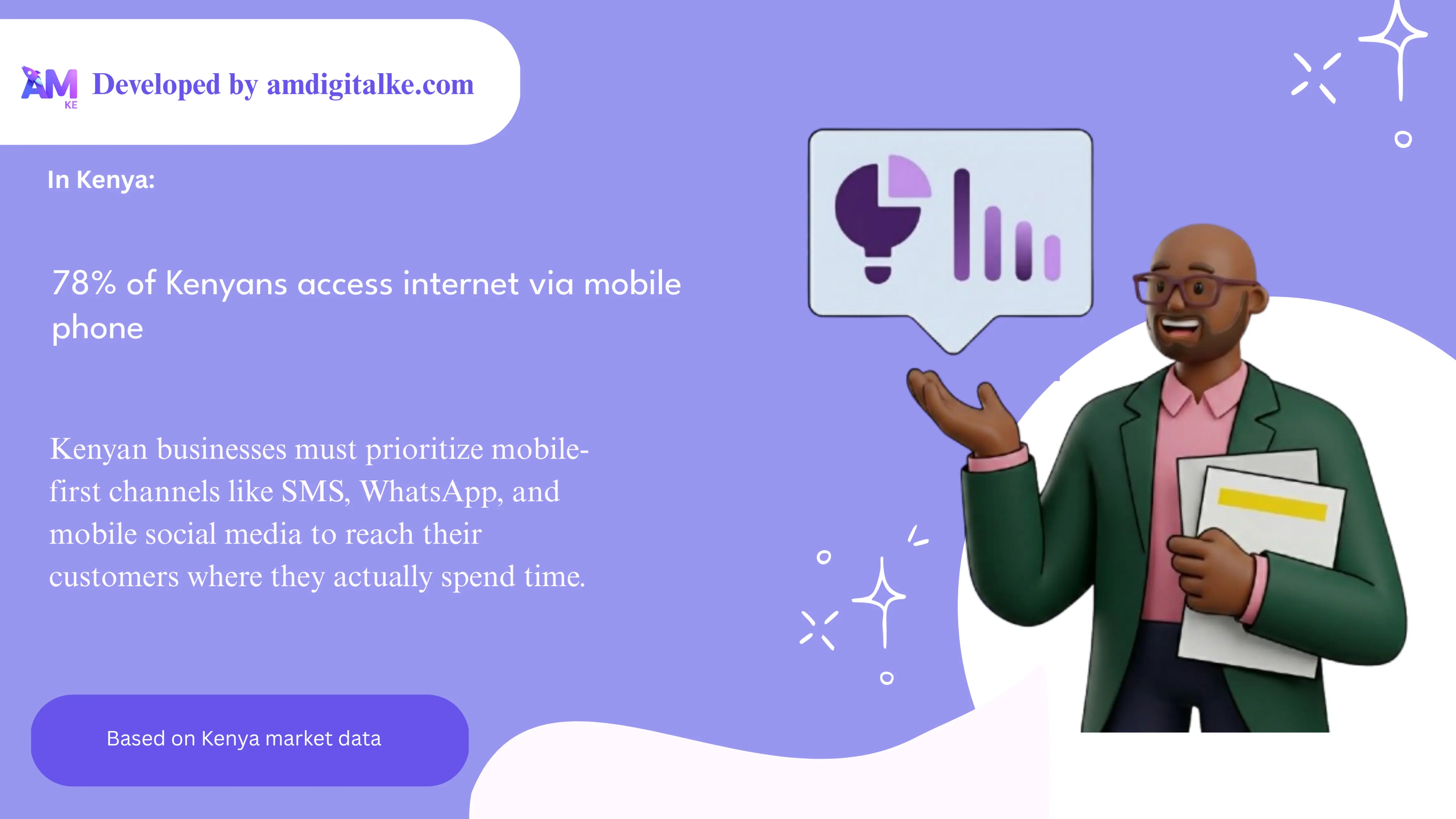
78% of Kenyans access the internet via mobile devices. This is a fact that changes everything about how you market.
If you are spending money on channels that work best on desktop computers, you are missing your customers. Your customers are on their phones, checking WhatsApp, scrolling Instagram, and searching Google on mobile.
When you choose channels strategically, you meet customers on the devices and platforms they actually use. A Nairobi salon owner who uses WhatsApp Business to confirm appointments reaches customers in a channel they already trust and use daily.
A Mombasa restaurant that appears in Google Maps Search reaches hungry customers at the exact moment they are looking for food near them.
You Stop Wasting Money on the Wrong Platforms
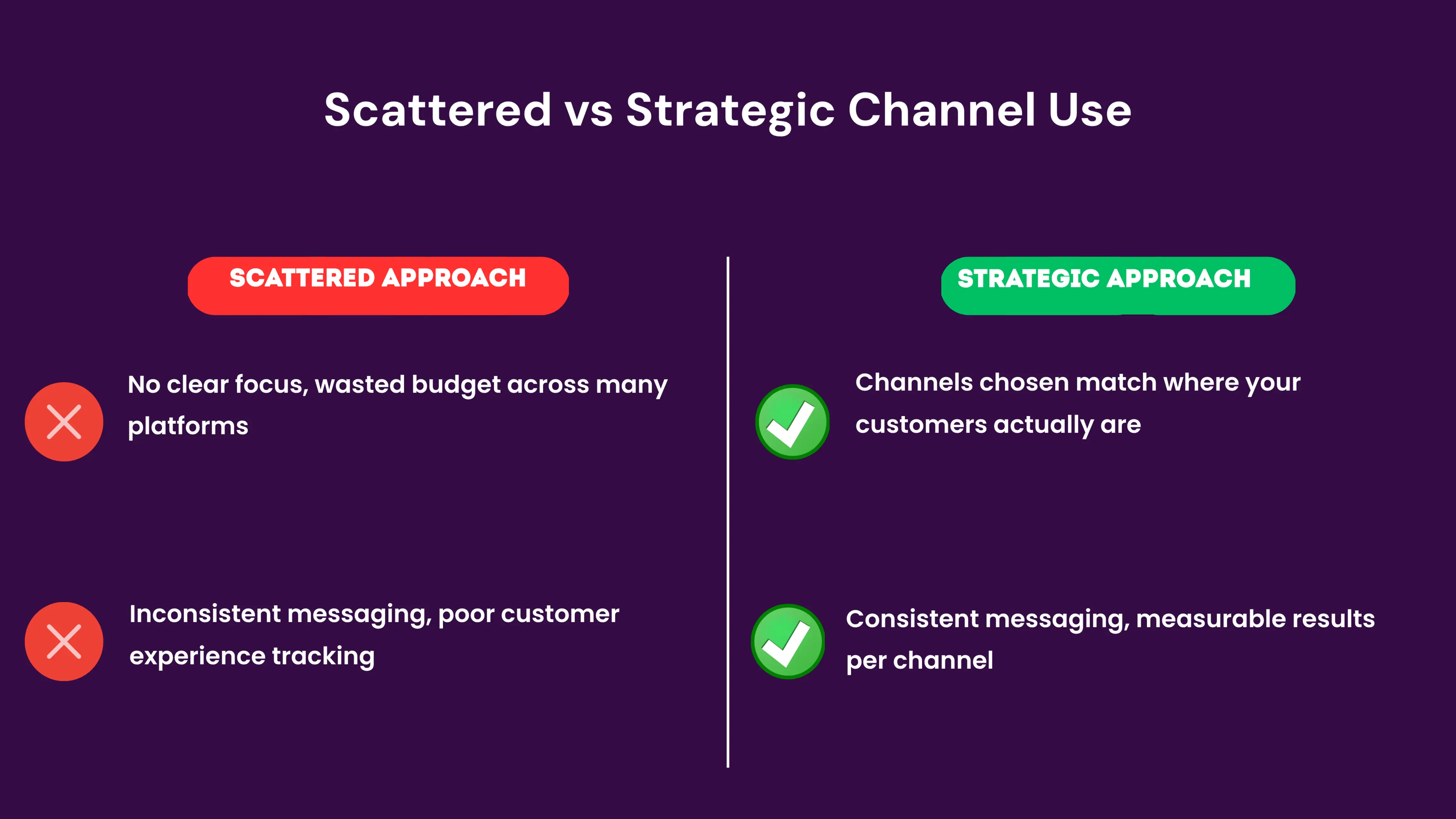
Many Kenyan business owners spend money on channels where their customers do not exist. They run Facebook ads targeting the entire country when their customers are only in Nairobi.
They pay for LinkedIn ads when their customers do not use LinkedIn. They invest in TikTok when their audience is on WhatsApp.
When you understand your channels, you know exactly where your budget will work. Businesses that focus on 3-5 channels consistently see better ROI than those scattered across 10+ channels.
Focus is more powerful than breadth. A small budget used strategically in the right channels will outperform a large budget spread thin across the wrong ones.
You Build a Repeatable, Scalable Business
Every successful Kenyan business operates through channels. Safaricom does not rely on one way to reach customers. They use SMS, their website, retail shops, customer service centers, and community events.
When you define your channels, you create a system. You know which channels bring customers, which ones are most profitable, and which ones you should invest in next.
Once you have a system, you can scale it. You can hire someone to manage your email channel, or train staff to handle your WhatsApp channel.
You can reinvest profits into your highest-performing paid channels. See how to use marketing channels template kenya to map this out for your own business.
Without clear channels, you are making random decisions every month. With clear channels, you are building a business.
You Measure What Actually Matters
You cannot improve what you do not measure. When you define your channels, you can track which ones bring customers, which ones generate revenue, and which ones are wasting your money.
A Kenyan e-commerce business owner might discover that Google Search brings high-intent customers who buy immediately, while Instagram brings awareness but takes weeks to convert. That insight changes everything about budget allocation.
Without channel clarity, you have no way to know. You just spend money and hope something works, which is why comparing agencies like artly vs am digital ke matters before you commit your budget.
How Marketing Channels Work 🎯
A marketing channel is not magic. It is a system with specific components that work together to move a customer from awareness to action.
Understanding how channels work helps you use them effectively. It also stops you making expensive mistakes.
The Customer Journey Through a Channel
Every customer moves through a channel in stages. First, they discover you exist.
Second, they learn what you offer. Third, they decide whether to buy.
Fourth, they take action.
Different channels are effective at different stages. Google Search is powerful at stage three and four, when customers are actively looking and ready to buy.
Facebook is powerful at stage one and two, when customers are browsing and learning. Email is powerful at all stages. You can nurture customers from awareness to purchase.
When you understand which stage each channel addresses, you can build a complete strategy. You use Facebook to build awareness, email to nurture interest, Google Search to capture intent, and WhatsApp to close deals.
Channel Reach and Frequency
Reach is the number of people who see your message. Frequency is how often they see it.
Some channels have high reach but low frequency. A TV ad reaches millions of Kenyans but they only see it once.
Some channels have low reach but high frequency. An email to your existing customers reaches only them, but you can send multiple messages.
The best channels balance both. Your owned channels like email let you reach customers repeatedly at low cost.
Your paid channels like Google Ads let you reach new customers at scale. Businesses that invest in content marketing services kenya often blend both approaches.
Cost and Control in Each Channel
Each channel has a different cost structure and level of control. Your website costs money to build and maintain, but you own it completely.
Google Ads costs money every time someone clicks, but you control exactly who sees your ad and when. Facebook is free to post on, but Facebook controls your reach and can change its algorithm anytime.
Email is cheap to send, but you need permission first. WhatsApp is free to use, but you cannot send unsolicited messages at scale.
Understanding these differences helps you build a balanced portfolio. You need some owned channels you control, some paid channels for scale, and some social channels for engagement.
Marketing Channel Examples in Kenya 📍
Kenya’s marketing landscape is unique. You have sophisticated digital infrastructure in some areas and limited connectivity in others.
You have customers who love WhatsApp and customers who still prefer phone calls. Here is how real Kenyan businesses use different channels effectively.
Google Search as a Channel
When a customer in Nairobi searches “plumber near me” on Google, they are using a channel. Google Search is one of the most powerful channels for Kenyan businesses because it captures customers at the moment they are actively looking.
A plumbing business in Nairobi that appears in Google Search results at that moment gets a customer who is ready to buy. They do not need convincing. They need a solution now.
This channel works for any service business. Dentists, lawyers, accountants, salons, and restaurants all benefit from appearing in Google Search when customers look for them.
Businesses that understand what is search engine marketing can combine search ads with organic visibility for faster results. Ranking for featured snippets also gives Kenyan businesses extra visibility at the top of search results.
WhatsApp Business as a Channel
WhatsApp is the dominant messaging app in Kenya. Over 90% of Kenyans with smartphones use WhatsApp regularly.
A Kenyan fashion retailer uses WhatsApp Business to send product updates to customers who have opted in. A logistics company uses WhatsApp to send delivery updates.
A training academy uses WhatsApp to send course reminders. WhatsApp is a channel because it reaches customers in a place they already trust, and you can measure responses through read receipts and replies.
Email as a Channel
Email is often overlooked by Kenyan businesses, but it remains one of the most powerful channels. An email list is an asset you own completely.
A Nairobi-based SaaS company sends weekly tips to their email subscribers. A Mombasa tourism business sends special offers to past customers.
A Kenyan online course creator sends lessons to enrolled students. Email works because customers who receive your message have already shown interest.
They subscribed. They are not random strangers.
Social Media as a Channel
Facebook, Instagram, and TikTok are channels where Kenyan businesses reach younger audiences and build community. A Nairobi beauty brand uses Instagram to showcase products and build a following.
A Kenyan fitness coach uses TikTok to share short workout videos and attract clients. A local artisan uses Facebook to sell handmade goods directly to customers.
These channels work for awareness and engagement. They convert slower than search or email.
Referral and Word-of-Mouth as a Channel
In Kenya, personal relationships still drive business. A satisfied customer tells their friends.
A business owner refers clients to a trusted partner. This is an earned channel, and it is powerful because the recommendation comes from someone the customer trusts.
A Nairobi accountant who gets 30% of new clients through referrals has built a channel that costs nothing. It also converts well.
Common Mistakes to Avoid ⚠️
Kenyan business owners make predictable mistakes with marketing channels. Knowing these mistakes helps you avoid them and save money.
Mistake One: Choosing Channels Based on Trends, Not Your Customers
When TikTok became popular, many Kenyan businesses rushed to create TikTok accounts. But their customers were not on TikTok.
A B2B software company does not need TikTok. A children’s toy store does not need LinkedIn.
You choose channels based on where your specific customers spend time. Do not choose based on what is trendy.
Before choosing a channel, ask three questions. Where do my customers spend their time? What devices do they use, and what problems are they solving on this channel?
Mistake Two: Spreading Yourself Too Thin
A Kenyan business owner decides to be on Facebook, Instagram, TikTok, LinkedIn, Twitter, and YouTube. They post inconsistently on all of them and see no results.
It is better to master three channels than to be mediocre on ten. Choose the channels where your customers are most likely to be, and focus all your energy there.
Once those channels work and generate revenue, expand to new ones. A marketing channels template kenya can help you track this decision.
Mistake Three: Not Measuring Channel Performance
Many Kenyan businesses spend money on channels but never track which ones actually bring customers. They do not know if Facebook is worth the time, or if Google Search brings quality leads.
Without measurement, you cannot improve. You are just guessing.
Set up basic tracking on every channel. Know how many customers came from each channel and how much revenue they generated.
Mistake Four: Ignoring Owned Channels
A business owner spends all their time on Facebook and Instagram, but owns nothing. When Facebook changes its algorithm, their reach disappears.
Your website, email list, and SMS subscriber list are channels you own. Invest in these first, then use paid and social channels to build these owned audiences.
✅ Quick Action Checklist
- ☐ List the three channels where your customers spend the most time
- ☐ Identify one channel you are currently using poorly and commit to improving it
- ☐ Set up basic tracking for each channel (how many customers, how much revenue)
- ☐ Build your email list by adding a signup form to your website or shop
- ☐ Create a WhatsApp Business account if you do not have one
- ☐ Claim and optimize your Google Business Profile if you have a physical location
- ☐ Choose one new channel to test for the next 30 days
- ☐ Document which channels bring your most profitable customers
Ready to Master Your Marketing Channels?
Choosing the right channels and using them consistently is how Kenyan businesses grow. You do not need to be everywhere. You need to be in the right places, with the right message, at the right time.
Start with the channels where your customers already are. Master those first.
Then expand to new channels as your business grows and your budget allows. Tools like marketing automation kenya can help you manage more channels without hiring more staff.
Frequently Asked Questions
What is the difference between a marketing channel and a marketing platform?
A platform is the technology or service itself, like Facebook, Google, or email. A channel is how you use that platform to reach customers.
You can use the same platform as multiple channels. Facebook ads are different from organic Facebook posts.
How many marketing channels should a small Kenyan business use?
Start with 2-3 channels where your customers already are. Master those completely before adding more.
Once you have systems and staff, expand to 5-6 channels. Spreading across more than that usually wastes money.
Which channel is best for a new Kenyan business with no budget?
Start with owned channels like email and WhatsApp, plus earned channels like referrals and word-of-mouth. These cost almost nothing.
Build your audience first. Then use paid channels to accelerate growth once you have budget.
Can I use the same message across all my marketing channels?
No. Different channels reach different people at different stages.
Your Google Search message should be direct and action-focused. Your Facebook message can tell a story, and your email can go deeper. This matters even more in sensitive industries, similar to how ymyl content writing health information google trusts demands extra care in tone and accuracy.
How do I know if a marketing channel is working?
Track three metrics: how many customers came from the channel, how much they spent, and how much the channel cost. If customers from a channel spend more than the channel costs, it is working.
If not, either improve the channel or move your budget elsewhere.
Additional Resources
- SEO Vs Google Ads: Which One Should A Kenyan Business Choose In 2026? – Once you know SEO and paid search are two separate marketing channels, this guide helps you decide which one deserves your budget first.
- Digital Marketing Agency in Kenya – If juggling multiple marketing channels feels overwhelming, see how a Kenyan agency can run them for you.
- Tourism SEO Kenya – How to Attract International Visitors – See how organic search works as a marketing channel for tourism businesses chasing international bookings.
- The Review Velocity Strategy-Outranking Competitors Fast – Reviews are an often-overlooked marketing channel; learn how to build them fast to outrank competitors.
- Strategic Partnerships – Co-Marketing for Mutual Link Benefits – Partnerships open a marketing channel you don’t have to build alone; here’s how co-marketing gets you there.
- Social Media Automation- Consistency Without Burnout – If social media is one of your chosen channels, this shows how to keep it running without burning out your team.
Take the Next Step
You now understand what a marketing channel is and why it matters for your Kenyan business. The next step is to build your channel strategy and start measuring results.
Use our guide on how to use marketing channels template kenya to get a step-by-step framework for choosing, setting up, and optimizing your marketing channels. If you sell on WhatsApp, pair this with whatsapp business automation answering customer questions 24 7 to keep customers engaged around the clock.
Not sure which agency can help you execute this strategy? Read our comparison of savage digital vs am digital ke before you choose a partner.