Table of Contents
TL;DR: Google ranks health content based on expertise, authority, and trust. Kenyan clinics should highlight local credentials and avoid medical misinformation.
Last Updated: March 2026
Key Takeaways
- Always credit medical professionals
- Link to Kenya Ministry of Health
- Update health content regularly
- Avoid exaggerated health claims
- Show hospital accreditations
Your clinic’s website has excellent health information.
Your doctors are highly qualified. But when Kenyans search for health symptoms or treatment options, your content doesn’t rank.
Meanwhile, questionable health blogs occupy top positions. Here’s the problem: Google doesn’t trust your content yet.
Why Google Holds Health Content to Higher Standards
Google categorises health and medical information as “Your Money or Your Life” (YMYL) content.
These are topics that can directly impact someone’s health or safety.
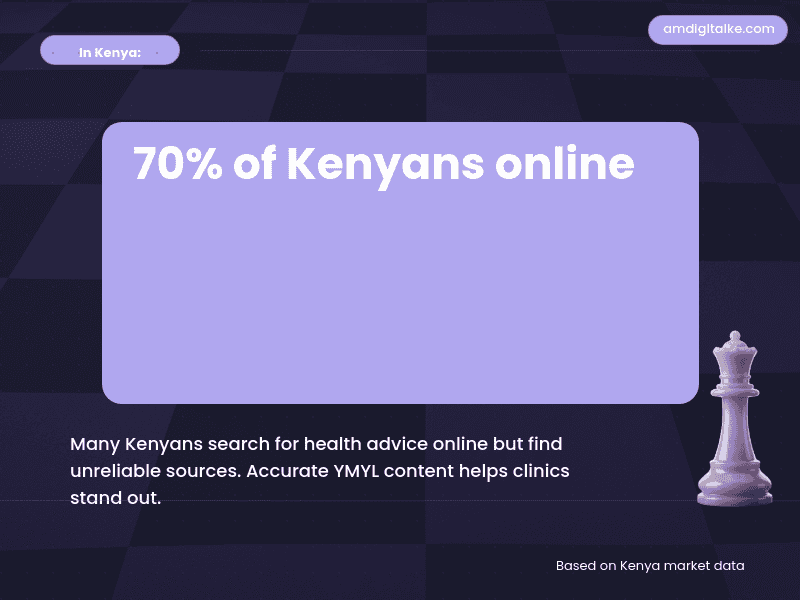
In Kenya, medical misinformation spreads rapidly through WhatsApp.
Google is particularly careful about which health content it ranks. A Nairobi resident searching “chest pain symptoms” needs accurate medical information, not wellness blog speculation. The same trust and relevance signals decide who ranks in other high-stakes searches too, as our hotel search rankings guide shows for the hospitality sector.
The E-A-T Framework for Healthcare Content
Expertise: Prove Your Medical Credentials
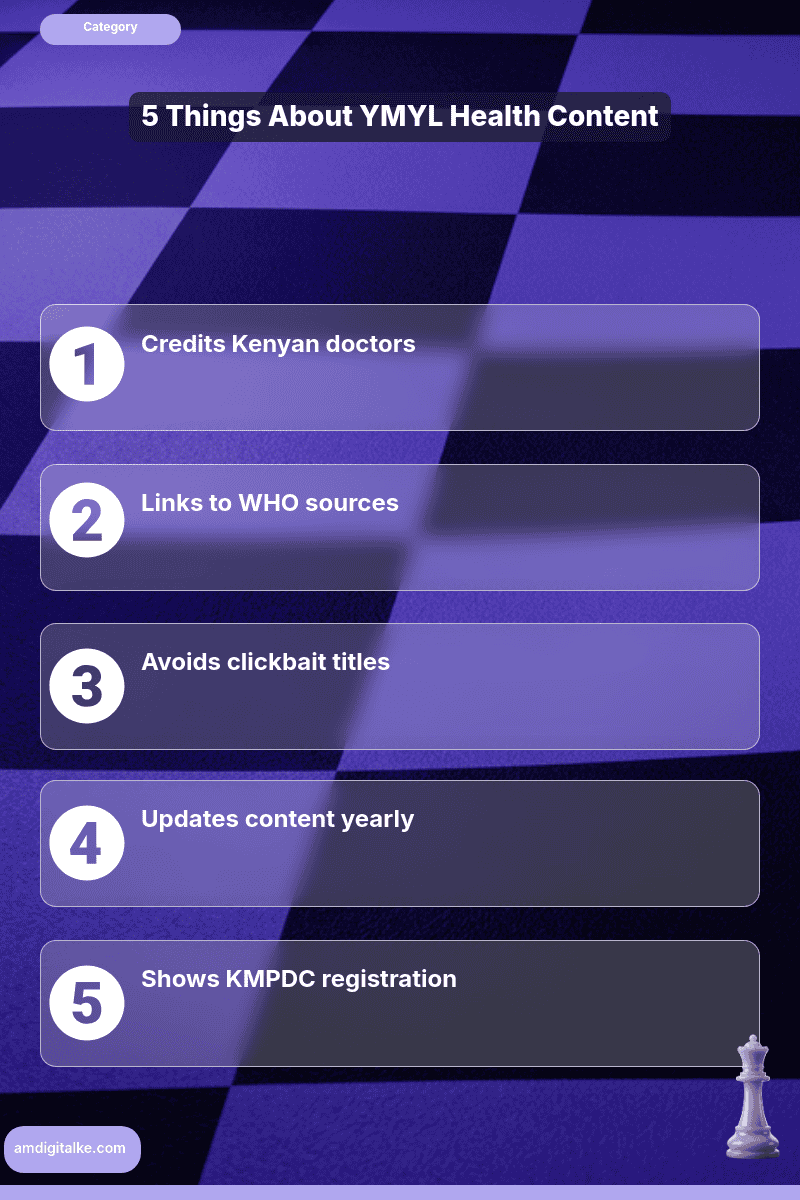
Every health article must clearly identify the medical professional behind it.
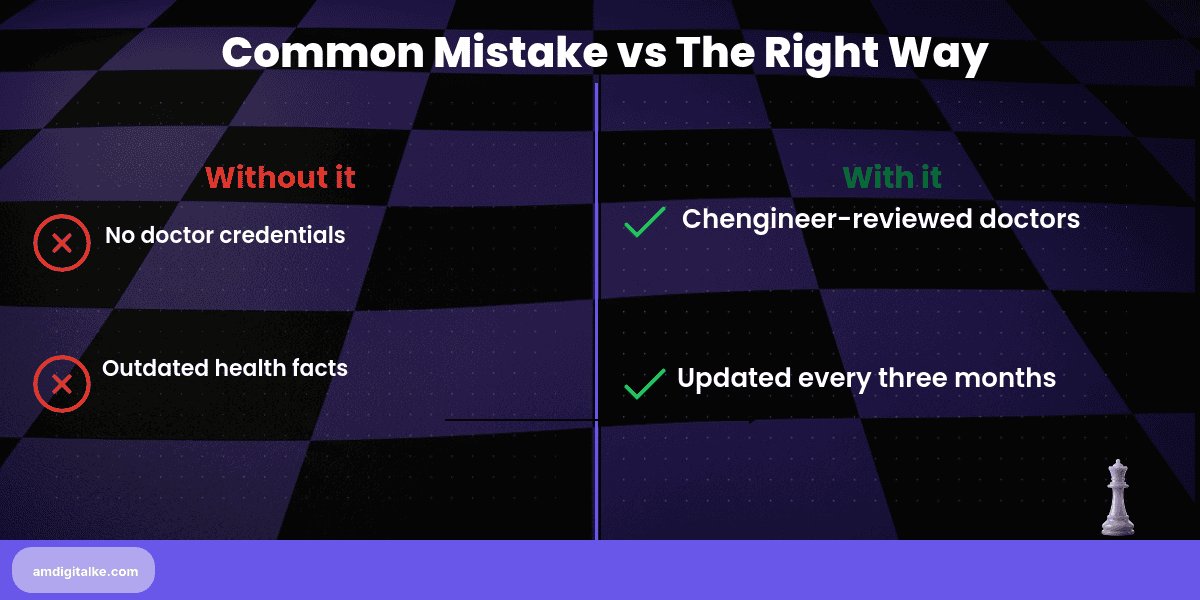
Don’t publish generic “Admin” bylines. Instead, use author bios with credentials: “Dr Jane Mwangi, MD, Board-Certified Cardiologist, Nairobi Hospital.”
If a content writer drafts the article, have a qualified doctor review it.
Add: “Medically Reviewed by Dr Peter Odhiambo, General Practitioner, Aga Khan University Hospital.”
Mention Kenyan credentials patients recognise.
University of Nairobi Medical School, Moi University, or international training all build trust.
Authoritativeness: Build Your Medical Reputation
Google evaluates your entire online presence.
Get backlinks from Business Daily health sections, The Standard wellness articles, or the Kenya Medical Association.
Display your clinic’s KMPDC registration, hospital accreditations, and quality certifications.
If your doctors have been interviewed by Citizen TV or quoted in Nation Health stories, showcase these prominently.
Trustworthiness: Demonstrate Transparency
Trust signals matter.
Display clear content dates: “Last Updated: November 2025.” Cite reputable sources like WHO, Kenya Ministry of Health, and medical journals.
Avoid absolute claims.
Instead of “This treatment cures diabetes,” write “This treatment can help manage Type 2 diabetes when combined with lifestyle changes.”
Be honest about limitations and when patients should seek emergency care.
What Hurts Your YMYL Ranking
Red flags Google watches for: unattributed medical advice, outdated information, clickbait tactics (“Cure diabetes in 7 days”), missing citations, and intrusive ads covering content.
Technical requirements: HTTPS security is non-negotiable.
Mobile optimisation matters since most Kenyan health searches happen on phones. Display clear contact information and maintain a professional website design.
A Kilimani clinic published diabetes management guides without doctor bylines or medical sources.
Google ranked them on page 5.
After adding endocrinologist author profiles, citing Kenya Ministry of Health diabetes guidelines, and including NHIF coverage information, they moved to position 3 within four months.
Based on AM Digital KE client data across Kenyan accounts, monthly website inquiries jumped from 12 to 89.
Your YMYL Content Checklist:
- ☐ Every health article has a named medical professional with displayed credentials and bio
- ☐ Content cites 3+ reputable sources (WHO, medical journals, Kenya Ministry of Health)
- ☐ Publication and last-updated dates are clearly visible
- ☐ Medical claims include appropriate qualifiers (“may help,” “studies suggest”)
- ☐ Content addresses Kenya-specific context (NHIF coverage, local medication availability)
- ☐ Clear disclaimer stating content doesn’t replace professional consultation
- ☐ The website has HTTPS security and loads quickly on mobile
Creating YMYL-compliant health content isn’t just about ranking better.
It’s about being a trustworthy healthcare resource for Kenyans making critical health decisions.
At AM Digital KE, we help Kenyan healthcare providers develop medical SEO strategies that balance Google’s quality standards with patient education.
Your expertise deserves to be found by patients who need it most.
Want your health content to rank and build trust? Explore our Healthcare SEO Services in Kenya and discover how we help medical practices create YMYL-compliant content that Google rewards and patients rely on.
Concerned your health content isn’t ranking? Get a free website quality review where we’ll assess your E-A-T signals, check for YMYL compliance issues, and show you credibility gaps preventing Google from trusting your expertise.
Have more SEO questions? Our SEO FAQs Kenya page answers the most common ones.
Frequently Asked Questions
What is YMYL content?
YMYL means ‘Your Money or Your Life.’ It’s content that can affect health or safety, like medical advice in Kenya.
Why does Google restrict health blogs?
To prevent misinformation, like fake remedies shared on Kenyan WhatsApp groups.
How do I make health content trusted?
Use Kenyan doctors’ credentials, cite WHO, and update content often.