Table of Contents
- Key Takeaways
- Why Medical Review Management Can’t Be Ignored
- Your Professional Response Framework
- Your Medical Review Management Checklist:
- Frequently Asked Questions
- Can I confirm a patient’s details in a review reply?
- How quickly should I respond to reviews?
- What if a Kenyan review seems unfair?
- Can I delete bad reviews?
TL;DR: Medical review management is key in Kenya as most patients check reviews before booking. Respond professionally to all feedback quickly.
Last Updated: March 2026
Key Takeaways
- Most Kenyans check reviews first
- HIPAA rules still apply online
- Respond within 24 hours always
- Public replies must stay general
- Negative reviews need private follow-up
Your clinic offers excellent care. Your doctors are qualified.
Your nurses are compassionate. But a single negative Google review sits at the top of your profile, and now potential patients in Nairobi are choosing the clinic down the street.
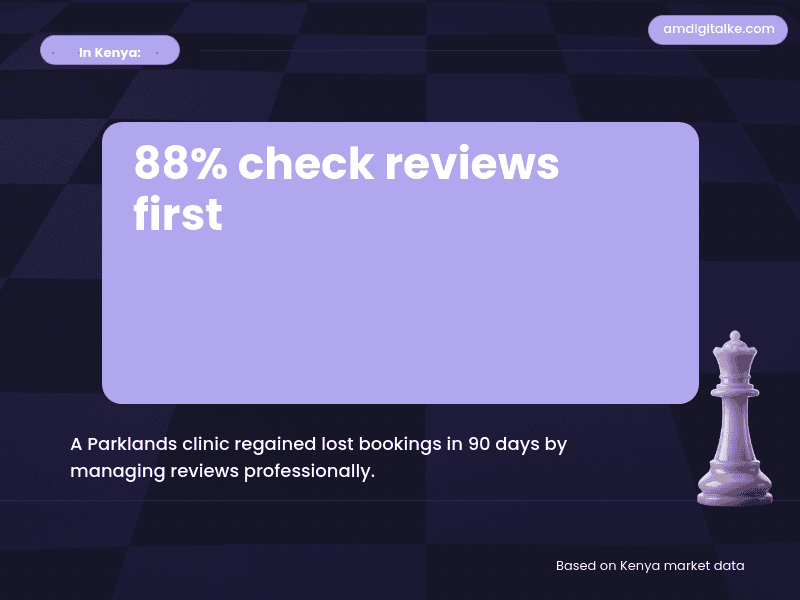
Here’s the uncomfortable truth. Most Kenyan patients read online reviews before booking a medical appointment.
How you respond to feedback matters more than the feedback itself.
Why Medical Review Management Can’t Be Ignored
In Kenya’s competitive healthcare landscape, your online reputation is your digital front desk. When someone in Kilimani searches “best paediatrician near me” or “dental clinic Westlands,” Google shows reviews prominently.
A clinic with 4.8 stars and thoughtful responses to every review will always outperform a 5-star clinic that ignores patient feedback.
But here’s what makes healthcare different. Patient confidentiality laws still apply online.
You can’t discuss specific treatments, share medical details, or confirm someone was your patient. This makes medical review management both critical and complex.
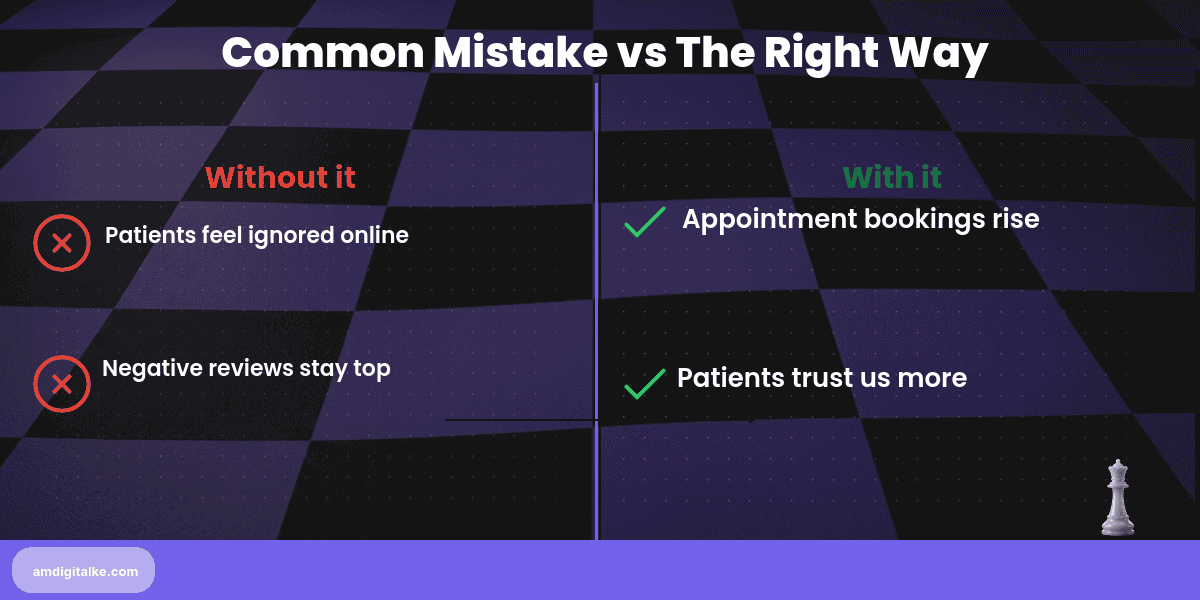
A Parklands dental clinic saw bookings drop after three negative reviews went unanswered for two months. When they implemented a systematic review management strategy with AM Digital KE, response rates improved.
New positive reviews increased, and bookings recovered within 90 days.
Your Professional Response Framework
1. Respond to Every Review Within 24 Hours
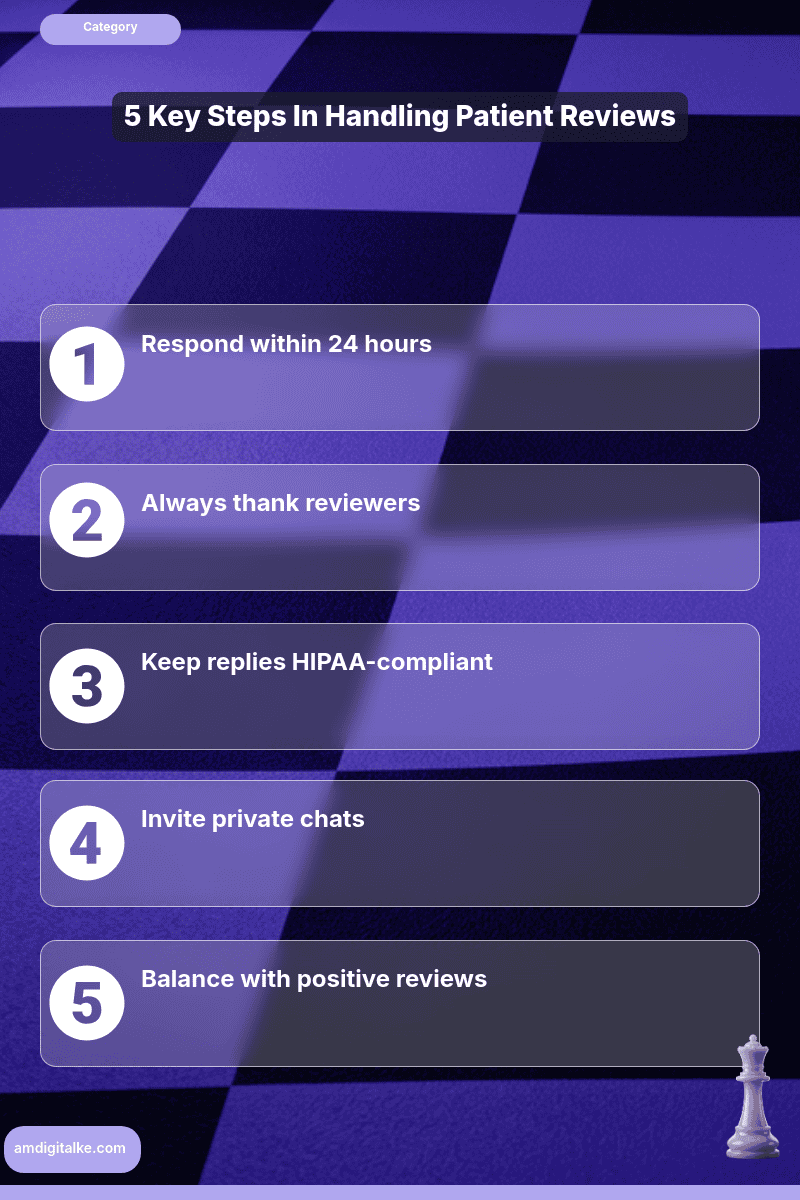
Speed signals that you care. Set up Google Business Profile notifications so you’re alerted immediately when reviews arrive.
Even a brief “Thank you for your feedback” within hours shows active management.
For Positive Reviews: Keep it personal but professional. Thank them specifically for what they mentioned.
Example: “Thank you for trusting us with your family’s dental care, Mary. We’re glad our Saturday appointments worked well for your schedule. Welcome to the [Clinic Name] family!”
2. Master the Art of the HIPAA-Compliant Response
Never confirm that someone was a patient. Never discuss their condition or treatment.
Never defend your medical decisions publicly.
Instead, use this template for negative reviews:
“Thank you for sharing your feedback. We take all patient concerns seriously and would appreciate the opportunity to discuss your experience privately. Please contact our patient relations team at [email/phone] so we can address this properly. – [Name, Title]”
This approach:
- Acknowledges their concern
- Shows willingness to resolve issues
- Moves the conversation offline (where you can verify identity and discuss details)
- Protects patient confidentiality
3. Address Common Complaints Systematically
Long Wait Times: “We apologise for the extended wait time during your visit. We’re currently reviewing our scheduling system to serve patients more efficiently.
Your time is valuable, and we’re working to improve this.”
Billing Disputes: “We understand billing concerns can be frustrating. Our accounts team is available to review any charges and explain our pricing structure in detail. Please call [number] to schedule a discussion.”
Staff Concerns: “Thank you for this feedback. We hold our team to high professional standards and take concerns about patient interactions seriously. Please contact our administration at [email] so we can address this appropriately.”
4. Generate More Positive Reviews (The Right Way)
You can’t pay for reviews or incentivise them. That violates Google’s policies and medical ethics.
But you can make it easier for satisfied patients to share their experience.
Ethical Strategies:
- Train front desk staff to verbally request reviews from satisfied patients at checkout
- Send post-appointment emails with a direct Google review link (not asking for positive reviews specifically)
- Display QR codes in waiting rooms linking to your Google Business Profile
- Feature your Google review link on email signatures and receipts
Script for Staff: “We’re glad we could help you today. If you have a moment, we’d appreciate your feedback on Google.
Your experience helps other patients know what to expect when choosing healthcare providers.”
5. Turn Negative Reviews Into Opportunities
Every negative review is a chance to demonstrate professionalism publicly. Future patients are watching how you handle criticism.
A Nairobi clinic received this review: “Waited 2 hours. Terrible service. Never coming back.”
Their public response: “We sincerely apologise for your wait time. We experienced an unexpected emergency that day, which delayed all appointments.
We understand your frustration and would like to make this right. Please contact our patient services manager at [email] so we can discuss how to improve your experience.”
Result: Three subsequent reviews mentioned how impressed they were with the clinic’s transparent communication and commitment to improvement.
Your Medical Review Management Checklist:
- ☐ Set up instant notifications for new Google reviews on all devices
- ☐ Create response templates that comply with patient confidentiality laws
- ☐ Assign review management to a specific staff member (with backup)
- ☐ Train your team on ethical ways to request patient feedback
- ☐ Add Google review link to post-appointment emails and receipts
- ☐ Monitor reviews weekly and track common complaints for operational improvements
- ☐ Respond to all reviews (positive and negative) within 24 hours
Pro Tip: Don’t just manage reviews. Learn from them.
If five patients mention long wait times, that’s operational data. If patients consistently praise a specific nurse, that’s a training opportunity for your whole team.
Medical review management isn’t about damage control. It’s about building trust in Kenya’s digital healthcare marketplace.
When potential patients see a clinic that responds professionally to feedback, addresses concerns transparently, and consistently receives positive reviews, they see a healthcare provider they can trust.
At AM Digital KE, we help Kenyan healthcare providers implement systematic review management strategies that protect patient confidentiality while building online reputations that attract more patients. Your clinical expertise deserves a digital presence that reflects the quality of care you provide.
Ready to turn patient feedback into your advantage? Check out our Healthcare SEO Services in Kenya and learn how we help medical practices build systematic review strategies that protect confidentiality while attracting new patients.
Worried about negative reviews hurting bookings? Request a free SEO analysis where we’ll evaluate your review response strategy, benchmark your ratings against nearby clinics, and create a compliance-friendly action plan to strengthen your profile.
Have more SEO questions? Our SEO FAQs Kenya page answers the most common ones.
Frequently Asked Questions
Can I confirm a patient’s details in a review reply?
No, Kenyan patient confidentiality laws prohibit it. Keep responses general and invite private discussions.
How quickly should I respond to reviews?
Aim for within 24 hours. Fast replies show you care and improve your clinic’s online reputation.
What if a Kenyan review seems unfair?
Thank them publicly, then invite private discussion. Never argue online. It could violate Kenyan healthcare privacy laws.
Can I delete bad reviews?
Only Google can remove reviews if they violate policies. Focus on making positive replies to balance ratings.