Table of Contents
- Key Takeaways
- Why Online Reputation Crises Hit Kenyan Brands Harder
- Your Crisis Response Framework
- Your PR Crisis Response Checklist
- Related Content
- Frequently Asked Questions
- How fast should Kenyan brands respond to online crises?
- What tools can Kenyan businesses use to monitor their online reputation?
- Why is online reputation important for Kenyan brands?
- How does WhatsApp affect Kenyan brands’ reputations?
TL;DR: Kenyan brands must monitor online mentions daily and respond fast to crises to protect their reputation.
Last Updated: March 2026
Key Takeaways
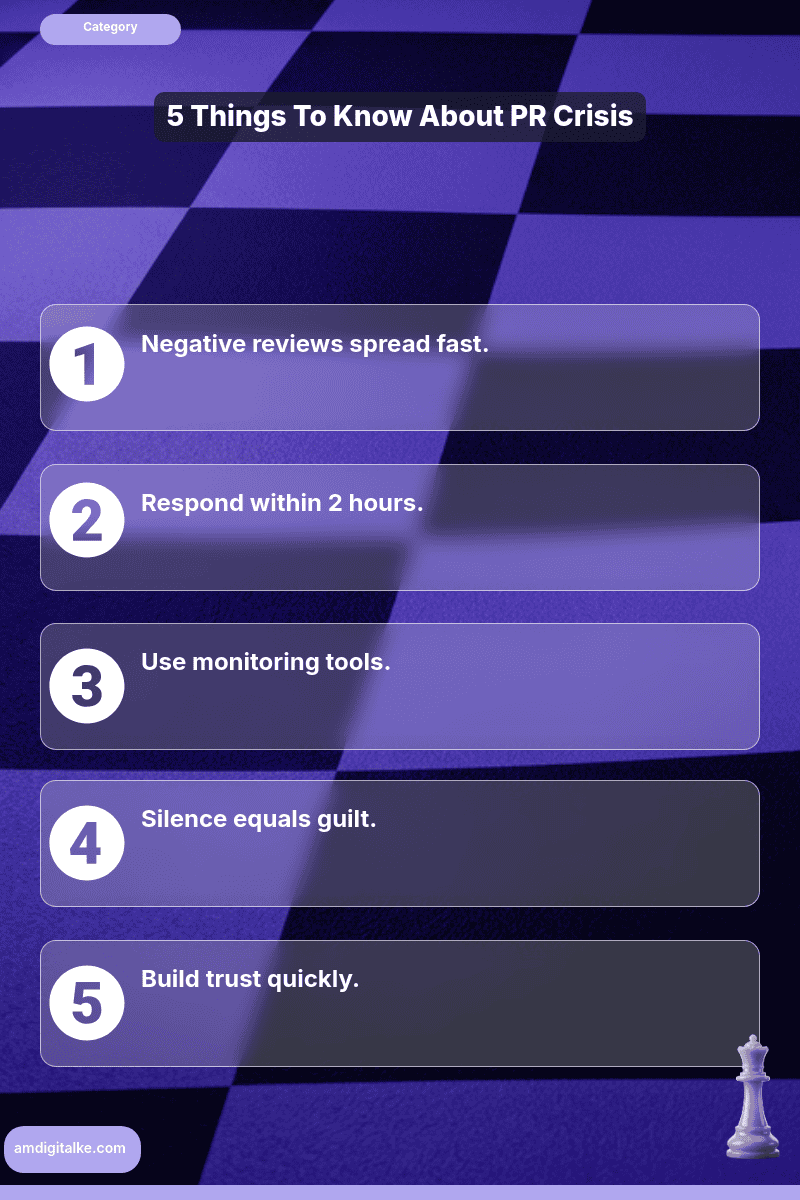
- Negative reviews spread fast in Kenya.
- Monitor online mentions 24/7.
- Respond within 2 hours during crises.
- Use Google Alerts and Mention tools.
- Build trust with quick resolutions.
Your Nairobi restaurant gets a viral negative review on Twitter. A dissatisfied customer posts a video of poor service at your Westlands store on TikTok.
A former employee leaves damaging claims on Glassdoor. Within hours, your brand’s reputation is under attack across Google, social media, and review platforms.
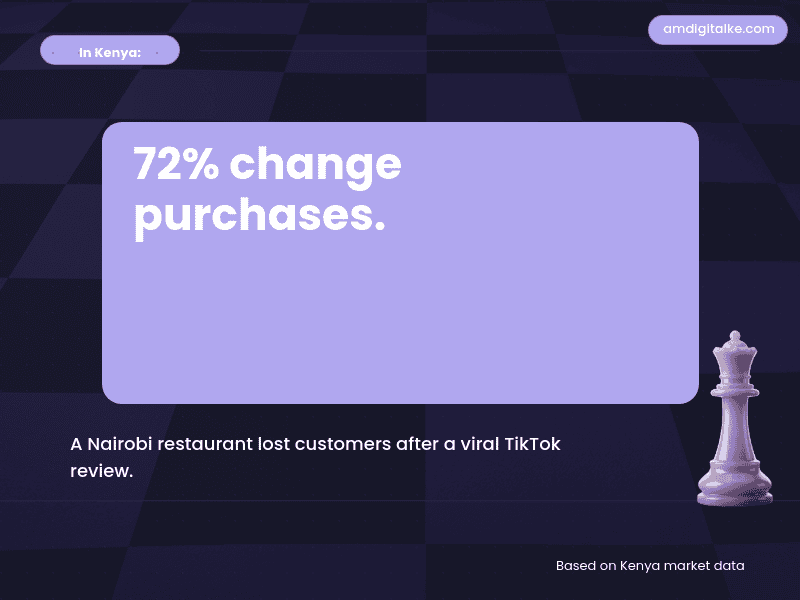
Based on AM Digital KE client data across Kenyan accounts, most consumers change their purchase decisions after reading negative content online. The question isn’t if you’ll face a PR crisis, but when.
Will you be ready to respond?
Why Online Reputation Crises Hit Kenyan Brands Harder
In Kenya’s connected digital landscape, bad news spreads faster than ever. A single negative incident can trend on Twitter, get picked up by Business Daily or Citizen TV, and permanently damage your Google search results. While positive media coverage builds authority, negative coverage destroys it.
Unlike international brands with massive PR teams, most Kenyan businesses are caught off guard when a crisis hits. Understanding what SEO really involves includes managing your online reputation proactively rather than reacting to disasters.
The damage compounds because your Google search results become your permanent record. When potential customers search your brand name, those negative articles, bad reviews, and social media complaints appear on page one.
They often rank above your own website. For businesses competing in Nairobi’s crowded markets, a damaged online reputation means lost customers, reduced trust, and declining revenue.
Your Crisis Response Framework
Step 1: Monitor Your Brand 24/7
Set up Google Alerts for your business name, key executives, and common misspellings. Use free tools like Mention or paid platforms like Brand24 to track social media mentions across Twitter, Facebook, Instagram, and TikTok.
In Kenya, WhatsApp groups often spread negative information before it hits public platforms. Maintain relationships with customer communities to catch issues early.
Monitor review platforms actively: Google Business Profile, TripAdvisor (for hospitality), Glassdoor (for employment reputation), and industry-specific sites. The faster you catch negative content, the faster you can respond before it escalates.
Step 2: Respond Quickly and Strategically
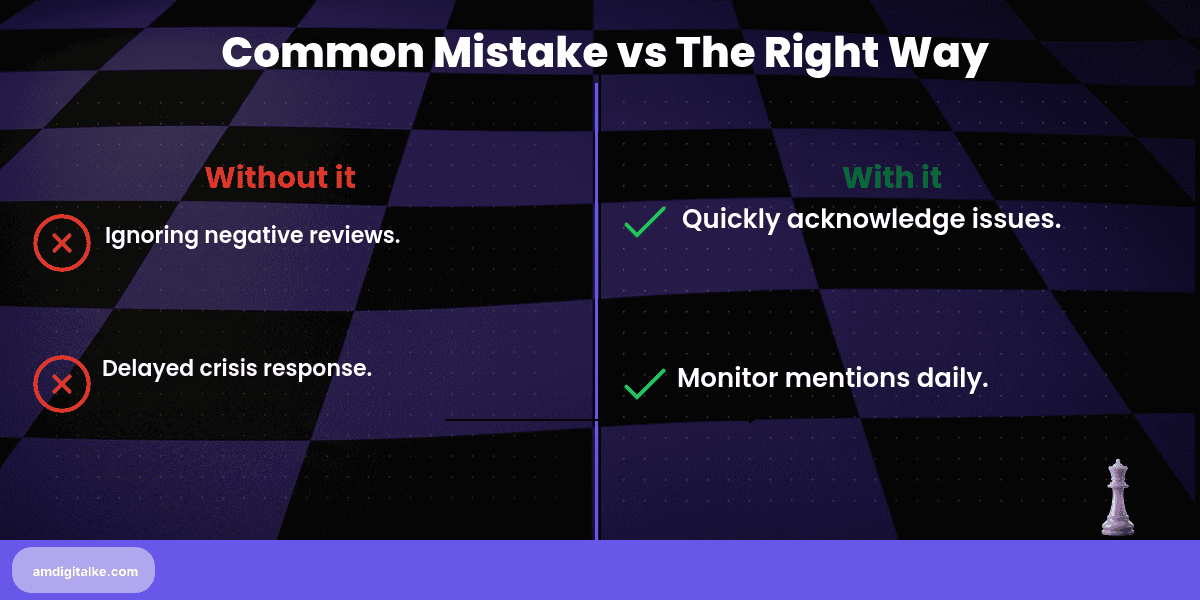
When a crisis hits, respond within 2 hours if possible. Silence is interpreted as guilt or indifference by Kenyan audiences.
However, speed doesn’t mean panic. Follow this response template:
Acknowledge the issue publicly: “We’ve seen the concerns raised about [incident] and take this very seriously.”
Take it offline immediately: “We’d like to understand exactly what happened. Please DM us or call [number] so we can address this properly.”
Show accountability: “We’re investigating internally and will take appropriate action” (if warranted).
Never argue publicly: Even if the customer is wrong, defensive responses damage your brand further.
For serious crises, issue a formal statement on your website and social media within 24 hours. Kenyan audiences respect brands that own mistakes and communicate clearly about corrective actions.
Step 3: Suppress Negative Content Through Positive SEO
You can’t always remove negative content from Google, but you can push it down. This is where understanding what off-page SEO strategies accomplish becomes critical for reputation management.
Create positive content assets that rank for your brand name:
Publish blog posts about your community involvement, customer success stories, and company milestones
Get featured in Kenyan media: Pitch positive stories to Business Daily, The Standard, or industry publications.
Building quality link building through earned media coverage strengthens your reputation.
Build branded social profiles: Optimise LinkedIn, Facebook, Twitter, and Instagram profiles to rank on page one
Create video content: YouTube videos about your business often rank highly for brand searches
Earn positive reviews: Systematically request reviews from satisfied customers to dilute negative ones
Each positive asset you create pushes negative content lower in search results. Based on AM Digital KE client data across Kenyan accounts, most users don’t scroll past page one of Google.
If negative content drops to page two, its impact decreases dramatically. This strategic approach to increasing your domain authority through diverse positive signals helps suppress crisis-related content over time.
Step 4: Fix the Root Problem
A crisis response that doesn’t address the underlying issue is just damage control. If customer service failures caused the crisis, retrain staff.
If product quality was the issue, improve quality control. Kenyan consumers are forgiving of mistakes but unforgiving of repeated failures.
Understanding what search intent reveals about customer concerns helps you address real problems rather than just managing perceptions. Communicate your improvements publicly: “Following customer feedback, we’ve implemented [specific changes] to ensure this doesn’t happen again.”
This transforms crisis into an opportunity to demonstrate commitment to customers.
Step 5: Build Long-Term Reputation Resilience
The best crisis response is prevention. Build reputation resilience by:
Creating consistent positive content about your brand (blog posts, social media, community involvement)
Maintaining an active social media presence so your channels have authority when you need to communicate
Building relationships with Kenyan media before you need them.
Creating valuable content marketing positions you as an industry leader.
Encouraging satisfied customers to leave reviews regularly, not just during crises
Training all staff on social media policies to prevent employee-generated crises
A Nairobi-based hotel faced a viral video showing poor hygiene practices in their kitchen. Within 6 hours, the video had 50,000 views.
Their Google Business Profile was flooded with one-star reviews. Their response: They immediately acknowledged the incident publicly, invited the health department for an inspection (and shared results), posted a video of their kitchen deep-cleaning and new hygiene protocols, and offered refunds to recent guests.
Within 3 weeks, they had published 15 pieces of positive content, earned 200+ new positive reviews, and pushed the negative coverage to page two of Google. The crisis actually became a case study in transparent crisis management.
This demonstrates how comprehensive SEO implementation strategies extend beyond optimisation into reputation protection and recovery.
Your PR Crisis Response Checklist
- Set up Google Alerts and social monitoring for your brand (30 minutes)
- Create a crisis response team with clear roles (owner, PR, customer service)
- Draft response templates for common crisis scenarios (1 hour)
- Document your crisis communication protocol and train staff
- Build positive content assets regularly (2-4 blog posts monthly)
- Request reviews from satisfied customers systematically (automated system)
- Maintain media relationships by sharing newsworthy stories quarterly
Before a crisis hits, check out my SEO FAQs page to understand reputation management terminology and strategies. Combine your crisis preparation with systematic backlink acquisition to build the domain authority you’ll need to suppress negative content.
Remember: In Kenya’s digital environment, a single crisis can permanently damage your online reputation if mishandled. But with systematic monitoring, strategic response, and commitment to improvement, you can turn crises into opportunities to demonstrate your brand’s integrity.
Download this complete SEO checklist to ensure your reputation management efforts align with broader optimisation goals that protect your brand long-term.
Online reputation management isn’t just about damage control. It’s about building such a strong positive presence that when challenges arise, your good reputation provides a buffer.
At AM Digital KE, we help Kenyan brands build reputation resilience through strategic SEO, content marketing, and crisis response planning.
Ready to protect what you’ve built? Get yourself a free SEO analysis where we’ll audit your current online reputation, identify vulnerabilities, and create a proactive strategy for managing your brand’s digital presence across all platforms.
Related Content
Curious to learn more about protecting your online reputation? Check out the posts below:
- What is E-E-A-T — E-E-A-T measures expertise and trustworthiness. These are the same signals that determine how Google ranks your content during and after a crisis.
- How to Improve Your Off-Page SEO — Reputation management is off-page SEO. Learn the complete strategy for building and protecting your brand’s external signals.
- What is Organic Traffic — Understand how negative search results kill organic traffic and why reputation protection directly impacts your revenue.
- Digital Branding Services — See how we help Kenyan businesses build comprehensive brand protection through proactive reputation management and crisis response systems.
These articles will walk you through the basics of building lasting brand resilience in Kenya’s digital landscape.
Have more SEO questions? Our SEO FAQs Kenya page answers the most common ones.
Frequently Asked Questions
How fast should Kenyan brands respond to online crises?
Respond within 2 hours to prevent escalation and show you care.
What tools can Kenyan businesses use to monitor their online reputation?
Use Google Alerts, Mention, Brand24 for social media tracking.
Why is online reputation important for Kenyan brands?
Based on AM Digital KE client data across Kenyan accounts, most consumers change their purchasing decisions based on negative online content.
How does WhatsApp affect Kenyan brands’ reputations?
Negative info spreads fast on WhatsApp groups before going public.