Table of Contents
- Key Takeaways
- Why Inventory Pages Are Your SEO Goldmine
- The Technical Foundation for Ranking Inventory
- Your Inventory Optimisation Toolkit
- Related Content
- Frequently Asked Questions
- How can descriptive URLs help my car listings?
- What should I include in car description titles?
- Why include prices in car listing titles?
- How detailed should car descriptions be?
TL;DR: Optimise vehicle inventory pages with clear URLs, unique titles, and detailed descriptions. These changes help Kenyan dealerships rank higher for car searches.
Last Updated: March 2026
Key Takeaways
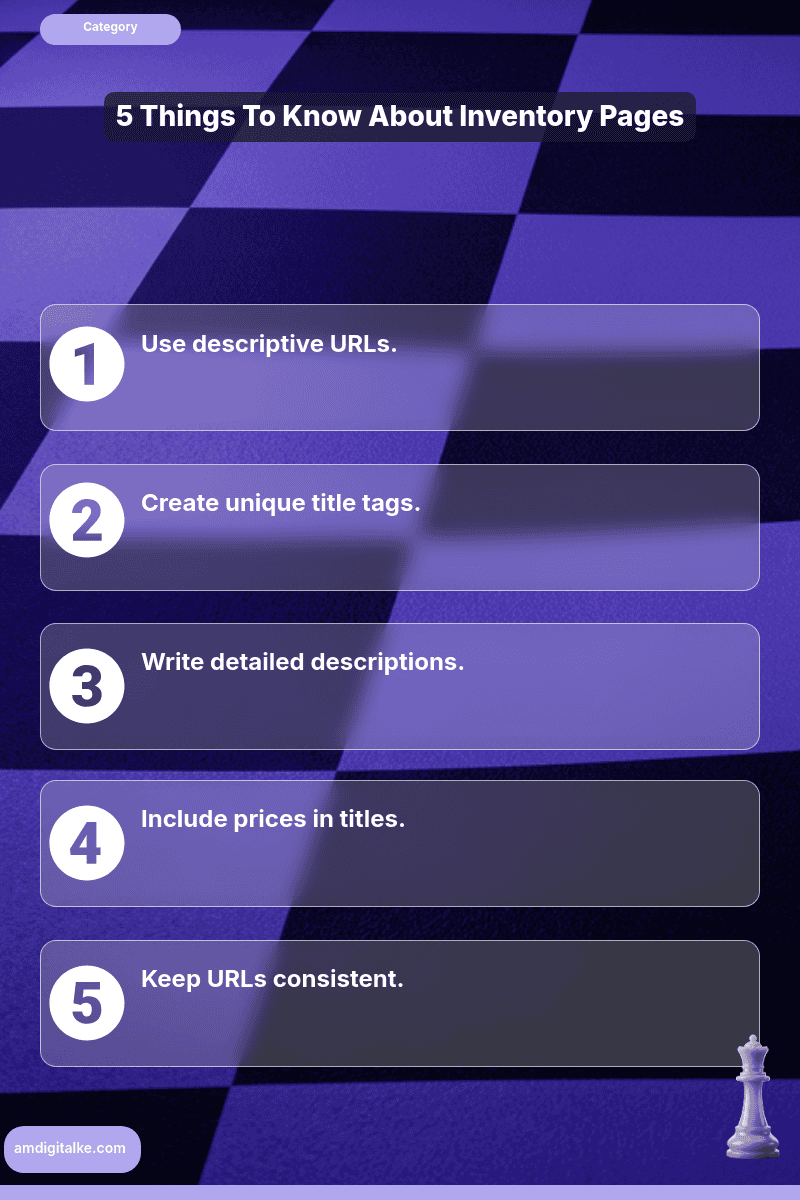
- Use descriptive URLs for car listings.
- Create unique, keyword-rich title tags.
- Write detailed vehicle descriptions.
- Include prices in titles.
- Keep URLs consistent after sales.
Your showroom in Westlands is packed with quality vehicles.
Your website has hundreds of car listings. But when someone searches “Toyota Premio for sale Nairobi” or “used SUV Kenya,” your inventory doesn’t show up.
Meanwhile, competitors with fewer cars are getting all the clicks.
The problem isn’t your stock. It’s how your inventory pages are structured for search engines.
Why Inventory Pages Are Your SEO Goldmine
Most Kenyan dealerships treat inventory pages as basic databases.
Just photos, specs, and prices. But here’s what they’re missing: Every single vehicle listing is an opportunity to rank for specific searches.
Someone searching “2019 Toyota Fielder automatic Nairobi” is ready to buy.
Understanding what technical SEO really means helps you structure inventory pages so Google understands and ranks them exactly when it matters.
The challenge? Inventory pages are tricky.
They change constantly as vehicles sell and new stock arrives. Dealers often use the same template for every car, missing opportunities to target specific buyer searches.
Poor technical structure means Google struggles to understand and rank these pages.
This leaves thousands of shillings in potential sales on the table.
The Technical Foundation for Ranking Inventory
1. URL Structure That Works
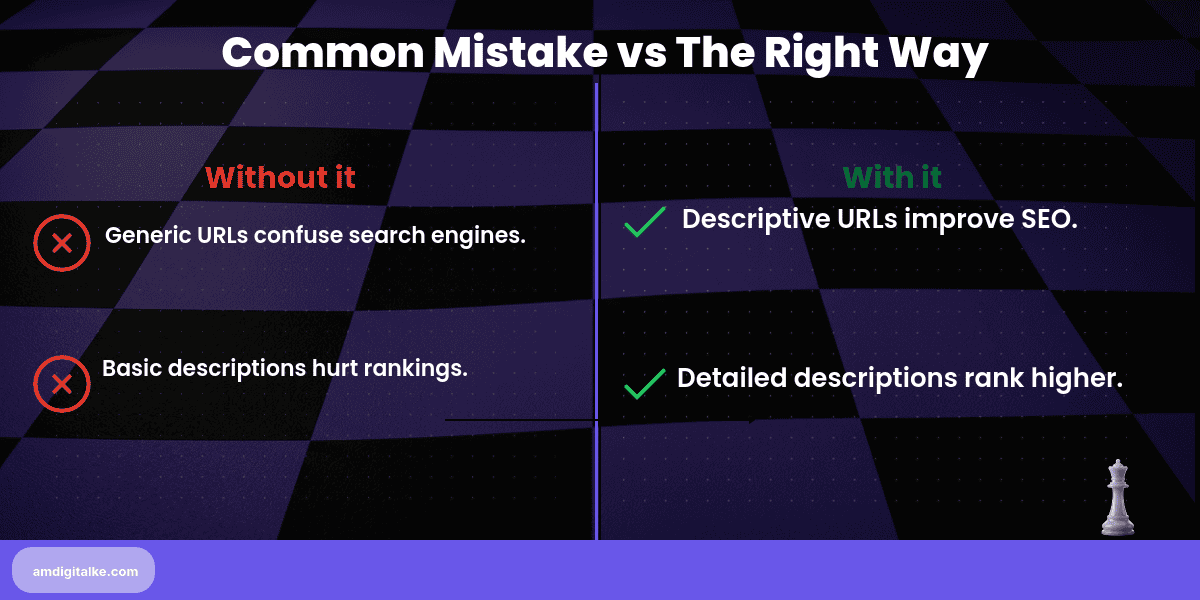
Your inventory URLs should be descriptive and permanent.
Instead of:
❌ yourdealership.co.ke/inventory?id=12345
Use this:
✅ yourdealership.co.ke/used-cars/toyota-fielder-2019-nairobi
Why it matters: Descriptive URLs help Google understand page content.
They also improve click-through rates when people see them in search results. Keep URLs consistent even after vehicles sell.
2. Unique, Keyword-Rich Title Tags
Generic title tags kill your rankings.
Don’t do this:
❌ Vehicle Details | ABC Motors
Instead, create specific titles:
✅ 2019 Toyota Fielder Hybrid - KSh 1.8M | ABC Motors Nairobi
Formula: [Year] [Make] [Model] [Key Feature] – [Price] | [Dealership] [Location]
Each listing should have a completely unique title targeting how Kenyan buyers actually search.
Include the price. Based on AM Digital KE client data across Kenyan accounts, this increases click-through rates significantly. Implementing proper keyword research strategically helps you identify which vehicle phrases buyers use most.
3. Comprehensive Vehicle Descriptions
This is where most Kenyan dealerships lose the game.
They list basic specs and stop. You need 200-300 words minimum that naturally include:
- Search phrases buyers use: “low mileage,” “accident-free,” “well maintained,” “negotiable price”
- Location signals: “available in Nairobi,” “viewings in Kilimani showroom”
- Financing options: “hire purchase available,” “deposit from KSh 200,000”
- Unique selling points: “single owner,” “full service history,” “recently imported”
Write conversationally while working with keywords.
Creating valuable content marketing strategies for each vehicle helps you rank for long-tail searches.
Example:
“This 2019 Toyota Fielder hybrid is perfect for Nairobi families seeking fuel efficiency without compromising space.
With just 45,000 km on the odometer, this well-maintained vehicle features an automatic transmission, keyless entry, and a reverse camera. Available at our Westlands showroom for KSh 1.8M, with flexible hire purchase terms from KSh 200,000 deposit.”
4. Schema Markup for Vehicles
Schema markup is structured data that tells Google exactly what information is on your page.
For vehicles, this can show:
- Price
- Mileage
- Year
- Condition (new/used)
- Availability
When properly implemented, your listings can appear with rich snippets in search results.
Those extra details make your result stand out. Implementing schema markup correctly requires technical know-how, but the visibility boost is worth it.
Still unsure about technical SEO fundamentals? Check out my SEO FAQs page for clear explanations of schema markup, URL structure, and more.
5. Image Optimisation
Your inventory photos are huge ranking opportunities.
For each vehicle:
- File names: Don’t use
IMG_1234.jpg. Use2019-toyota-fielder-hybrid-nairobi.jpg - Alt text: Describe what’s in the photo: “2019 Toyota Fielder hybrid exterior in silver, front angle”
- Compression: Large images slow down your site. Use tools like TinyPNG to reduce file sizes without losing quality
- Quantity: 10-15 high-quality photos per vehicle (exterior, interior, engine, mileage)
Google Images is a massive traffic source for car searches in Kenya.
Optimising your page speed properly includes compressing images so pages load fast on mobile data. Implementing page speed optimisation can dramatically increase conversions.
6. Internal Linking Strategy
Connect inventory pages strategically:
- Link to similar vehicles: “View other Toyota Fielder models”
- Link to category pages: “Browse all hybrid cars under KSh 2M”
- Link to financing pages: “Check our hire purchase calculator”
- Link from blog posts: “Best family cars in Kenya 2024” → relevant inventory
This helps Google understand your site structure.
It also keeps potential buyers exploring more options.
Handling Sold Vehicles Without Killing SEO
Here’s a critical mistake: Deleting inventory pages when vehicles sell creates 404 errors that hurt your SEO.
Instead:
Option 1: The “Sold” Badge
Keep the page live, but add a prominent “SOLD” badge.
Add text: “This 2019 Toyota Fielder has been sold, but we have similar vehicles available.” Link to comparable cars in stock.
Why it works: The page keeps its ranking power.
Buyers see you actually sell vehicles (social proof). You can capture their interest with alternatives.
Option 2: 301 Redirects
Redirect the sold vehicle’s URL to a similar car currently in stock or to a relevant category page (all Toyota Fielders, for example).
Implementing 301 redirects properly preserves your SEO equity.
Never: Let sold inventory pages return 404 errors or simply disappear.
Mobile Optimisation is Non-Negotiable
Based on AM Digital KE client data across Kenyan accounts, most car buyers browse inventory on their phones.
Your inventory pages must:
- Load in under 3 seconds on mobile data
- Have tap-friendly buttons for “Call” and “WhatsApp Inquiry”
- Display photos in mobile-optimised galleries
- Show key specs (price, year, mileage) above the fold
- Include click-to-call phone numbers
Test your inventory pages on a phone using Safaricom data, not your office WiFi.
That’s the real user experience.
A Westlands dealership restructured its inventory pages using these techniques.
Unique descriptions, schema markup, optimised images, and smart URL structure. Within 4 months:
- Organic search traffic to inventory increased by 156%
- “Used Toyota Nairobi” searches started landing on specific inventory pages
- Phone inquiries from search doubled
- Three inventory pages ranked in the top 5 for competitive “used [model] Kenya” terms
The investment? Systematic optimisation of their vehicle listings following technical SEO best practices.
Your Inventory Optimisation Toolkit
Free Tools:
- Screaming Frog (free version) – Audit all your inventory URLs and find issues
- Google Rich Results Test – Check if your schema markup is working
- PageSpeed Insights – Test mobile loading speed for inventory pages
- TinyPNG – Compress vehicle photos without quality loss
Worth The Investment:
- Ahrefs – Research what keywords Kenyan buyers use when searching for specific models
- Schema.org Vehicle Plugin – Automated schema markup for WordPress dealership sites
Kenya-Specific Considerations:
- Mobile-first everything – Most buyers browse on phones with limited data
- WhatsApp integration – Add WhatsApp inquiry buttons on every listing
- M-PESA payment mentions – Include flexible payment terms in descriptions
- Location specificity – Mention your showroom location and nearby landmarks
Ready to implement a complete technical strategy? Download this complete SEO checklist with every technical optimisation step for dealership inventory.
Optimising inventory pages isn’t a one-time task.
It’s a systematic process applied to every vehicle you list. Get the technical foundation right, and each new car you add becomes another opportunity to capture high-intent buyers searching Google.
At AM Digital KE, we help Kenyan car dealerships build inventory systems that rank.
From technical SEO implementation to ongoing content optimisation, we make sure your best vehicles get found by buyers ready to buy.
Want every vehicle listing working as a lead magnet?
Explore our Automotive SEO Services and discover how we optimise inventory pages to rank for specific make-model searches and capture buyers with purchase intent.
Not sure if your inventory structure is hurting rankings?
Request a free SEO audit where we’ll assess your URL architecture, evaluate vehicle page optimisation, and identify technical issues preventing your stock from showing up in buyer searches.
Related Content
Curious to learn more about technical optimisation for dealership websites? Check out the posts below
- How to Perfect Technical SEO – by Kenya’s SEO Authority — Master the complete technical foundation so every inventory page is structured properly for search engine visibility.
- How to Optimise Page Speed – A Kenyan Expert’s Playbook — Fast-loading inventory pages convert mobile buyers browsing on Safaricom data into showroom visits and sales.
- How to Implement 301 Redirects Without Losing Rankings — Handle sold vehicle pages properly to preserve SEO equity and guide buyers to similar available inventory.
- How to Use Schema Markup for Your Kenyan Business — Implement vehicle schema markup to display prices, mileage, and ratings directly in search results for higher click-through rates.
These articles will walk you through the basics of technical SEO for dealerships.
Have more SEO questions? Our SEO FAQs Kenya page answers the most common ones.
Frequently Asked Questions
How can descriptive URLs help my car listings?
Descriptive URLs help Google understand your content and improve click-through rates.
What should I include in car description titles?
Include year, make, model, key features, price, dealership name, and location.
Why include prices in car listing titles?
Prices in titles increase click-through rates in Kenyan searches.
How detailed should car descriptions be?
Car descriptions should be 200-300 words, detailing specs, features, and condition.