Table of Contents
- 📋 Key Takeaways
- What is Omnichannel Marketing?
- Why Does Omnichannel Marketing Matter for Kenyan Businesses?
- How Omnichannel Marketing Works
- Omnichannel Marketing Examples in Kenya
- Common Mistakes to Avoid
- ✅ Quick Action Checklist
- Ready to Improve Your Omnichannel?
- Frequently Asked Questions
- Additional Resources
- Take the Next Step
TL;DR: Omnichannel marketing means your customer can start on WhatsApp, continue on your website, finish in your shop, and feel like they’re dealing with one business the whole time. It requires the same message, pricing, and customer data across every platform. For Kenyan SMEs, this means connecting Facebook, email, WhatsApp, your website, and your physical location into one customer experience.
If you run a business in Nairobi, Mombasa, or anywhere in Kenya, you already know your customers are everywhere. They’re on WhatsApp at 6am, scrolling Facebook at lunch, checking your website from their phone at 3pm, and walking into your shop on Saturday morning.
The problem is most Kenyan businesses treat each of these places as a separate business. Your Facebook page doesn’t know what your customer bought on your website.
Your WhatsApp doesn’t sync with your email list. Your shop staff have no idea what that customer saw on Instagram.
That’s where omnichannel marketing comes in. It connects every customer touchpoint so your business feels like one unified thing, no matter where the customer meets you.
📋 Key Takeaways
- Omnichannel marketing means the same customer experience across WhatsApp, email, social media, website, and in-store.
- It requires shared customer data, consistent messaging, and unified pricing across all channels.
- Kenyan businesses that implement omnichannel see higher customer retention and repeat purchases.
- Start by mapping where your customers are, then connect those platforms with the same brand voice and offers.
- The biggest mistake is treating each channel as separate instead of parts of one customer journey.
What is Omnichannel Marketing?
Omnichannel marketing connects every way a customer reaches your business into one seamless experience. Whether they contact you via WhatsApp, visit your website, see your Instagram post, receive your email, or walk into your physical shop, they experience the same brand, the same offers, and the same level of service.
The key word is seamless. A customer should start their journey on one channel and continue on another without feeling like they’re dealing with a different business.
The Difference Between Multichannel and Omnichannel
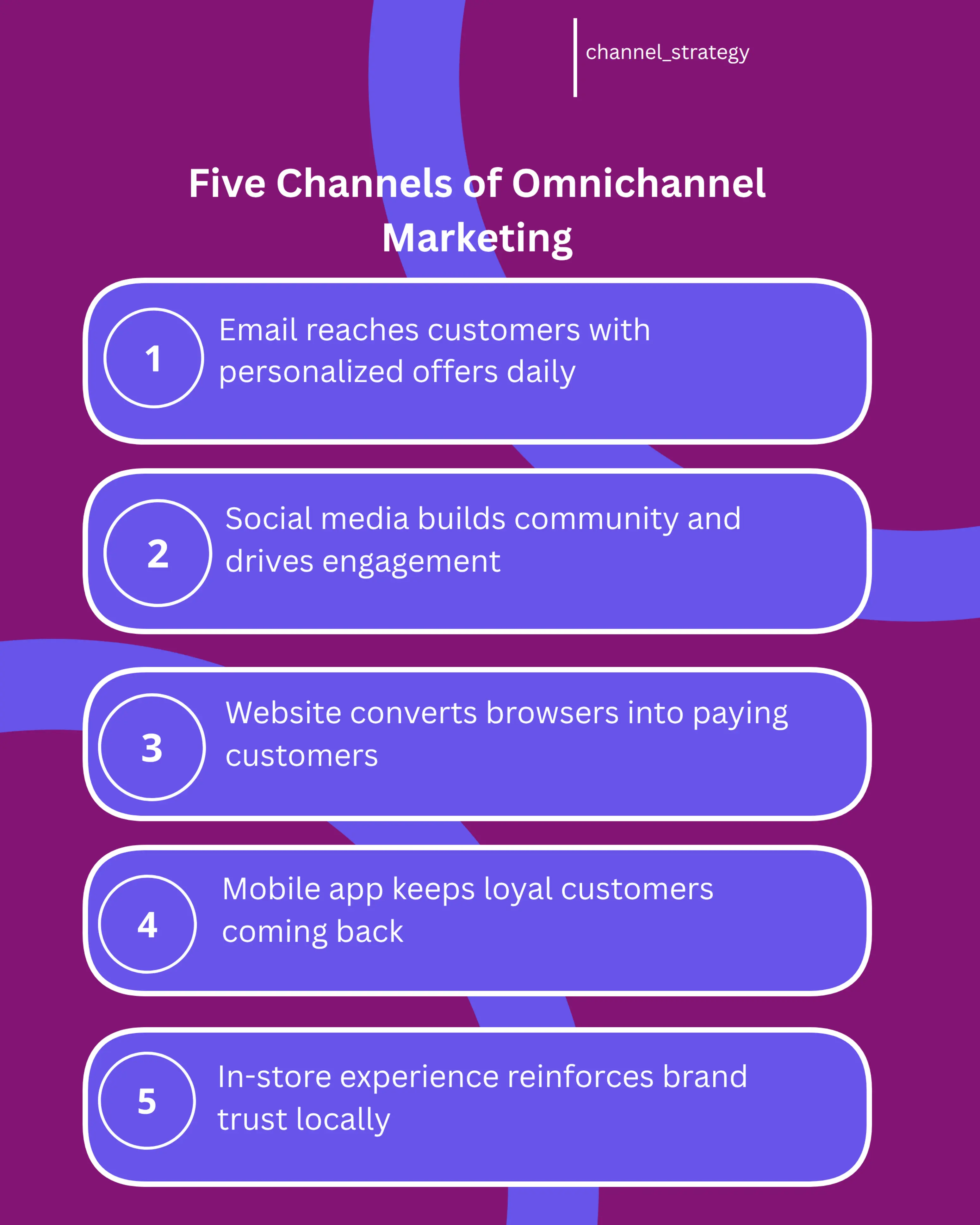
Many Kenyan business owners think they’re doing omnichannel when they’re actually doing multichannel. There’s a big difference. Multichannel means you’re present on multiple platforms like Facebook, WhatsApp, email, and a website, but each one operates independently.
A customer might see your product on Instagram, message you on WhatsApp, then visit your website and find a different price or different product description. That’s multichannel, and it creates confusion and lost sales.
Omnichannel Means Integration
Omnichannel means all those channels talk to each other. When a customer buys something on your website, your WhatsApp team knows about it.
When someone messages you on WhatsApp asking about a product, you can see their full purchase history. This kind of connection is often powered by marketing automation kenya tools running in the background.
When you post a promotion on Facebook, that same promotion appears in your email, on your website, and your shop staff know about it. They can mention it to walk-in customers because everything is connected.
Why Does Omnichannel Marketing Matter for Kenyan Businesses?
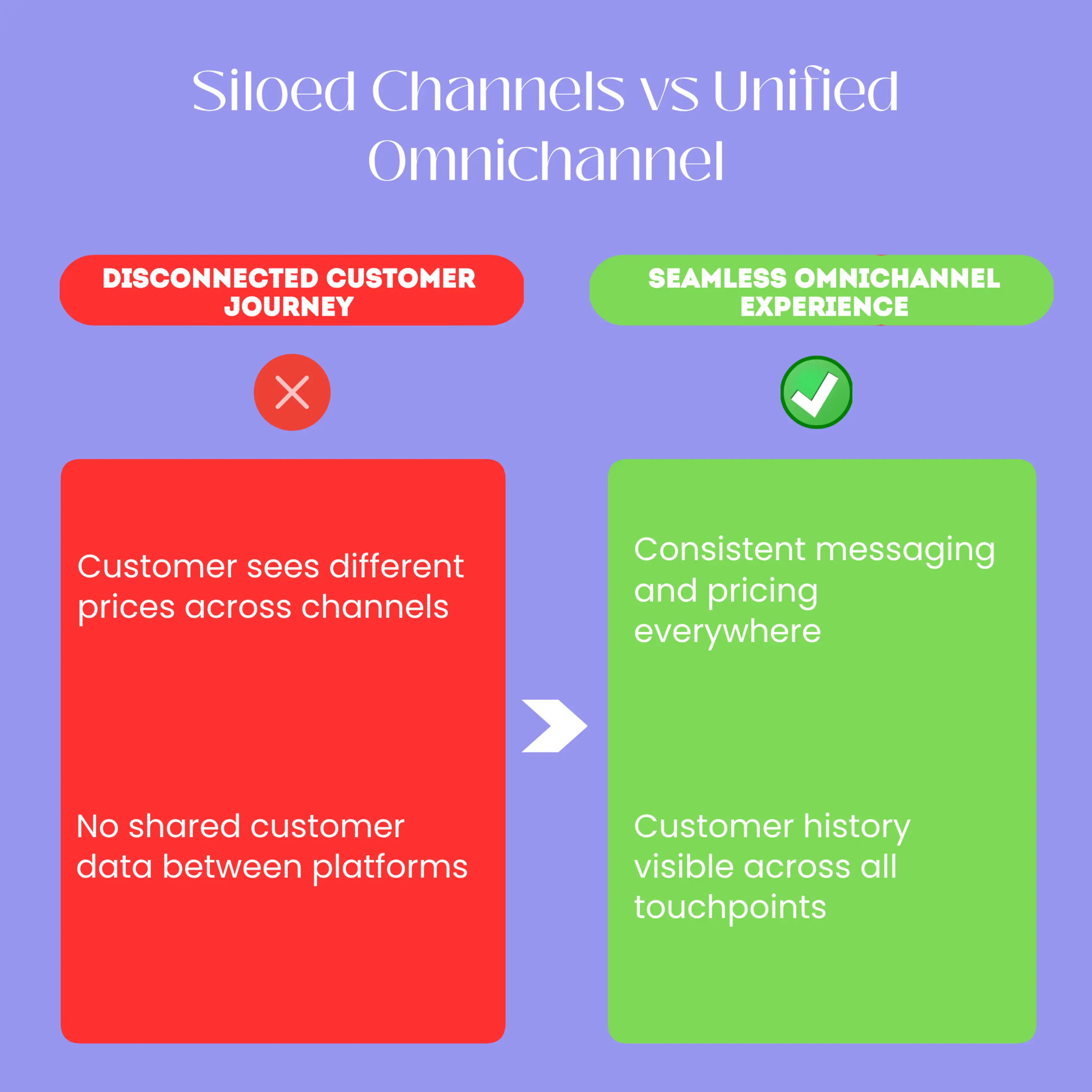
Kenya’s market is growing fast, but it’s also fragmented. Your customers are spread across multiple platforms, and they expect you to meet them everywhere.
If you don’t meet them there, they’ll find a competitor who does. Omnichannel isn’t a luxury for big brands anymore. It’s becoming table stakes for any Kenyan business that wants to compete.
Customer Expectations Have Changed
A few years ago, customers were happy if you had a Facebook page. Now they expect consistency across every platform.
They expect the same product, the same price, and the same brand voice whether they’re on WhatsApp, your website, or in your physical shop. When expectations aren’t met, they leave. A customer who has a poor experience across channels is 89% more likely to switch to a competitor.
Higher Customer Retention and Lifetime Value
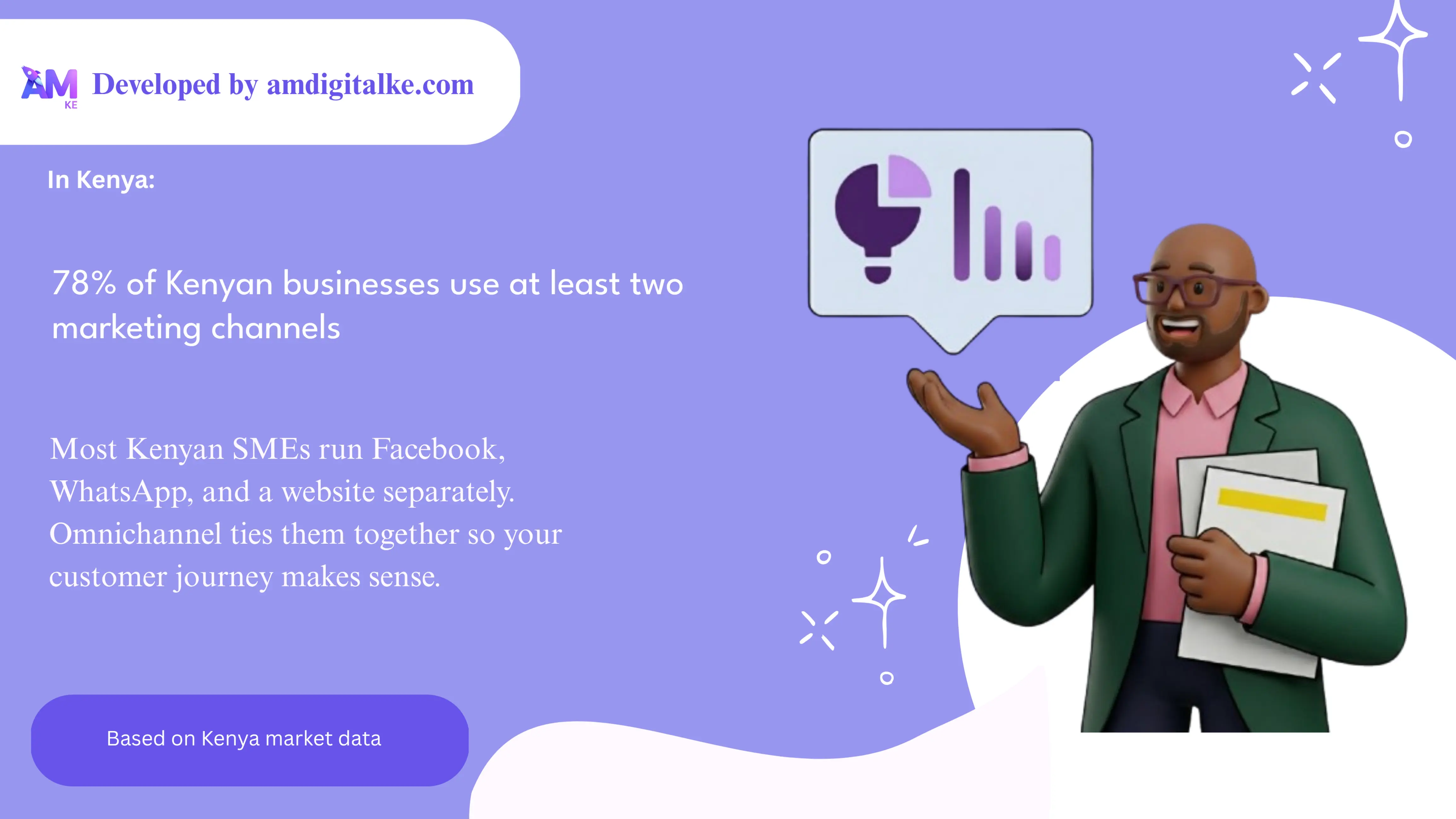
When customers have a smooth experience across channels, they stay longer and spend more. They don’t have to start over on a new platform or re-explain their needs.
They feel known and valued. Based on AM Digital KE client data across Kenyan accounts, businesses that implement omnichannel see an average 30% increase in repeat purchases within the first six months.
Better Data and Smarter Decisions
When all your channels are connected, you see the full picture of your customer. You know what they bought, when they bought it, what they looked at but didn’t buy, and how they prefer to communicate with you.
This data lets you make smarter marketing decisions. You can send the right offer to the right person at the right time, instead of blasting the same message to everyone.
Competitive Advantage in the Kenyan Market
Most Kenyan SMEs are still running siloed channels. They’re on Facebook and WhatsApp, but they’re not connected.
When you implement omnichannel, you immediately stand out. Your customer journey gets smoother, your follow-up gets faster, and your offers get more relevant. Building trust this way often ties back to user generated content reviews and qas that boost rankings across your channels, and choosing the right partner matters too, as shown in this artly vs am digital ke comparison. These small advantages compound into real revenue growth.
How Omnichannel Marketing Works
Omnichannel marketing works by connecting three things: your channels, your customer data, and your messaging. Let’s break each one down.
Channel Integration
First, you need to know where your customers are. Make sure you’re present on those channels.
For most Kenyan businesses, that means WhatsApp, Facebook, email, a website, and possibly an in-store location. Solid content marketing services kenya businesses use often start with mapping these touchpoints.
But being present isn’t enough. These channels need to be connected so information flows between them.
When a customer contacts you on WhatsApp, that conversation should be visible to your email team. When they buy on your website, your social media team should know.
Unified Customer Data
The backbone of omnichannel is a single view of the customer. Every interaction goes into one customer record, whether it’s a WhatsApp message, an email click, a website purchase, or a shop visit.
This way, you’re not treating the same customer as five different people across five different platforms. You’re treating them as one person with a complete history.
Consistent Messaging and Branding
Your brand voice, visual identity, and value proposition should stay the same everywhere. If you’re positioning yourself as a luxury brand on Instagram, you can’t be a discount brand on WhatsApp.
Consistency builds trust. Inconsistency creates confusion and kills sales.
Synchronized Pricing and Offers
Nothing kills an omnichannel strategy faster than different prices on different channels. If your product costs 5,000 KES on your website but 4,500 KES on WhatsApp, customers will notice and get angry.
All your channels should show the same prices and the same promotions. If you’re running a sale, it runs everywhere at the same time.
Omnichannel Marketing Examples in Kenya
Theory is one thing. Here’s how omnichannel works in practice for Kenyan businesses.
Example 1: A Clothing Boutique in Nairobi
Sarah runs a clothing boutique in Westlands. She has an Instagram account, a WhatsApp number, an email list, and a physical shop.
Most of her customers are young professionals who discover her on Instagram. Before omnichannel, her process was disconnected.
A customer would see a dress on Instagram and message Sarah on WhatsApp asking about size and price. Sarah would send a photo and price quote via WhatsApp.
The customer would visit the shop to try it on, buy it, and leave. Three days later, Sarah would email a generic newsletter to her whole list.
Now with omnichannel, the customer sees the dress on Instagram with a direct link to the product page on Sarah’s website. The website shows the same photo, price, and size information.
When the customer messages on WhatsApp, Sarah’s system shows her full history. It shows what they’ve looked at, what they’ve bought, and their size preferences.
Sarah can offer a personalized discount based on their purchase history. After the sale, the customer gets a follow-up email with care instructions and a discount code for their next purchase.
When the customer walks into the shop next month, the staff recognize her. They recommend items based on her previous purchases.
Example 2: A Pharmacy Chain in Mombasa
A pharmacy chain in Mombasa has five locations and wants to reach customers across the city. They have a website, a WhatsApp business account, Facebook, and physical stores.
With omnichannel, a customer can search for a medicine on the website and see which store has it in stock. They reserve it via WhatsApp and pick it up the same day.
The store staff can see the reservation and have it ready. If the customer needs a refill, they get an email reminder with a loyalty discount code. Businesses mapping this out can follow how to use marketing channels template kenya guidance to plan which channel handles what.
This creates a smooth experience that keeps customers coming back instead of going to a competitor.
Example 3: A Digital Marketing Agency in Kampala (Regional Example)
This is a regional example, but many Kenyan agencies follow the same model. A prospect discovers the agency on LinkedIn and gets retargeted on Facebook.
They receive an email with a case study, book a consultation via WhatsApp, and attend a webinar on Zoom. Some agencies also optimise their blog content to appear in featured snippets so prospects find them earlier in the search.
Every touchpoint reinforces the same message: we help businesses grow. By the time they’re ready to buy, they’ve had a consistent experience across five different channels.
Common Mistakes to Avoid
Most Kenyan businesses fail at omnichannel because they make the same mistakes. Here’s what to avoid.
Mistake 1: Treating Each Channel as a Separate Business
The biggest mistake is running Facebook, WhatsApp, email, and your website as four separate businesses. You post different things on each one, use different brand voices, and offer different prices.
This doesn’t work. Your customer is one person. Treat them like one person across all channels.
Mistake 2: Not Tracking Customer Data Across Channels
If you don’t know what your customers have done across all your platforms, you can’t deliver omnichannel. You need a system that connects your data. This means website visits, email opens, WhatsApp messages, and shop purchases all in one place.
Without this, you’re flying blind. You send the same generic message to everyone instead of personalized messages to the right people.
Mistake 3: Inconsistent Messaging and Branding
If your Instagram looks like a luxury brand, your WhatsApp sounds like a discount seller, and your email reads like a corporate bank, you create confusion. Your brand voice should be recognizable across every channel.
This doesn’t mean every message is identical. It means every message sounds like it comes from the same business with the same values.
Mistake 4: Ignoring the In-Store Experience
Many Kenyan businesses focus on digital channels and forget their physical shop. But if you have a shop in Nairobi, Mombasa, or Kisumu, it’s part of your omnichannel too.
Your shop staff should know about online promotions. They should be able to look up a customer’s purchase history. The in-store experience should feel like a continuation of the online experience, not a separate thing.
✅ Quick Action Checklist
- ☐ Map all the channels where your customers currently reach you (WhatsApp, Facebook, email, website, shop, etc.)
- ☐ Audit each channel for consistency in branding, messaging, and pricing
- ☐ Identify which channels are not connected and create a plan to integrate them
- ☐ Set up a simple customer database or CRM that tracks interactions across all channels
- ☐ Create a brand voice guide so every team member sounds like the same business
- ☐ Test your omnichannel by going through your own customer journey on each channel
- ☐ Train your team on the omnichannel approach so everyone understands the strategy
- ☐ Start measuring customer retention and repeat purchase rates to track your progress
Ready to Improve Your Omnichannel?
Omnichannel marketing isn’t complicated. It’s about making sure your customer feels like they’re dealing with one business, no matter where they meet you.
Start by auditing your current channels. Ask where your customers are and whether they get the same experience everywhere.
Then pick one thing to fix first. Maybe it’s connecting your WhatsApp to your email list, or making sure prices match everywhere, or training your team on your brand voice. If you’re still deciding where to focus, revisit what is a marketing channel and start from your strongest one.
Frequently Asked Questions
What’s the difference between omnichannel and multichannel?
Multichannel means you’re on multiple platforms but they operate separately. Omnichannel means all those platforms are connected so customers have one seamless experience. A customer can start on one channel and continue on another without confusion.
Do I need to use expensive software to implement omnichannel?
Not necessarily. You can start with simple tools like Zapier to connect your platforms, a basic CRM to track customers, and a shared spreadsheet for pricing and promotions.
As you grow, invest in more sophisticated tools. Our how to use marketing channels template kenya guide can help you plan this before you spend on software.
How long does it take to implement omnichannel?
It depends on your complexity. A simple business with one shop and three digital channels might implement it in 2-3 months.
A larger business with multiple locations and more channels might take 6-12 months. Start small and iterate.
Will omnichannel increase my marketing costs?
Not significantly. Omnichannel is more about strategy and organization than spending more money.
You might spend a bit on tools and training. But you’ll save money by being more efficient and targeting better.
What’s the first step for a Kenyan SME that wants to start with omnichannel?
Map where your customers are and audit each channel for consistency. If your business handles sensitive information, like health or financial services, check ymyl content writing health information google trusts before you scale your messaging across channels.
Then pick one integration project, like connecting WhatsApp to your email list, and complete it. Build from there.
Additional Resources
- What is Search Engine Marketing – Search is one channel in your omnichannel mix, so learn how to run it properly before you plug it into the bigger strategy.
- Digital Marketing Agency in Kenya – Running omnichannel across multiple platforms takes hands and hours, see what a Kenyan agency actually handles for you.
- How to Choose the Right Marketing Channels for Your Business – Before you connect channels into one omnichannel experience, you need to pick the right ones for your Kenyan audience first.
- SEO Vs Google Ads: Which One Should A Kenyan Business Choose In 2026? – Two of your key omnichannel touchpoints compared head to head, so you know where to put your budget.
- Tourism SEO Kenya – How to Attract International Visitors – See omnichannel thinking applied to a real Kenyan sector, where tourists move across search, social and booking sites before they buy.
- The Review Velocity Strategy-Outranking Competitors Fast – Reviews shape how customers experience your brand across every channel, learn how to control that narrative fast.
Take the Next Step
Omnichannel marketing is how modern businesses compete in Kenya today. If you’re ready to connect your channels and create a seamless customer experience, we can help.
Start with our free marketing channels template kenya businesses use to map every touchpoint. Then download our free guide to Building a Unified Channel Strategy for Your Kenyan Business.
It shows you how to audit your channels, spot gaps, and build your omnichannel roadmap. Many Kenyan brands now pair this with whatsapp business automation answering customer questions 24 7 to keep every conversation connected.
Not sure which agency fits your goals? Read our honest comparison of savage digital vs am digital ke before you choose.