Table of Contents
TL;DR: A CRM (Customer Relationship Management) is software that stores all your customer information in one place, tracks every sale and interaction, and automates follow-ups so nothing falls through the cracks. For Kenyan businesses, a CRM means you stop losing customers to poor organization, your sales team closes deals faster, and you can forecast revenue with confidence. The right CRM saves time, reduces manual data entry, and directly increases the money your business makes.
📋 Key Takeaways
- A CRM is a central database where you store customer names, contact details, purchase history, and every interaction your team has had with them.
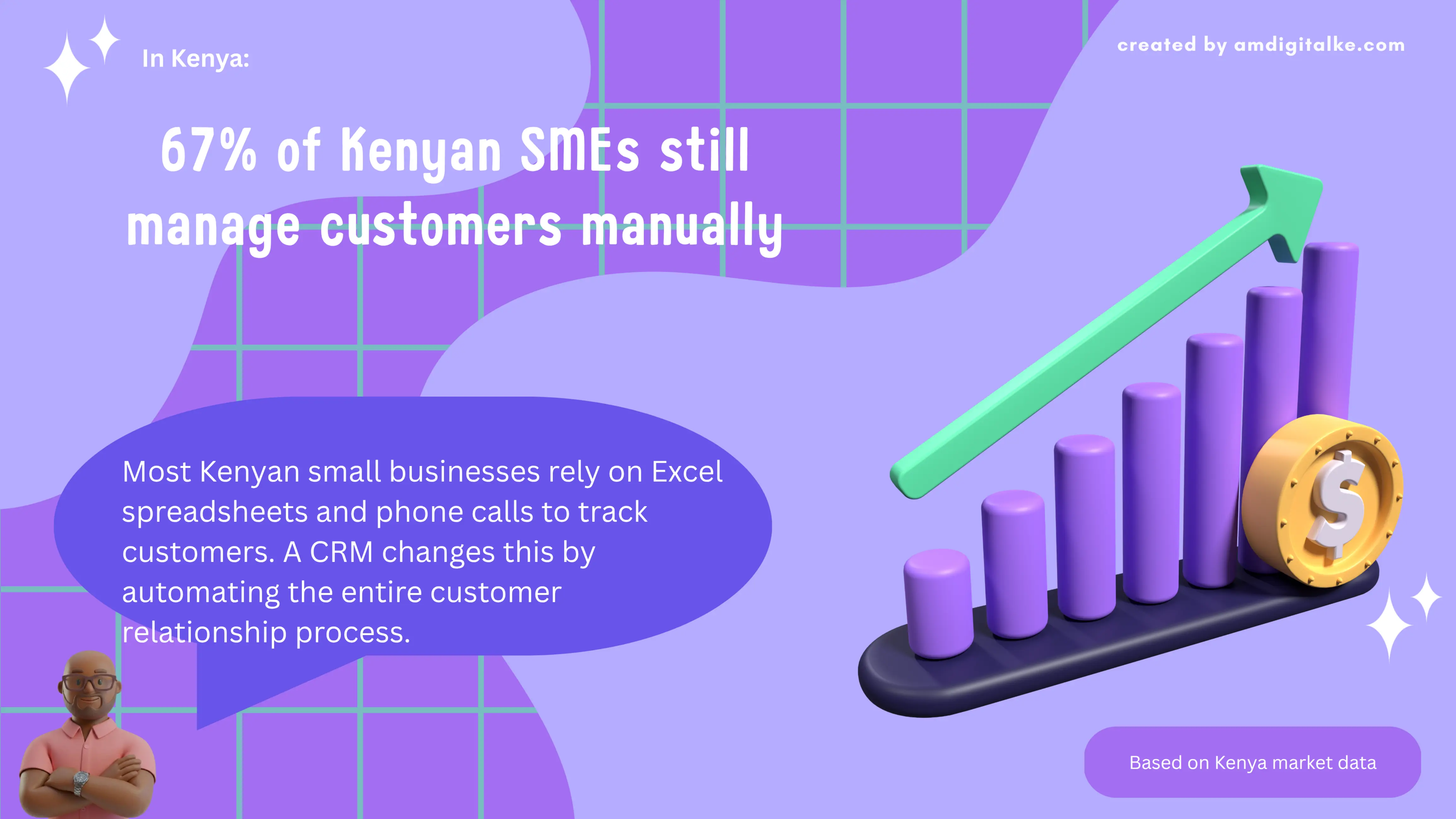
- Most Kenyan SMEs manage customers using Excel spreadsheets or scattered emails, which costs them time, money, and lost sales opportunities.
- A CRM automates follow-ups, tracks your sales pipeline in real time, and helps your team work together without duplicating effort.
- The best CRM for your business depends on your team size, budget, and whether you need features like invoicing or inventory integration.
- Implementing a CRM requires planning, staff training, and clean data entry upfront, but the payoff is faster sales cycles and higher customer retention.
What Is a CRM?
A CRM is software that acts as a central hub for all your customer information and business relationships. It replaces the phone contacts, notebooks, and scattered spreadsheets most businesses use to track customers.
A CRM brings everything into one organized database. Your entire team can access it at any time.
Think of it like this: if your business is a matatu route, the CRM is the logbook. It tracks every passenger (customer), where they are going (their needs), how much they paid (transaction history), and whether they are a regular or one-time rider.
Without a logbook, the conductor loses money. Passengers get confused about pricing and routes.
The Core Function of a CRM
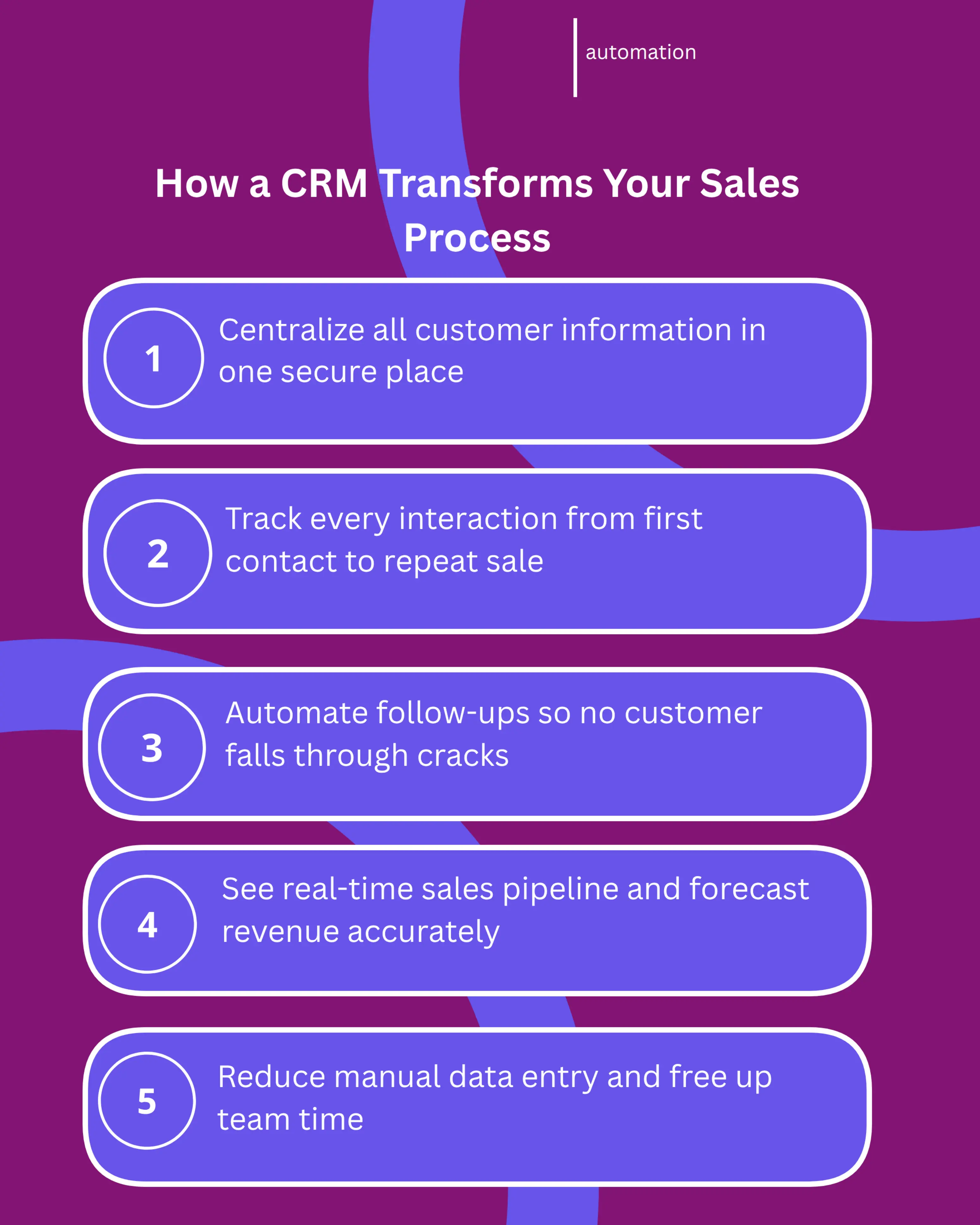
A CRM stores three types of information about every customer. First, it holds their basic contact details: name, phone number, email, business name, and physical address.
Second, it records their transaction history. This includes what they bought, when they bought it, how much they spent, and whether they paid on time.
Third, it logs every interaction your team has had with them. This covers phone calls, emails, meetings, support tickets, and follow-up dates.
What a CRM Is Not
A CRM is not an accounting system, though it can talk to one. It is not an email tool, though it can send and track emails.
It is not a project management app, though it can manage sales projects. A CRM answers one question: what do you need to know about this customer to build a stronger relationship and close more sales?
Why Does a CRM Matter for Kenyan Businesses?
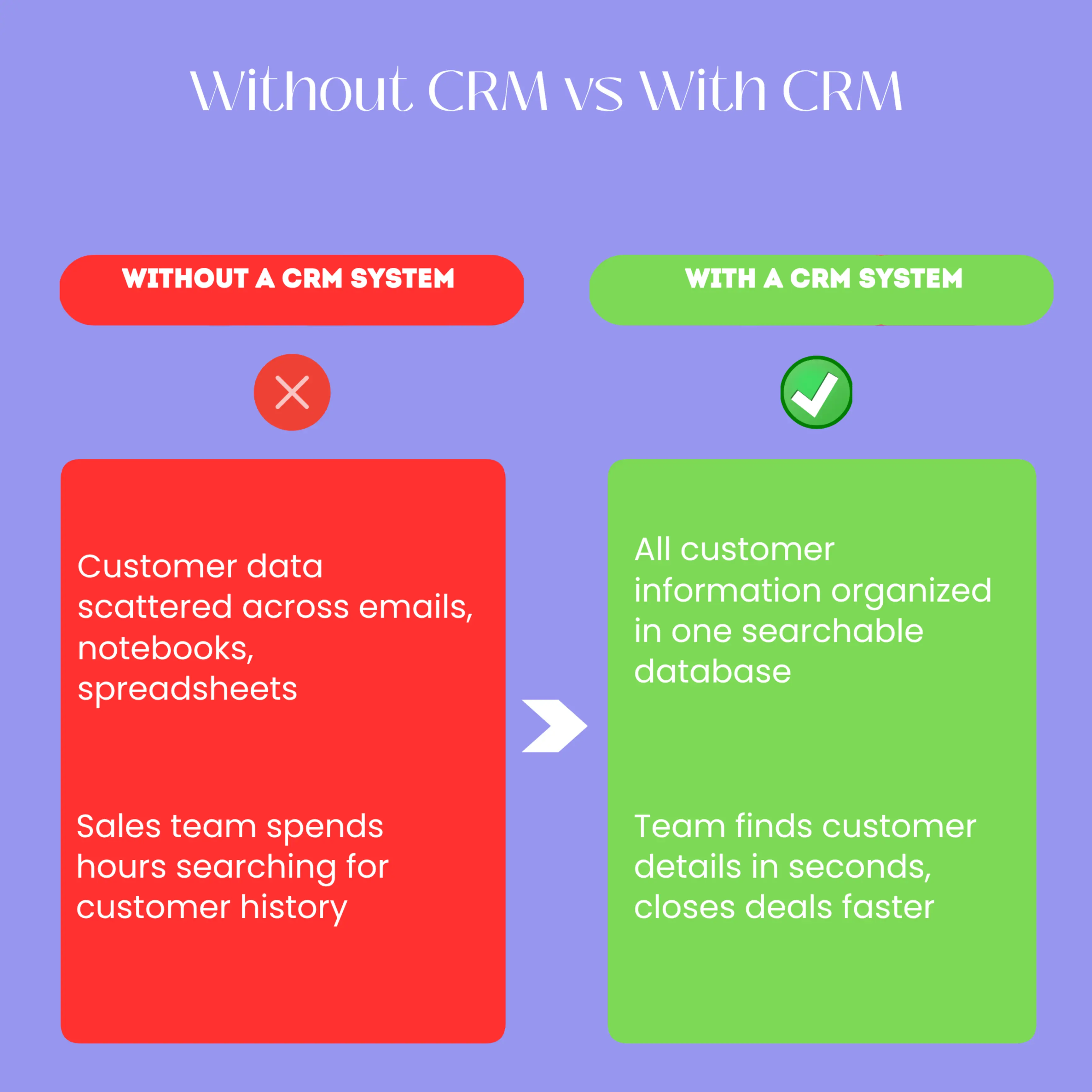
If you are running a Kenyan business right now, you are probably managing customers one of three ways: a notebook and phone calls, WhatsApp chats with clients, or an Excel spreadsheet that gets bigger and messier every month. All three methods work until they don’t.
A CRM solves the core problem every growing Kenyan business faces. As you get more customers, it becomes impossible to remember who bought what, when they last called, what they promised to buy next, or whether you have already sent them an invoice.
You Stop Losing Customers to Disorganization
When a customer calls your business and your team member cannot find their last order or payment history, you look unprofessional. That customer remembers the frustration and buys from a competitor next time.
A CRM means any team member can pull up a customer’s entire history in 10 seconds. If a customer calls and says “I bought a product from you three months ago,” your team finds it instantly and knows exactly what to do next.
Your Sales Team Works Faster and Smarter
Sales teams using a CRM close deals 40% faster than teams relying on manual spreadsheets. A CRM automatically reminds your team when to follow up, shows them exactly where each customer is in the buying process, and prevents them from contacting the same person twice by accident.
For a Kenyan business with five salespeople, this means you are not wasting time searching for customer data. You also know instantly whether someone has already called a prospect.
Every minute your sales team saves is a minute they spend actually selling. Businesses that automate lead follow up convert more of these saved minutes into closed deals.
You Forecast Revenue With Confidence
A CRM shows you exactly how much money is in your sales pipeline at any moment. You can see which deals are likely to close this month, which ones are stuck, and which customers are your biggest spenders.
This matters for a Kenyan business because you can predict cash flow, decide whether to hire another salesperson, and plan inventory with real data instead of guessing. If you know KES 500,000 is coming in from three specific customers, you can make smarter business decisions.
Customer Retention Becomes Measurable
A CRM tracks which customers keep buying and which ones have gone silent. You can set up automatic reminders to reach out to inactive customers before they become lost sales.
For a Nairobi restaurant, a CRM might remind you to call regular customers who have not ordered in 30 days. For a Mombasa tour operator, it might alert you when a customer’s annual booking date is coming up.
This proactive outreach directly increases repeat sales.
How a CRM Works
A CRM works in a simple cycle. It moves through data entry, tracking, automation, and reporting.
Understanding this cycle helps you choose the right CRM. It also helps you use it effectively from day one.
Step 1: Data Entry and Contact Management
When a new customer comes in, someone enters their information into the CRM. This includes name, phone, email, company, industry, and the reason they contacted you.
Your team can do this manually. Or it happens automatically when a customer fills out a form on your website.
The CRM then stores this information permanently, so it is never lost. Every team member can search by name, phone number, or company and pull up the full profile in seconds.
Step 2: Interaction Tracking
Every time your team talks to a customer, they log it in the CRM. This includes what was discussed, what the customer asked for, what you promised to do, and when you will follow up.
This creates a complete timeline of the relationship. When a customer calls your business six months later, your team can see exactly what happened in previous conversations.
No more saying “I do not remember.” No more making the same pitch twice.
Step 3: Automation and Reminders
A CRM can automatically send follow-up emails, create task reminders for your team, and even schedule calls. If a customer says they will decide in one week, the CRM reminds your salesperson on day six.
This kind of marketing automation kenya businesses use means your best customers never fall through the cracks. For a Kenyan business with a small team, this is the difference between chaos and control.
Step 4: Reporting and Insights
A CRM generates reports that show you how your business is performing. This includes total sales this month, number of new customers, average deal size, and sales cycle length.
You can see which salesperson is performing best and which customers spend the most money. These reports help you make decisions about hiring, marketing spend, and product focus.
Instead of guessing, you have real data.
CRM Examples in Kenya
Numbers convince faster than theory. Here are real Kenyan business scenarios and how a CRM solved their problems.
A Nairobi B2B Software Company
A software development company in Nairobi has 12 salespeople calling businesses across Kenya to sell accounting software. Before a CRM, their salespeople called the same prospects multiple times.
They lost track of which companies had already said no. They also forgot to follow up with interested leads.
After implementing a CRM, each prospect is entered once with their company name, industry, budget, and decision timeline. When one salesperson calls a prospect and they say “call back in two months,” that information gets logged.
The CRM automatically reminds the team on day 58. The result: their sales cycle dropped from four months to 2.5 months and their close rate improved by 35%.
A Mombasa Tourism Business
A tour operator in Mombasa serves both local and international tourists. They used to track bookings in a notebook and store customer contact details in their phone.
When a customer called back to book again, they could not find the record of their previous tour. So they could not offer personalized service or remember their preferences.
With a CRM, every customer’s tour history, preferences, budget, and contact details are stored permanently. When a returning customer calls, the team greets them by name and remembers their family prefers snorkeling.
They offer a customized package on the spot. Customer satisfaction jumped and repeat bookings increased by 40%.
A Nairobi Real Estate Agency
A real estate agent in Nairobi was managing 200+ property listings and hundreds of potential buyers. Leads came in through WhatsApp, email, and phone calls.
The agent often forgot to follow up with buyers who were not ready to purchase immediately. A CRM changed this by organizing all leads by property type and budget.
When a buyer asked about a three-bedroom apartment in Westlands, the CRM showed every available property plus notes from previous conversations. Automated follow-ups meant no lead was forgotten.
The agent went from closing one deal per month to three deals per month.
A Kisumu Manufacturing Business
A manufacturing company in Kisumu supplies spare parts to retailers across Western Kenya. They had 80+ customers but no system to track who was buying what, payment terms, or upcoming reorder dates.
Orders were placed by phone and recorded in a notebook. A CRM allowed them to see which customers were buying regularly and which were overdue for reorders.
They set up automatic reminders to call customers when their typical reorder date approached. This proactive outreach increased repeat orders by 25% and reduced order management time by four hours per week.
Common Mistakes to Avoid
Many Kenyan businesses buy a CRM but fail to use it effectively. This happens because they do not plan properly. Here are the mistakes that cost businesses time and money.
Choosing a CRM Without Understanding Your Needs
A business owner buys an expensive CRM because it looks professional or because a competitor uses it. But the CRM has features they do not need. It is also missing features they do need.
The solution is to list your specific needs first. Do you need invoicing built in? Do you need to track inventory? Do you need to integrate with M-Pesa payments? Answer these questions before you choose a CRM.
Entering Data Inconsistently
A CRM is only as good as the data inside it. If one team member enters a customer name as “John Smith” and another enters the same customer as “J. Smith,” your CRM will treat them as two different people.
Before you launch your CRM, create a data entry standard. Decide how customer names will be formatted, how phone numbers will be entered, and what fields are required. Train your entire team on this standard before they start using the system.
Not Training Your Team
You buy a CRM and hand it to your team without explaining why they need it or how to use it. Your salespeople think it is extra work and ignore it. They continue managing customers their own way.
The solution is to invest time in training. Show your team exactly how the CRM saves them time. Let them see they no longer have to search through emails for a customer’s phone number or remember who they called last week. This connects directly to what is marketing automation and how it works alongside your CRM to save your team even more time.
Not Cleaning Your Data Before Launch
You import your customer list from an old system into your CRM without checking for duplicates, typos, or incomplete information. Your CRM becomes cluttered and unreliable.
Before you launch, spend time cleaning your data. Remove duplicates, fix spelling errors, and fill in missing information. This takes a few days but saves months of frustration.
CRM Features Comparison Table
| Feature | Basic CRM | Mid-Level CRM | Enterprise CRM |
|---|---|---|---|
| Contact Management | Yes | Yes | Yes |
| Sales Pipeline Tracking | Yes | Yes | Yes |
| Email Integration | Limited | Full | Full |
| Automated Follow-ups | No | Yes | Yes |
| Reporting and Analytics | Basic | Advanced | Advanced |
| Invoicing Built-In | No | Optional | Yes |
| M-Pesa Integration | No | Available | Available |
| Cost Per Month | KES 2,000–5,000 | KES 8,000–20,000 | KES 50,000+ |
✅ Quick Action Checklist
- ☐ List the top three problems you face managing customers right now (scattered data, lost follow-ups, forgotten details).
- ☐ Define your team size and the number of customers you manage to choose the right CRM size.
- ☐ Identify must-have features: Do you need invoicing? Inventory tracking? Payment integration?
- ☐ Research three CRM options and request free trials to test them with your actual workflow.
- ☐ Create a data entry standard document before you launch your CRM (how names, phone numbers, and emails will be formatted).
- ☐ Plan a training session with your entire team to explain why the CRM matters and how to use it.
- ☐ Clean your existing customer data and remove duplicates before importing into your new CRM.
- ☐ Set a launch date and commit to using the CRM for at least 90 days before deciding if it is working.
Ready to Improve Your Customer Management?
A CRM is one of the fastest ways to improve sales speed and customer retention for a Kenyan business. Businesses that implement a CRM correctly see results in the first 60 days. Expect faster follow-ups, fewer lost leads, and happier customers.
The key is choosing the right CRM for your business size and budget. Train your team properly and commit to using it consistently. If you are serious about growing your business without adding chaos, a CRM is where to start.
Frequently Asked Questions
What is the difference between a CRM and a database?
A database stores information. A CRM stores information and automates actions based on that information. A CRM reminds you to follow up, tracks sales progress, and generates reports. A database just holds data.
How much does a CRM cost in Kenya?
Basic CRMs cost KES 2,000–5,000 per month for small teams. Mid-level CRMs range from KES 8,000–20,000 per month. Enterprise CRMs start at KES 50,000 per month. Some CRMs charge per user, so a five-person team pays less than a 20-person team.
Can a CRM integrate with M-Pesa?
Yes, many modern CRMs can integrate with M-Pesa so payment confirmations are automatically logged in your customer record. This is especially useful for Kenyan businesses that rely on mobile money for transactions.
How long does it take to set up a CRM?
Basic setup takes one to two weeks. This includes choosing the CRM, importing your customer data, training your team, and creating workflows. Full optimization takes 60–90 days as your team learns to use it effectively and you refine your processes.
What happens if my team does not want to use the CRM?
This is common. The solution is to show them exactly how the CRM saves them time, not adds work. Let them see they no longer have to search for customer data or remember follow-up dates. Make the CRM mandatory for a 90-day trial period, then measure results.
Additional Resources
- What is Organic CTR – Once your CRM starts tracking where leads come from, you will want to know if your search rankings are actually driving clicks, and this explains how to measure that.
- Savage Digital vs AM Digital KE – If you are shopping for an agency to help set up and manage your new CRM, see how AM Digital KE compares before you choose.
- How to Optimize for AI Overviews – Your CRM captures customer questions daily, and this shows you how to turn those insights into content that shows up in AI search results.
- What is Voice Search SEO – More Kenyan customers are finding businesses through voice search, and this explains how to capture those leads before they even reach your CRM.
- How to Do a Content Audit – A CRM is only useful if your content is pulling in the right leads, so run an audit to check what is actually working.
- Artly Digital Marketing vs AM Digital KE – Comparing agencies before you commit to CRM setup and marketing support helps you avoid a costly wrong choice.
Take the Next Step
Stop losing customers to poor organization. A CRM is your first move if you want to close deals faster.
Choosing the right one and implementing it correctly matters most. This is where many Kenyan businesses get stuck.
We have helped dozens of Kenyan businesses select, set up, and master their CRM systems. Once your CRM is running, you can also learn how to automate marketing around it to save your team time.
Download our Free CRM Implementation Guide for Kenyan Businesses. It shows which CRM features matter most for your business and how to train your team from day one.