Table of Contents
- Key Takeaways
- Picture This Scenario
- Why Long-tail Keywords Matter for Your Kenyan Business
- How Long-tail Keywords Work (With Local Examples)
- Your Long-tail Keyword Action Checklist
- Frequently Asked Questions
- What are examples of long-tail keywords in Kenya?
- Why are long-tail keywords important in Kenya?
- How do I find Kenyan long-tail keywords?
- Can long-tail keywords boost my Kenyan site traffic?
TL;DR: Long-tail keywords are specific phrases Kenyans use when searching online, like ‘affordable Nairobi apartments under 80k’.
Last Updated: March 2026
Key Takeaways
- Capture exact Kenyan search intent
- Easier to rank than broad keywords
- Drive more sales-ready customers
- Perfect for niche Kenyan markets
- Cheaper with higher ROI potential
Long-tail keywords are specific, longer search phrases that people use when they’re closer to making a purchase or finding exactly what they need.
They’re a core part of how businesses rank online in Kenya.
Unlike keyword terms like “shoes,” long-tail keywords are detailed phrases like “waterproof hiking boots for Mount Kenya” or “affordable web design services in Westlands.”
These targeted phrases have lower search volume but higher conversion rates.
They capture users with clear intent.
Picture This Scenario
Imagine you own a nyama choma restaurant in Kilimani.
A tourist searching “food” might never find you among thousands of results.
But someone searching “best nyama choma near Yaya Centre with outdoor seating” is practically walking to your door.
That specific search phrase is a long-tail keyword.
It’s exactly how your ideal customer thinks and searches when they’re ready to visit.
Why Long-tail Keywords Matter for Your Kenyan Business
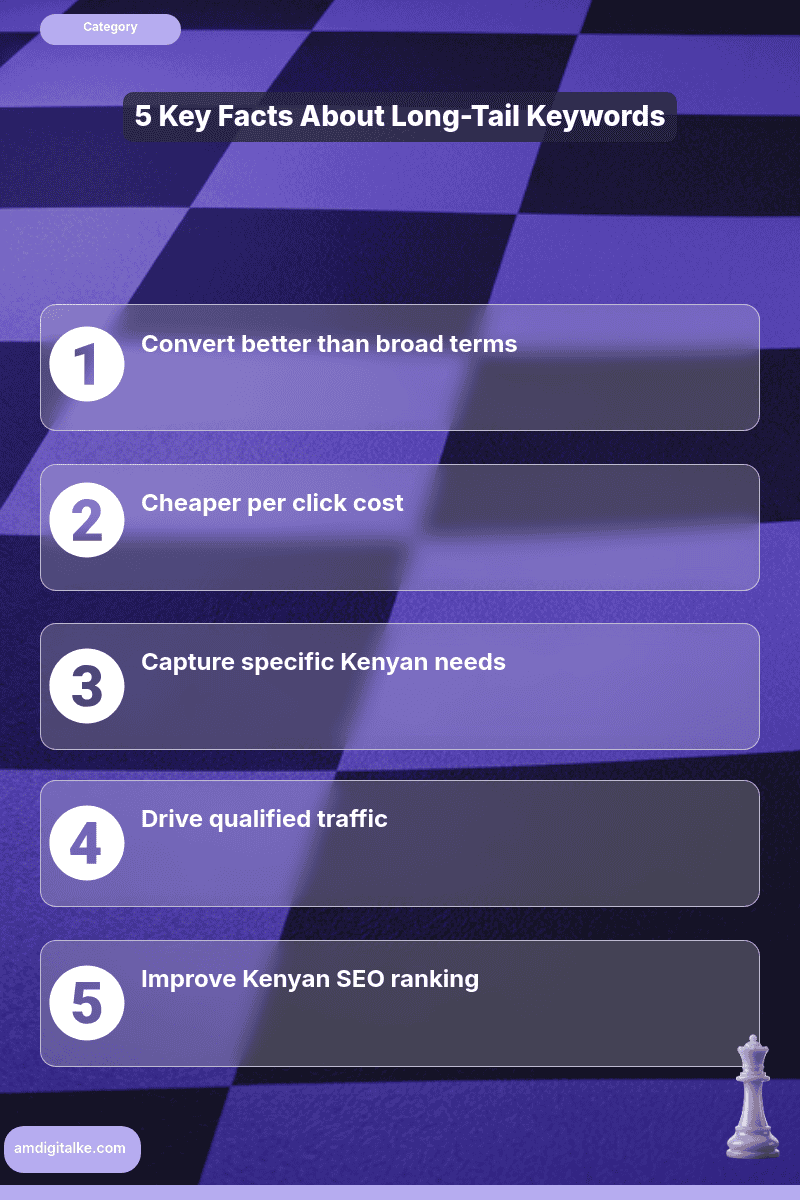
Long-tail keywords are game-changers for Kenyan businesses competing against established players.
While big companies fight over expensive broad terms like “insurance,” your Nairobi-based firm can dominate “affordable car insurance for young drivers in Kenya.”
Based on AM Digital KE client data across Kenyan accounts, these specific phrases convert better than broad keywords because they capture people ready to buy.
A Mombasa hotel targeting “budget beachfront accommodation near Diani with family rooms” attracts visitors who know exactly what they want and are ready to book.
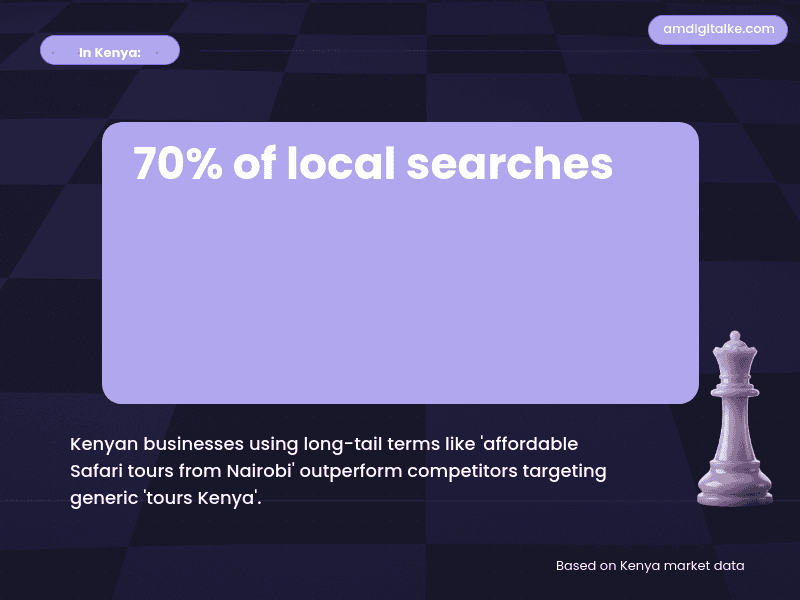
Most online searches are long-tail keywords, giving smaller Kenyan businesses huge opportunities to outrank competitors by being more specific about what they offer.
How Long-tail Keywords Work (With Local Examples)
Long-tail keywords follow a simple pattern: they get more specific as buyers get closer to purchasing.
Here’s how it works:
Broad to Specific Search Journey:
- “Laptops” → “business laptops Kenya” → “Dell business laptops under 80k
- “Nairobi” “Wedding venues” → “outdoor wedding venues Nairobi” → “garden wedding venues Karen with parking for 200 guests”
Winning Long-tail Examples for Kenyan Businesses:
- A Nakuru accounting firm ranks #1 for “small business bookkeeping services Nakuru town”
- A Kisumu driving school dominates “intensive driving lessons Kisumu 2 weeks”
- An Eldoret hardware store owns “roofing materials supplier Eldoret free delivery”
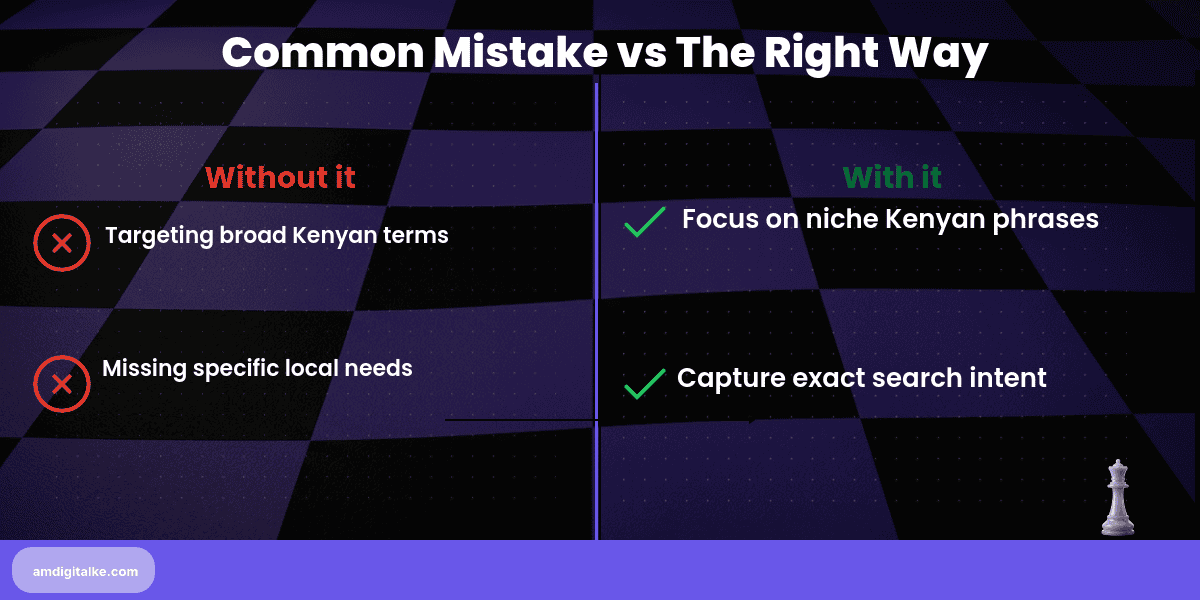
The magic happens because fewer businesses compete for these specific phrases.
This makes it easier and cheaper to rank highly.
To learn more about terms like these, check out my SEO FAQs page for a glossary.
See how to take advantage of long tail keywords to improve your traffic.
Your Long-tail Keyword Action Checklist
Here’s your long-tail keyword strategy checklist:
- ☐ List 10 specific services you offer (be as detailed as your customers would search)
- ☐ Add your location to each service (“Westlands,” “CBD,” “Nairobi” work differently)
- ☐ Check what your customers actually search using Google’s suggested searches
- ☐ Analyse your competitors’ specific keywords with tools like Google Keyword Planner
- ☐ Create dedicated pages for your top 5 long-tail phrases with helpful, detailed content
- ☐ Track which long-tail keywords bring you actual customers and double down on what works
Need a complete walk-through?
Download this complete SEO Checklist for everything you need to do.
Ready to discover the long-tail keywords that could transform your Kenya business?
Let’s analyse your specific market through our free Kenyan SEO audit, and find the exact phrases your customers use when they’re ready to buy.
Curious to learn how to utilise long tail keywords? Check out the posts below
- Learn How to Get Keyword Density Right – avoid stuffing your content with long tail keywords
- How to Analyse Search Volume – find high volume long tail keywords
- Learn Different SEO Types – So you can understand where to use long tail keywords
- How to Use Google Search Console – See which long Tail keywords are already ranking
These articles will walk you through the basics of how to properly use long tail keywords.
Have more SEO questions? Our SEO FAQs Kenya page answers the most common ones.
Frequently Asked Questions
What are examples of long-tail keywords in Kenya?
Examples include ‘best nyama choma in Kilimani’ or ‘budget hotels near JKIA with airport shuttle’.
Why are long-tail keywords important in Kenya?
They help small Kenyan businesses rank higher by targeting specific local needs like ‘M-Pesa payments for e-commerce’.
How do I find Kenyan long-tail keywords?
Use tools like Google Keyword Planner, study Kenyans’ online searches, and analyze competitor Kenyan sites.
Can long-tail keywords boost my Kenyan site traffic?
Yes, they attract focused Kenyan visitors ready to buy, like ‘matatu insurance plans covering Nairobi routes’.