
Table of Contents
TL;DR: Optimize keyword density by using your main keyword 5-10 times in 500 words, focusing on natural placement and variations.
Last Updated: March 2026
Key Takeaways
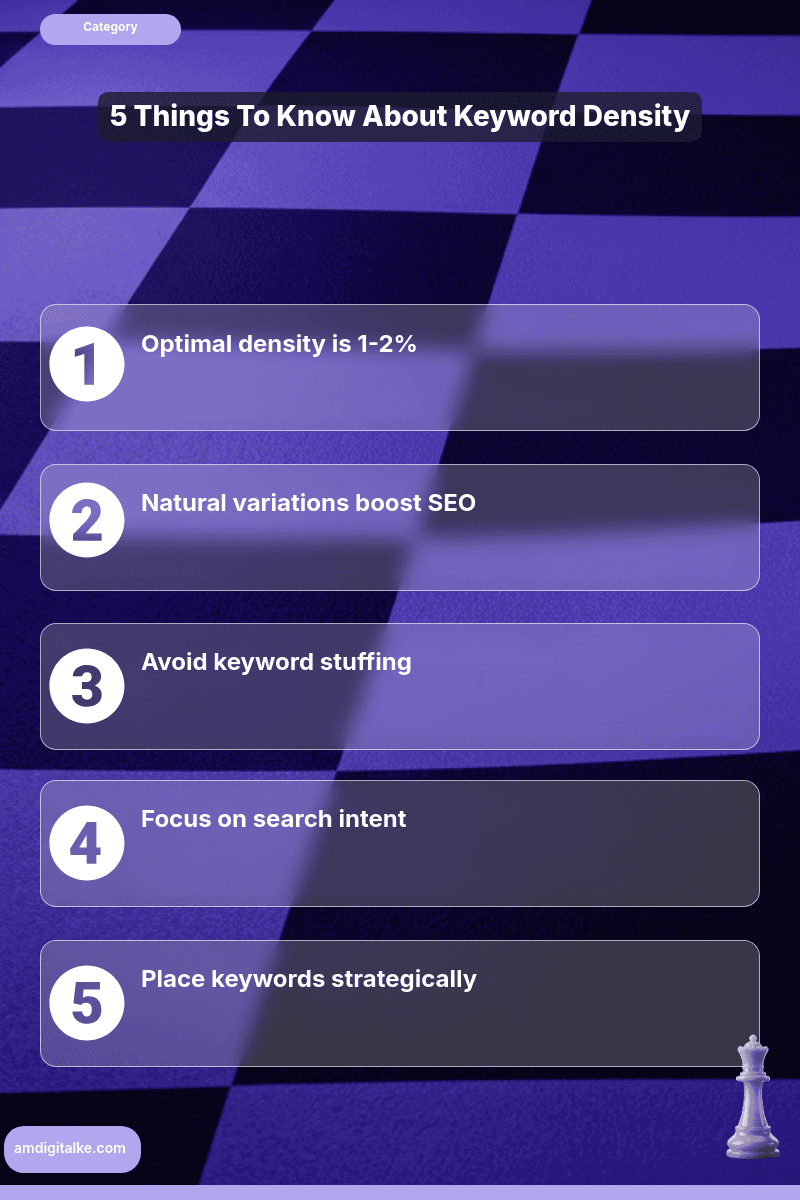
- Aim for 1-2% keyword density
- Place keywords in title and headings
- Use natural variations
- Write for humans first
- Focus on search intent
Keyword density affects whether Google sees your content as relevant or spammy.
Getting this balance right helps your Kenyan business rank higher without triggering penalties.
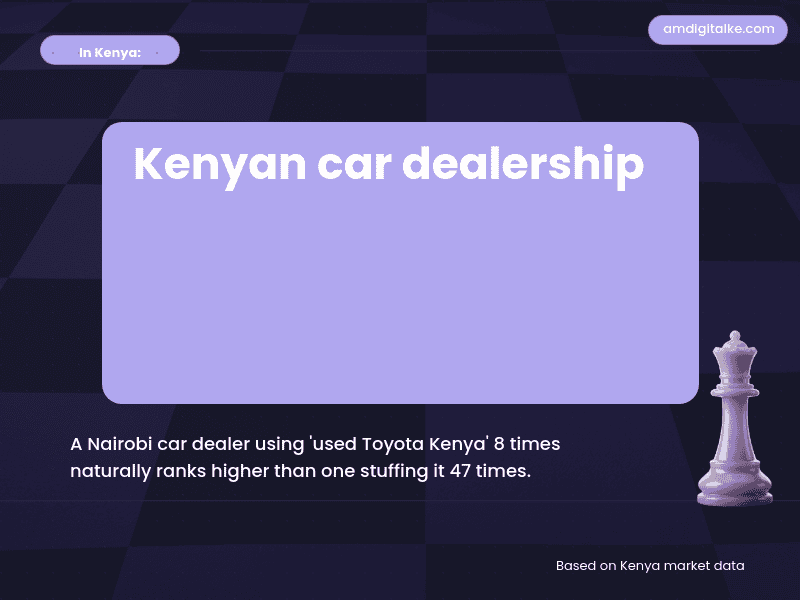
Imagine you run a car dealership in Nairobi, selling used Toyota SUVs.
Your landing page mentions “used Toyota Kenya” 47 times in 500 words because you think more keywords mean better rankings.
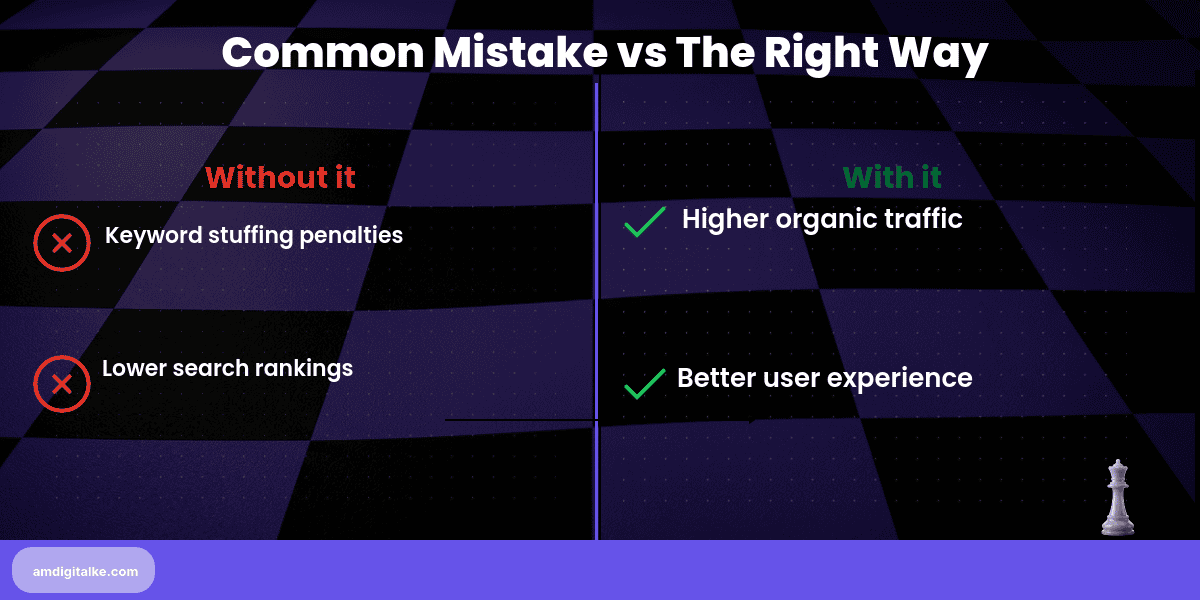
Google flags this as keyword stuffing and drops your page to position 50.
Meanwhile, your competitor uses “used Toyota Kenya” just 8 times naturally in the title, first paragraph, and service descriptions.
They rank position 3. That’s the difference between 5 inquiries per month and 200.
How to Get Keyword Density Right
Step 1: Aim for a 1-2% keyword density maximum
In a 500-word article, use your main keyword 5-10 times total, never more.
This approach aligns with understanding what SEO really means. It helps Google understand your content without over-optimising.
Step 2: Place keywords in your title, first paragraph, and one H2 heading
These high-value locations signal relevance without over-optimisation.
When optimising on-page SEO elements, focus on strategic placement in title tags, headers, and opening content.
Step 3: Use natural variations like “Toyota cars Nairobi” and “buy Toyota Kenya”
Google understands synonyms and related terms, so mix your phrasing naturally.
Properly implementing keyword research techniques helps you identify these natural variations.
Step 4: Write for humans first, then check keyword count afterwards
If it sounds forced when you read it aloud, you’ve overdone it.
Remember that understanding search intent properly matters more than keyword repetition.
If you’re unsure about any terminology, check out my SEO FAQs page for clear definitions and practical examples.
Step 5: Focus on search intent over keyword repetition
Answer “What do Toyota buyers in Nairobi actually want to know?” instead of repeating phrases.
When executing content marketing effectively, prioritise providing genuine value over hitting arbitrary keyword targets.
Step 6: Use tools like Yoast SEO to measure density automatically
Set alerts for when you exceed 2% on any single keyword.
This helps you maintain implementing technical SEO standards without manually counting every keyword instance.
✅ Your Keyword Density Checklist:
- ☐ Keyword in title tag
- ☐ Mentioned in the first 100 words
- ☐ 1-2% density throughout the page
- ☐ Natural variations included
- ☐ Read aloud test passed
- ☐ Checked with Yoast or a similar tool
- ☐ Search intent is clearly addressed
Before publishing your content, download this complete SEO Checklist to verify you’re following all on-page optimisation best practices.
Fix your top 3 product pages this week using these guidelines.
Based on AM Digital KE client data across Kenyan accounts, you’ll see improved rankings within 2-3 weeks as Google recognises your natural, helpful content.
Let’s run a free SEO analysis on your website.
I’ll identify exactly where your keyword usage is helping or hurting your rankings and show you what to fix first.
Related Content
Curious to learn more about keyword optimisation? Check out the posts below
- What is Keyword Density (For the Kenya Market) – Understanding the concept helps you apply these density guidelines with confidence.
- What is a Keyword (A Kenya Business Guide) – Learn the foundation of keywords before optimising density on your pages.
- What is Keyword Research (For the Kenya Market) – Proper research identifies the right keywords to focus on before worrying about density.
- What are Long-Tail Keywords (From a Kenyan Expert) – Long-tail keywords naturally maintain lower density while targeting qualified searchers.
- Automotive SEO Services – See how Kenyan car dealerships apply keyword density principles to rank for competitive local searches.
These articles will deepen your understanding of keyword strategy and proper usage.
Fix your top 3 product pages this week using these guidelines.
Based on AM Digital KE client data across Kenyan accounts, you’ll see improved rankings within 2-3 weeks as Google recognises your natural, helpful content.
Have more SEO questions? Our SEO FAQs Kenya page answers the most common ones.
Frequently Asked Questions
What is keyword density?
Keyword density is how often a keyword appears in your content, usually as a percentage.
Why is keyword density important in Kenya?
Proper keyword density helps Kenyan businesses rank higher on Google without penalties.
What happens if I stuff keywords?
Google may flag your content as spammy and lower your rankings in Kenya.
How do I check keyword density?
Use tools like Yoast SEO to count keyword mentions in your content.