Table of Contents
- Key Takeaways
- Why Neighbourhood-Level SEO Matters in Kenya
- Your Hyper-Local SEO Strategy
- Your Hyper-Local SEO Checklist
- Related Content
- Frequently Asked Questions
- What is hyper-local SEO?
- Why is hyper-local SEO important in Kenya?
- How do I optimise for hyper-local SEO?
- Can hyper-local SEO help small businesses?
TL;DR: Hyper-local SEO helps Nairobi businesses target customers in specific neighbourhoods like Kilimani or Westlands.
Last Updated: March 2026
Key Takeaways
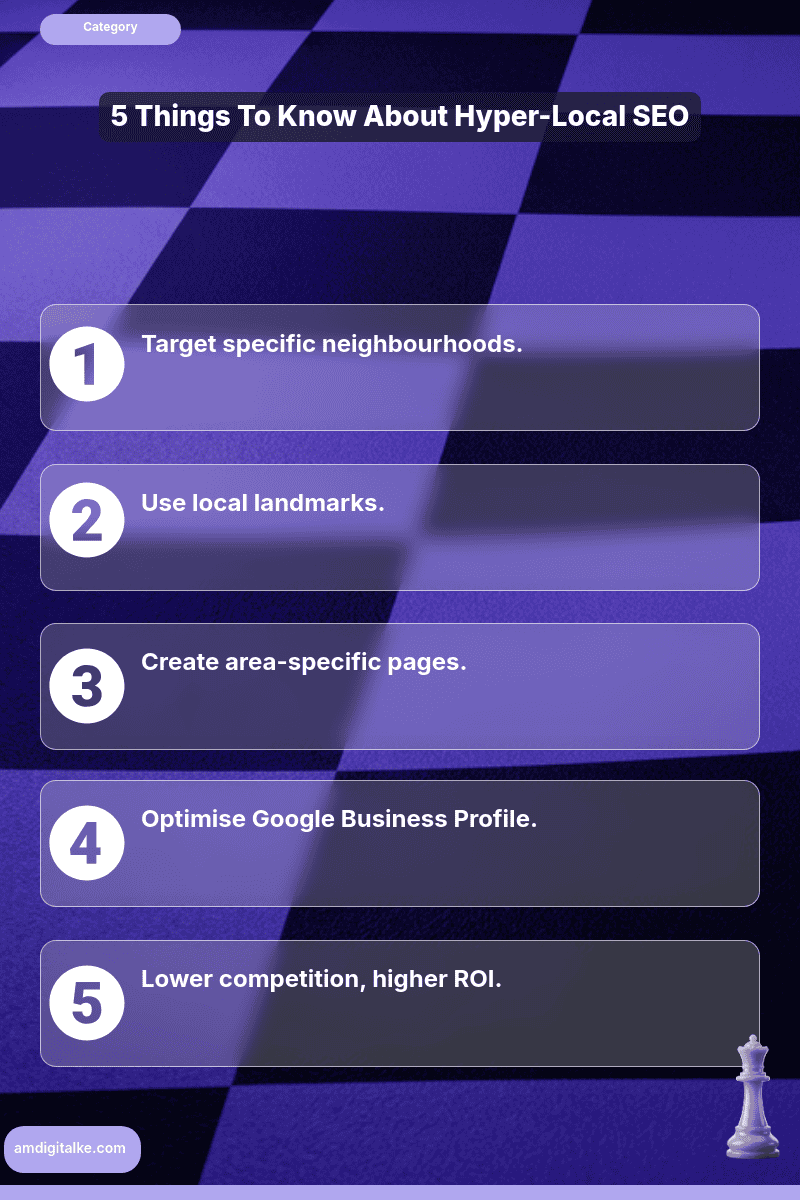
- Target neighbourhoods, not just Nairobi.
- Use local landmarks in descriptions.
- Create neighbourhood-specific web pages.
- Optimise Google Business Profile.
- Lower competition, higher conversions.
Your restaurant serves the best nyama choma in Kilimani.
Your salon is the go-to spot in Eastlands. Your gym is Karen’s favourite.
But when someone three blocks away searches “gym near me,” they find your competitor instead.
The problem? You’re targeting “Nairobi” when you should be dominating your specific neighbourhood.
That’s where hyper-local SEO changes everything.
Why Neighbourhood-Level SEO Matters in Kenya
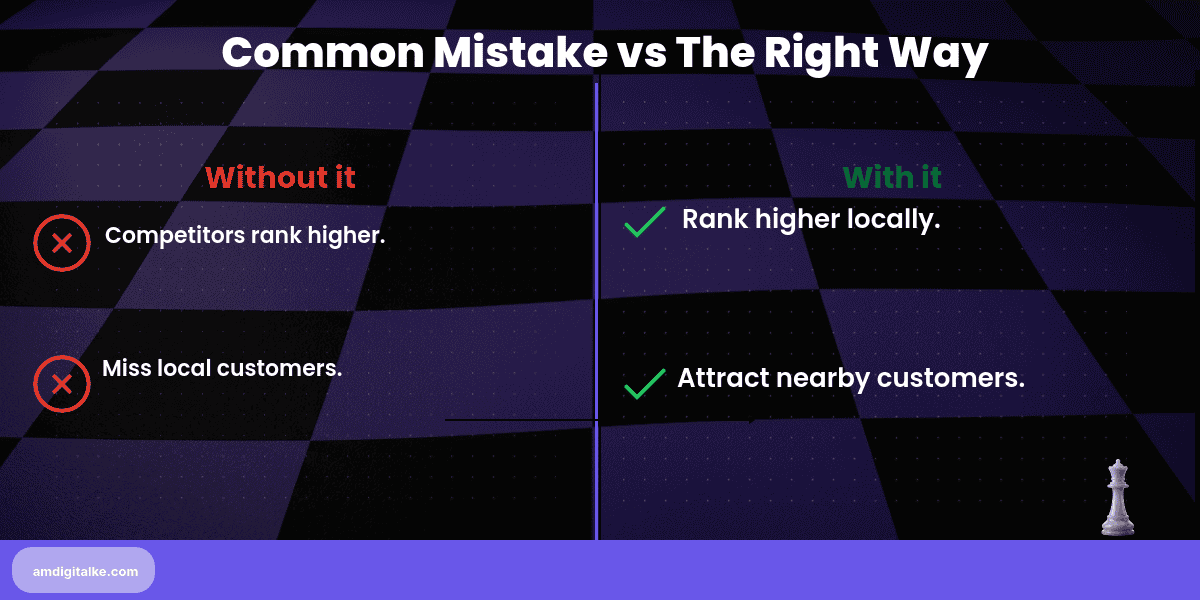
Most Kenyan businesses make a costly mistake. They optimise for “Nairobi” when their customers actually come from a 3-5 kilometre radius.
No one in Westlands will drive to South C for a haircut. A Karen resident won’t order food delivery from Eastlands.
Neighbourhood-level targeting captures the customers who actually convert.
These are the ones close enough to visit today.
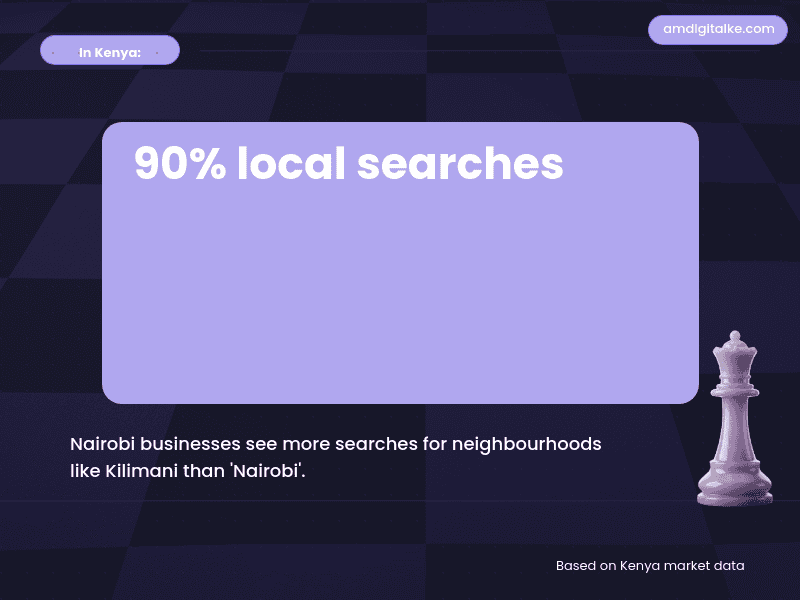
Search behaviour tells the story. When Kenyans search for services, they add neighbourhood names: “plumber Kilimani,” “gym Westlands,” “restaurant Karen.”
Google prioritises businesses that match these hyper-local searches. Even better, neighbourhood competition is lower than city-wide competition.
This makes it easier to rank number one where it matters most.
This strategic approach builds on understanding what local SEO really means at the most granular level.
Your Hyper-Local SEO Strategy
1. Optimise Your Google Business Profile for Your Neighbourhood
Start with your business description. Don’t just say “Nairobi.”
Mention your specific neighbourhood multiple times naturally: “Located in the heart of Kilimani, we serve residents throughout Kilimani, Lavington, and Kileleshwa.”
Add landmarks customers recognise: “opposite Yaya Centre” or “near Junction Mall.”
In your services section, create neighbourhood-specific variations. A pest control company shouldn’t list “Pest Control Services.”
List “Pest Control Kilimani,” “Pest Control Lavington,” “Pest Control Kileleshwa” as separate services. Google reads these as distinct, hyper-local offerings.
Optimising your Google Business Profile properly for neighbourhood targeting is essential.
2. Create Neighbourhood-Specific Website Pages
Build dedicated landing pages for each neighbourhood you serve.
A cleaning company serving multiple areas needs separate pages:
- amdigitalke.com/cleaning-services-kilimani
- amdigitalke.com/cleaning-services-westlands
- amdigitalke.com/cleaning-services-karen
Each page should include neighbourhood-specific content: local landmarks, area-specific customer testimonials, neighbourhood photos, and unique challenges residents face.
A Westlands page might mention, “We understand Westlands traffic patterns and schedule cleanings around your commute.”
For more practical guidance, check out my SEO FAQs page for location page structure tips.
3. Build Hyper-Local Citations
General Nairobi directories matter. But neighbourhood-level citations give you an edge.
List your business on:
- Neighbourhood Facebook groups and WhatsApp business directories
- Local estate notice boards and community websites
- Area-specific blogs and news sites
- Neighbourhood business associations
Ensure your NAP (Name, Address, Phone) includes your neighbourhood: “123 Argwings Kodhek Road, Kilimani, Nairobi” not just “Nairobi, Kenya.”
Maintaining NAP consistency properly across neighbourhood listings strengthens your local authority.
4. Generate Neighbourhood-Specific Reviews
When requesting reviews, ask customers to mention the neighbourhood: “Can you mention you visited our Kilimani location?”
Reviews containing “Kilimani,” “Westlands,” or “Karen” signal hyper-local relevance to Google.
A review saying “Best gym in Westlands” is exponentially more valuable than “Best gym in Nairobi” for neighbourhood searches.
Respond to reviews mentioning the neighbourhood too: “Thank you for choosing our Kilimani branch! We’re proud to serve the Kilimani community.”
5. Create Hyper-Local Content
Blog about neighbourhood-specific topics:
- “5 Best Lunch Spots Near Westlands Office Parks”
- “Kilimani Residents’ Guide to After-Work Fitness”
- “Karen Family Weekend Activities”
This content attracts neighbourhood searches while establishing you as the local authority.
Creating valuable content marketing strategies tailored to specific neighbourhoods builds deep community connections.
Share these posts in neighbourhood Facebook groups and WhatsApp community channels.
6. Use Neighbourhood Keywords Throughout Your Site
Naturally incorporate neighbourhood names in:
- Page titles: “Premium Hair Salon in Kilimani | [Your Business]”
- Headers: “Serving Kilimani, Lavington & Kileleshwa Since 2018”
- Image alt text: “Modern gym equipment at our Westlands location”
- URLs: Include neighbourhood in your URL structure
Don’t stuff keywords. Mention your neighbourhood 5-7 times per page naturally.
This aligns with implementing proper on-page SEO strategies at the neighbourhood level.
A Kilimani dental clinic implemented hyper-local SEO. They created separate pages for Kilimani, Lavington, and Hurlingham with neighbourhood-specific content.
Within four months:
- They ranked number one for “dentist Kilimani” (previously page 3)
- Appointment bookings from search increased 67%
- 83% of new patients came from within 3 kilometres
A Westlands gym stopped competing for “gym Nairobi.” They focused on “gym Westlands,” “gym near Sarit Centre,” and “gym Parklands.”
Their Google Business Profile views from local searches tripled. Membership signups from search doubled in six months.
Before implementing your hyper-local strategy, download this complete SEO checklist for Kenyan businesses to ensure you’re covering all neighbourhood optimisation essentials.
Your Hyper-Local SEO Checklist
☐ Update Google Business Profile description with specific neighbourhood mentions and landmarks
☐ Create separate service listings for each neighbourhood you serve
☐ Build 3 neighbourhood-specific landing pages on your website
☐ Request 10 reviews that mention your neighbourhood by name
☐ List your business in 5 neighbourhood-specific directories or groups
☐ Write 2 blog posts about neighbourhood-specific topics this month
☐ Add neighbourhood keywords to your homepage title tag and H1
Pro Tip: Start with your primary neighbourhood first. Dominate where your physical location is, then expand to adjacent areas.
Hyper-local SEO is about being the obvious choice for customers in your immediate area.
Want to dominate your specific neighbourhood, not just Nairobi? Check out our Local SEO Services and learn how we help businesses implement hyper-local strategies that capture customers within your actual service radius.
Request a free SEO analysis session where we’ll assess your current geographic optimisation, identify which nearby areas you’re missing, and build a hyper-local strategy for your 3-5km radius.
Related Content
Curious to learn more about neighbourhood domination? Check out the posts below:
- How to Improve Your Local SEO – A Kenyan Expert’s Approach — This implementation guide shows you the complete framework for building neighbourhood-level visibility.
- National SEO vs Local SEO – Which Does Your Kenyan Business Need? — This comparison helps you understand when neighbourhood targeting works better than Kenya-wide strategies.
- Local SEO for Multiple Medical Locations Across Kenya — See how medical practices optimise multiple neighbourhood locations without cannibalising their own rankings.
- Contractor SEO – Getting Found for ‘Builder Near Me’ Searches — This shows how service providers capture hyper-local “near me” searches in specific neighbourhoods.
These articles will help you master neighbourhood-level dominance across Nairobi.
Have more SEO questions? Our SEO FAQs Kenya page answers the most common ones.
Frequently Asked Questions
What is hyper-local SEO?
It’s SEO targeting specific areas like Westlands or Kilimani.
Why is hyper-local SEO important in Kenya?
Kenyan customers search by neighbourhood, not just Nairobi.
How do I optimise for hyper-local SEO?
Update your Google Business Profile with neighbourhood keywords.
Can hyper-local SEO help small businesses?
Yes, it helps local shops compete online in Kenya.