Table of Contents
- Key Takeaways
- Why Most Kenyan Businesses Track the Wrong Things
- Setting Up Conversion Tracking That Works
- Tracking Considerations
- Your Conversion Tracking Setup Roadmap
- Related Content
- Frequently Asked Questions
- Why is conversion tracking important in Kenya?
- How do I track phone calls in Kenya?
- What counts as a conversion in Kenya?
- How do I set up Google Analytics 4?
TL;DR: Conversion tracking shows which website actions make you money, like form submissions or M-PESA payments.
Last Updated: March 2026
Key Takeaways
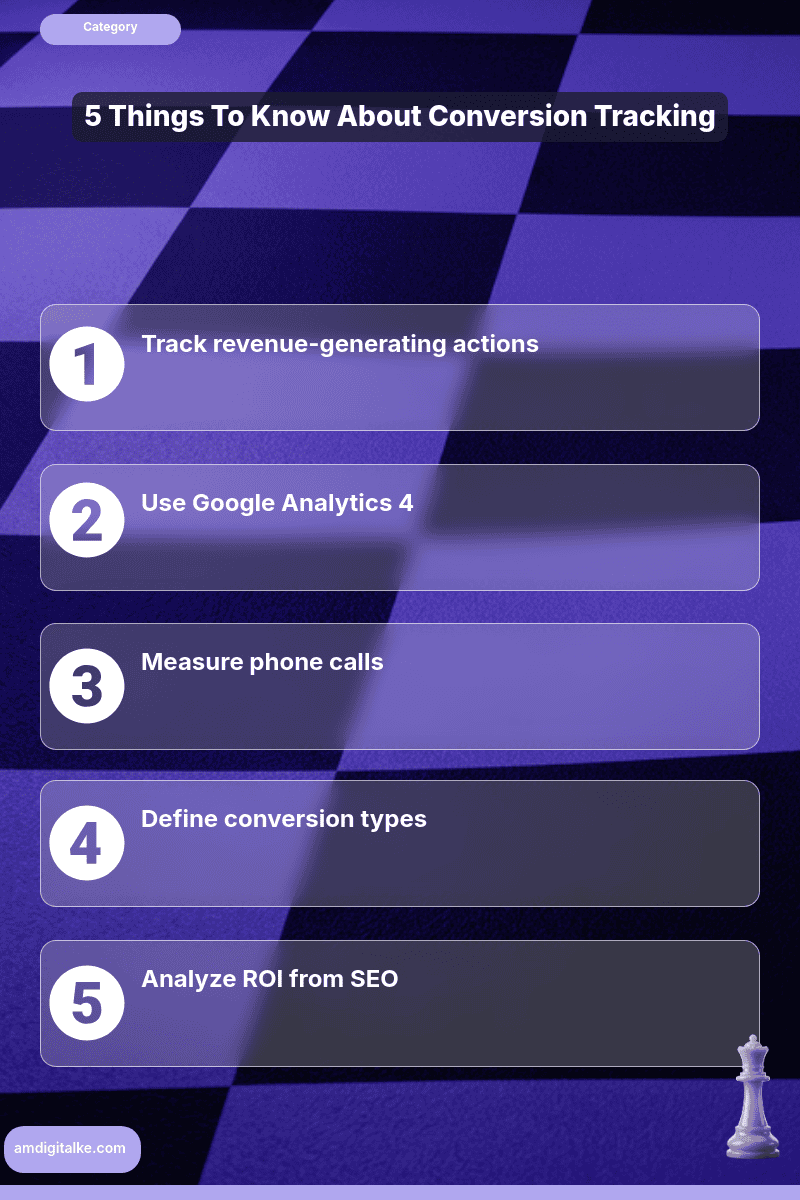
- Track actions that generate revenue
- Use Google Analytics 4 for events
- Phone calls are crucial in Kenya
- Define what counts as conversions
- Measure ROI from SEO efforts
You’re getting traffic. Your rankings are improving.
Google Analytics shows visitors arriving daily. But here’s the question that keeps you up at night: Is any of this actually making you money?
Without conversion tracking, you’re flying blind. You’re spending on SEO without knowing if it’s generating leads, sales, or just vanity metrics.
Why Most Kenyan Businesses Track the Wrong Things
Traffic doesn’t pay your bills. Conversions do.
A Westlands law firm celebrated reaching 1,000 monthly visitors. They realised only 3 people actually contacted them.
Meanwhile, a Kilimani clinic with just 200 visitors generated 45 appointment bookings. They tracked what mattered: form submissions, phone calls, and WhatsApp messages.
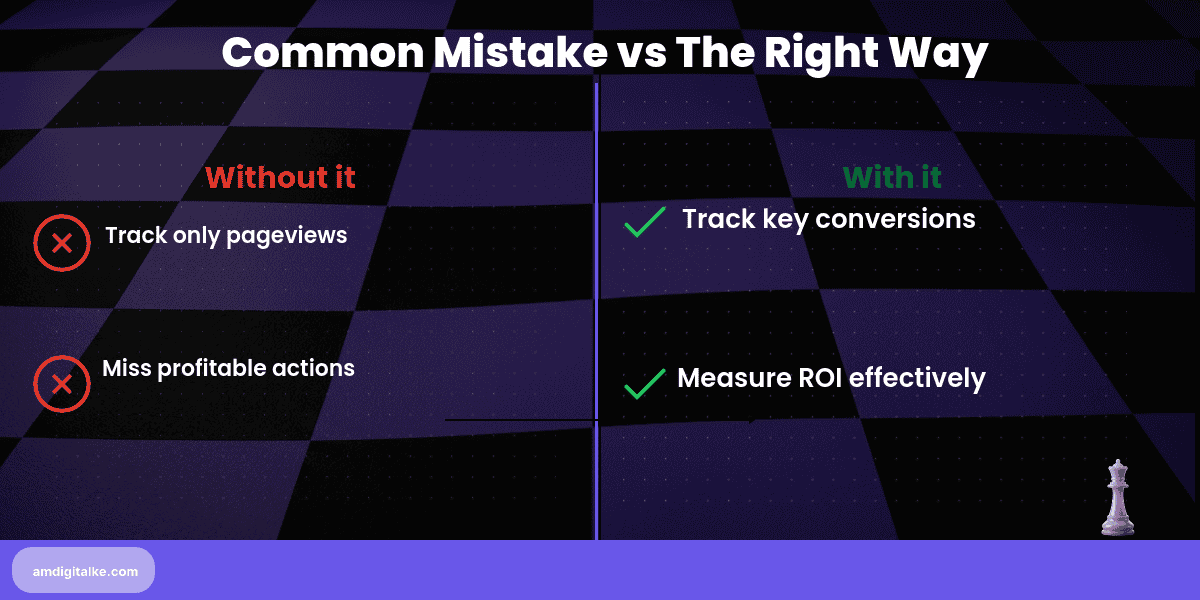
The problem? Most Kenyan businesses track pageviews and sessions rather than actions that generate revenue.
You need to know: which keywords bring paying customers? Which pages convert browsers into buyers?
What’s your actual understanding what SEO really means in terms of ROI?
Setting Up Conversion Tracking That Works
1. Define Your Conversions
Start by identifying what counts as a conversion for your business:
Lead generation: Contact form submissions, phone calls, WhatsApp messages
eCommerce: Product purchases, M-PESA payments, cart completions
Service bookings: Appointment requests, consultation forms, callback requests
Engagement: Brochure downloads, quote requests, live chat starts
A Nairobi real estate agency tracks three conversions: property inquiry forms, phone calls from listings, and WhatsApp messages about specific properties. Each conversion type gets its own tracking.
2. Implement Google Analytics 4 Events
Understanding what Google Analytics means is crucial for proper tracking. GA4 uses event-based tracking.
Set up custom events for your key actions:
- Form submissions (contact_form, quote_request)
- Button clicks (call_now, whatsapp_chat)
- File downloads (brochure_pdf, price_list)
- Scroll depth on key pages (75% on service pages)
The critical step: Mark these events as “conversions” in GA4 so they appear in your reports. Go to Admin → Events → Mark as conversion.
3. Track Phone Calls Accurately
Phone calls are gold for Kenyan service businesses, yet most don’t track them. Use call tracking numbers that forward to your main line.
When someone calls the tracking number, you’ll know:
- Which Google Ad or understanding what organic traffic means generated the call
- What page they were on when they called
- How long the call lasted (qualifier for serious inquiries)
A Karen dental clinic discovered that 60% of their conversions came from phone calls, not forms. Without call tracking, they would’ve missed this entirely.
4. Set Up Goal Values
Assign monetary values to conversions based on average customer value:
- Lead form submission = Ksh 50,000 (if 1 in 5 leads converts to a Ksh 250,000 project)
- Phone call = Ksh 30,000 (lower close rate than forms)
- Brochure download = Ksh 10,000 (early-stage lead)
Now you can calculate actual SEO ROI. If you spent Ksh 100,000 on SEO and generated 15 high-value leads worth Ksh 750,000 in potential revenue, that’s 7.5x return.
For more detailed guidance on tracking setup, check out my SEO FAQs page to understand the full analytics ecosystem.
5. Create Conversion-Focused Reports
Build custom reports in GA4 that show:
- Conversions by landing page: Which pages generate leads?
- Conversions by traffic source: Is it understanding what Local SEO means or social driving conversions?
- Conversion path analysis: What pages do people visit before converting?
- Time to conversion: How long from first visit to conversion?
This reveals your conversion funnel. A Westlands law firm discovered most conversions happened after 3 website visits.
So they implemented retargeting to bring people back.
Tracking Considerations
Track M-PESA Payments Separately
If you sell online, track M-PESA transactions as distinct conversion events. Many Kenyan customers prefer M-PESA over card payments.
You need to know which traffic sources drive M-PESA sales versus card payments.
Monitor WhatsApp Conversions
Add tracking to your “Chat on WhatsApp” buttons. When someone clicks through to WhatsApp, log it as a conversion event.
A Nairobi electronics shop found that WhatsApp inquiries had a 40% higher close rate than email forms.
Account for Offline Conversions
Many Kenyan B2B purchases start online but close offline. Track these by:
- Adding “How did you hear about us?” to intake forms
- Using unique promo codes for online visitors
- Training your sales team to ask about online research
A Mombasa Road logistics company set up proper conversion tracking and discovered:
Before tracking: Celebrated 5,000 monthly visitors
After tracking: Realised only 12 were actual quote requests
The fix: Optimised their quote form and targeted commercial keywords
New results: 800 monthly visitors, but 45 qualified quote requests
They traded vanity metrics for revenue metrics. They grew their pipeline by 275%.
Your Conversion Tracking Setup Roadmap
Days 1-7: Define & Prioritise
- List all actions that lead to revenue (forms, calls, purchases)
- Assign a value to each conversion type
- Prioritise the top 3 conversions to track first
Days 8-14: Technical Setup
- Set up GA4 custom events for priority conversions
- Implement call tracking on your main business line
- Add WhatsApp button tracking if applicable
Days 15-30: Test & Validate
- Complete test conversions yourself (submit forms, make test calls)
- Verify events appear in GA4 real-time reports
- Confirm conversion values are calculating correctly
Ongoing: Analyse & Optimise
- Review conversion reports weekly
- Identify high-converting pages and scale what works
- Test improvements on low-converting pages
- Calculate monthly SEO ROI: (Conversion Value – SEO Cost) / SEO Cost
Before you start optimising, download this complete SEO Checklist to ensure you’re tracking all critical conversion points.
At AM Digital KE, we don’t just drive traffic. We architect conversion funnels that turn visitors into revenue.
Our tracking implementations show you exactly which implementing proper keyword research efforts make you money, which keywords deliver ROI, and where to double down. We help Kenyan businesses measure what matters: profit, not pageviews.
Getting traffic but no idea if it’s making you money? Check out our Analytics Services in Kenya and learn how we set up conversion tracking that measures actual revenue.
Not just vanity metrics like pageviews and sessions.
Let’s run a free SEO analysis where we’ll identify your revenue-driving actions, set up proper event tracking, and calculate your actual return on SEO investment in Kenyan Shillings.
Related Content
Curious to learn more about tracking and analytics? Check out the posts below
- How to Make Decisions with Google Analytics — This implementation guide shows you how to turn GA4 data into actionable business decisions that drive revenue growth.
- What is Google Search Console — Search Console complements GA4 by showing which keywords bring traffic before conversions happen.
- Why Search Intent Beats Search Volume — Understanding intent helps you target keywords that convert rather than just attract traffic.
- Local SEO Services — See how we help Kenyan businesses track and optimise local conversions from Google Business Profile and map searches.
These articles will help you build a complete analytics strategy that measures what matters.
Have more SEO questions? Our SEO FAQs Kenya page answers the most common ones.
Frequently Asked Questions
Why is conversion tracking important in Kenya?
It helps businesses identify profitable actions like M-PESA payments and WhatsApp inquiries.
How do I track phone calls in Kenya?
Use call tracking numbers to link calls to specific marketing campaigns.
What counts as a conversion in Kenya?
Conversions include form submissions, M-PESA payments, and WhatsApp messages.
How do I set up Google Analytics 4?
Create custom events for key actions and mark them as conversions.