Table of Contents
- Key Takeaways
- Why Kenyan Online Stores Can’t Ignore This
- The Three Technical Challenges
- Your Technical eCommerce SEO Toolkit:
- Frequently Asked Questions
- Why does pagination hurt Kenyan e-commerce sites?
- How do filters waste crawl budget?
- What’s faceted navigation in Kenyan e-commerce?
- How does M-Pesa affect Kenyan SEO?
TL;DR: Fixing pagination, filters, and faceted navigation helps Kenyan e-commerce sites rank better and save Google’s crawl budget.
Last Updated: March 2026
Key Takeaways
- Use rel=next/prev tags for pagination
- Block irrelevant filter URLs in Search Console
- Canonical tags prevent duplicate content
- JavaScript filters reduce URL bloat
- Index only high-value filter combinations
Your online store has 500 products.
A customer clicks “Women’s Shoes” then filters by “Size 7” and “Under KES 5,000.”
Google crawls your site and finds thousands of URL variations from these filters.
Now you’re competing against yourself in search results, your crawl budget is wasted, and your rankings are tanking.
Why Kenyan Online Stores Can’t Ignore This
Most Kenyan e-commerce sites focus on adding products and M-PESA integration but ignore the technical chaos behind the scenes.
When you add filters and pagination, you create potential SEO nightmares.
Google indexes duplicate versions of the same page, wastes time crawling useless filter combinations, and can’t understand which pages matter.
Your best product pages don’t rank, and you lose sales to competitors who handle technical SEO properly.
The Three Technical Challenges
1. Pagination Problems
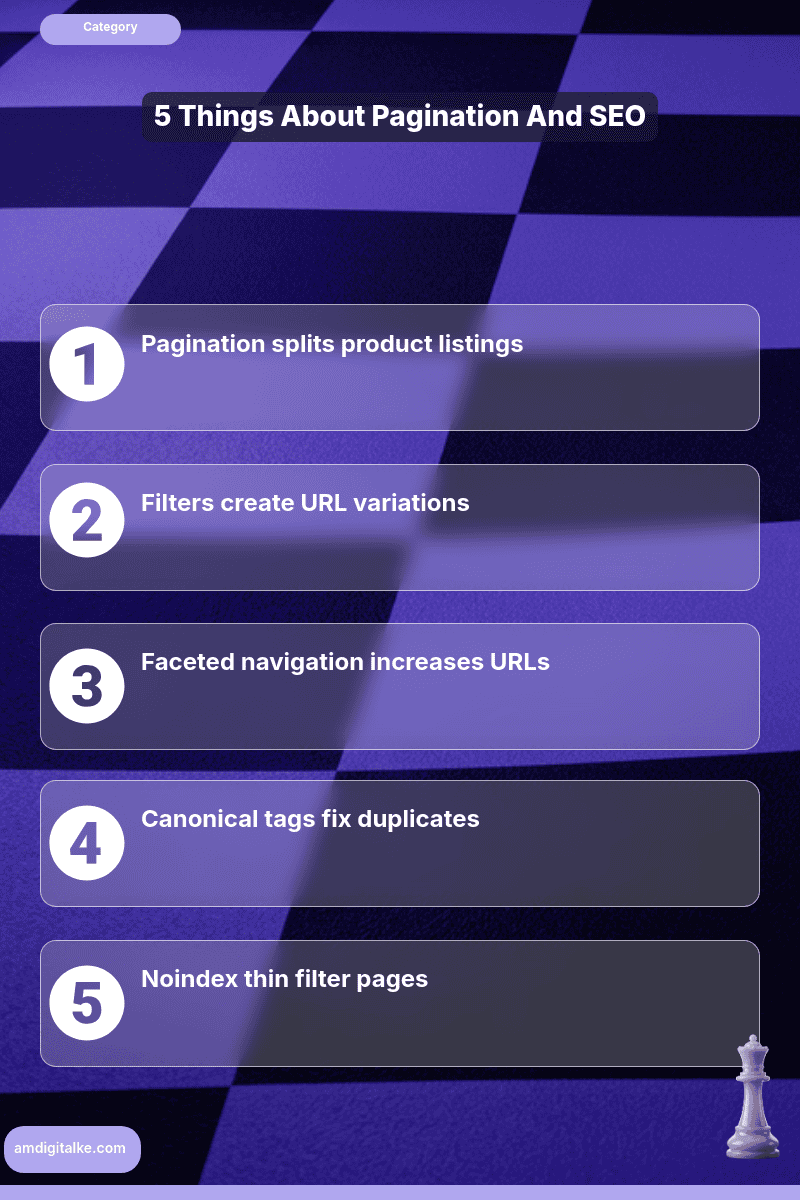
When you split listings across multiple pages, Google might only index page 1 (hiding other products) or treat each page separately (diluting ranking power).
The fix: Use rel=”next” and rel=”prev” tags, or implement a “View All” page with lazy loading for catalogues under 1,000 products.
2. Filter Chaos
Your fashion store lets customers filter by colour, size, and price.
Each combination creates unique URLs: /dresses?color=red, /dresses?color=red&size=medium&price=under-5000.
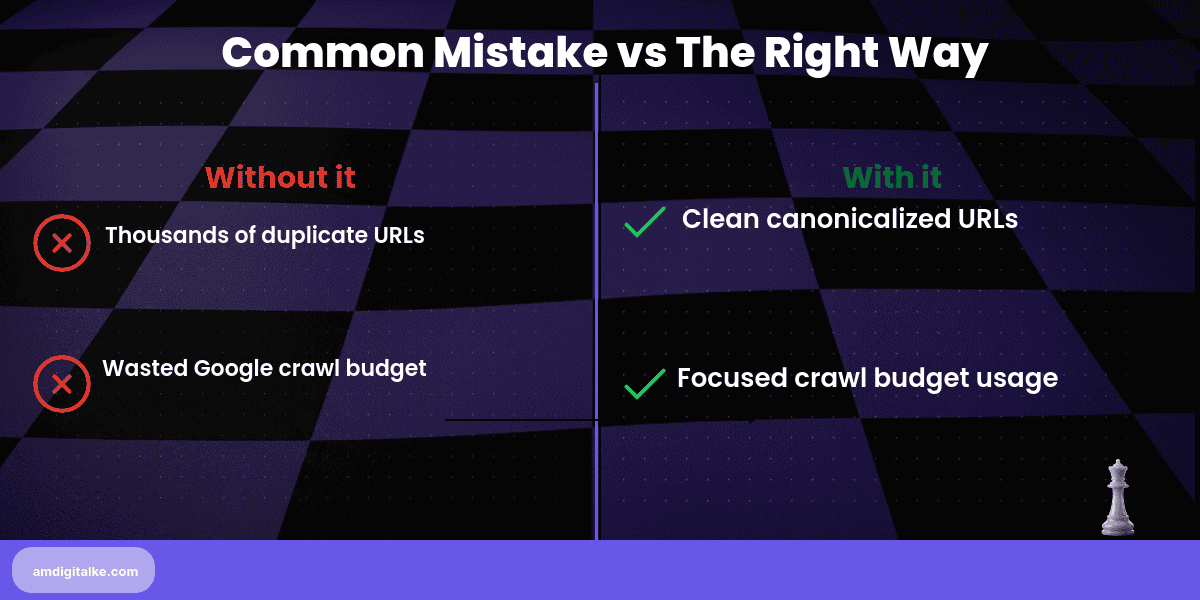
Multiply this across products, and you have thousands of near-duplicate pages wasting Google’s crawl budget.
The fix: Use URL parameters handling in Google Search Console to tell Google which parameters to ignore.
Add rel=”canonical” tags pointing to main category pages for dynamic filters.
Only allow indexing for high-value combinations you’ve optimised.
3. Faceted Navigation Complexity
Multiple filters working together can create millions of URL combinations.
A Kenyan electronics store with filters for brand, price, screen size, and features could generate 10,000+ URLs from just 100 products.
The fix: Implement “noindex, follow” for thin filter combinations.
Use JavaScript-based filters that don’t create new URLs.
Reserve indexable URLs for high-value, commonly-searched combinations.
A Nairobi fashion retailer had 3,000 products, creating 15,000+ indexed URLs through filters.
After implementing canonical tags, blocking irrelevant parameters, and using “noindex, follow” for thin filters, they saw organic traffic increase by 67% in four months.
Google stopped wasting time on duplicates and started ranking its optimised category pages.
Your Technical eCommerce SEO Toolkit:
Free Tools:
- Google Search Console (URL parameter handling, coverage reports)
- Screaming Frog (audit URL structure, free up to 500 URLs)
- Chrome DevTools (check canonical tags)
Worth The Investment:
- Ahrefs or SEMrush (site audits showing duplicate content)
- Sitebulb (technical audits for larger catalogues)
Kenya-Specific:
- Check your Shopify/WooCommerce theme’s filter handling. Many create problems by default.
- Test filter speed on Safaricom mobile. Users won’t wait.
- Use Cloudflare’s free CDN for faster product images
Technical eCommerce SEO is complex, and one wrong move tanks your visibility.
At AM Digital KE, we audit Kenyan online stores to identify hidden technical issues, then implement systematic fixes that help your products rank.
Tired of competing against yourself in search results? Check out our eCommerce SEO Services in Kenya and learn how we fix technical chaos so your products actually rank and generate sales.
Suspect technical issues are killing your visibility? Schedule a free site assessment where we’ll crawl your store for duplicate content, review your filter setup, and expose hidden issues wasting your crawl budget.
Have more SEO questions? Our SEO FAQs Kenya page answers the most common ones.
Frequently Asked Questions
Why does pagination hurt Kenyan e-commerce sites?
Google may only index page 1, hiding products on later pages, hurting sales for Nairobi stores.
How do filters waste crawl budget?
Each filter combination creates a new URL, exhausting Google’s crawl limit for Kenyan sites.
What’s faceted navigation in Kenyan e-commerce?
Multiple filters combined can create millions of URL variations for Nairobi online stores.
How does M-Pesa affect Kenyan SEO?
While crucial for payments, it doesn’t impact technical SEO issues like pagination and filters.