Table of Contents
- 📋 Key Takeaways
- 🎯 What’s the Difference? Chess vs Checkers Explained
- Checkers Marketing: Reacting to What’s in Front of You
- Chess Marketing: Playing 3 Moves Ahead
- Why Most Kenyan Businesses Play Checkers (And Lose)
- 5 Ways to Shift from Checkers to Chess Strategy
- 📊 How AM Digital KE Helps You Play Chess
- Your Chess Marketing Checklist
- ✅ Quick Action Checklist
- Ready to Improve Your Digital Marketing Strategy?
- Frequently Asked Questions
- Additional Resources
- Take the Next Step
TL;DR: Most Kenyan businesses play checkers with their marketing. They react to yesterday’s Instagram comments while competitors plan three moves ahead. Strategic marketing costs less than reactive panic spending, but it requires patience most Nairobi founders don’t have. This article shows you how to shift from checkers to chess thinking, working with a strategic marketing partner in Kenya, and stop wasting money on tactics that don’t compound.
Your competitor isn’t smarter than you.
They’re just playing a different game. They’re three moves ahead while you’re still reacting to yesterday’s results.
I see this every week in Nairobi.
A business owner calls me panicking because their Facebook ads stopped working. Or a competitor launched a new product. Or their Instagram engagement dropped.
They want me to fix it immediately.
But the problem isn’t the tactic that failed. It’s that they’re playing checkers in a chess game.
And checkers players always lose to chess players, even when the checkers player works harder.
This article breaks down the difference between reactive marketing and strategic marketing in Kenya’s market. I’ll show you why most businesses waste money on checkers moves.
I’ll also show you how to recognize when you’re doing it, and the exact framework to shift to chess thinking.
📋 Key Takeaways
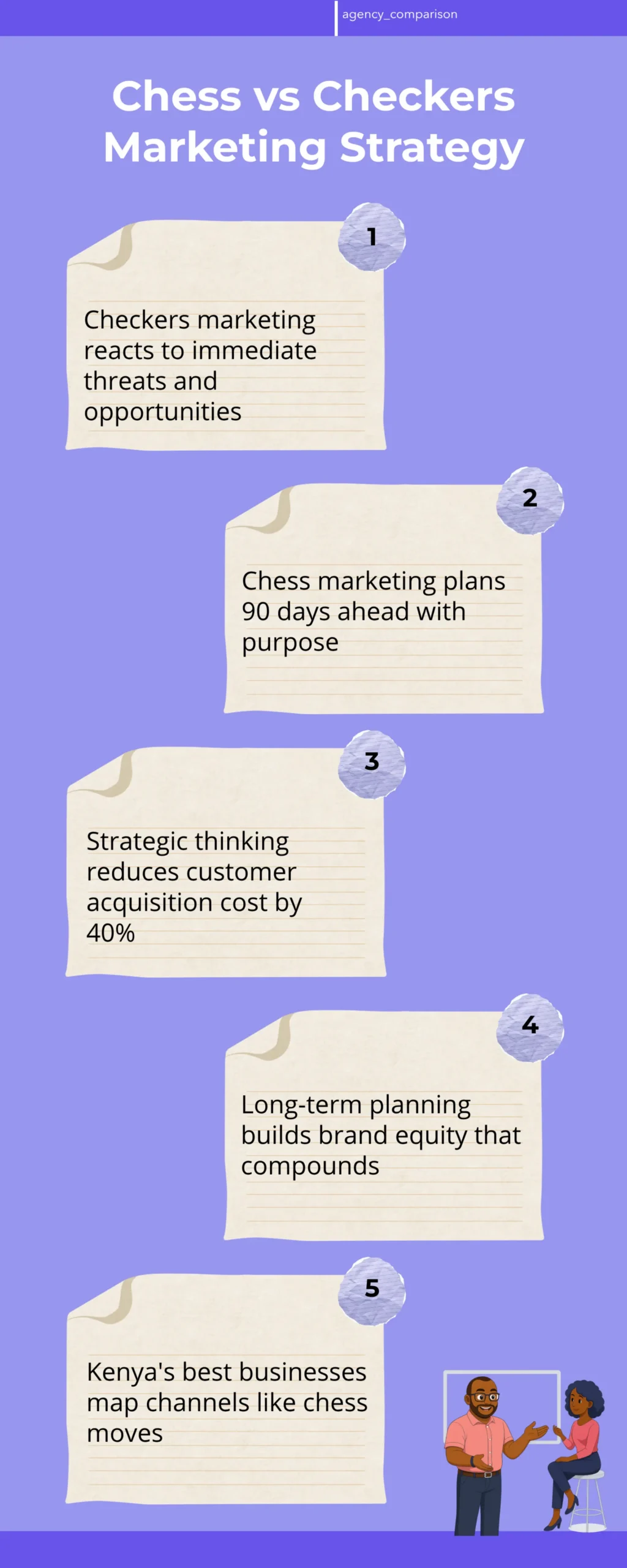
- Checkers marketing reacts to immediate threats and opportunities without considering how today’s move affects next quarter’s revenue
- Chess marketing plans 90 days ahead, mapping customer journeys across channels and measuring leading indicators that predict future growth
- Most Kenyan businesses play checkers because they’re cash-constrained and scared, but strategic planning reduces customer acquisition cost significantly. customer acquisition cost drops
- The shift from checkers to chess requires changing three things: your planning horizon, your measurement system, and your channel integration
- AM Digital KE teaches you to think strategically so you’re not dependent on reactive tactics that stop working when market conditions change
🎯 What’s the Difference? Chess vs Checkers Explained
Let me explain this metaphor properly before we go further.
In checkers, all your pieces move the same way. You react to what’s directly in front of you.
The Checkers Marketing Mindset
Checkers marketing looks like this in practice.
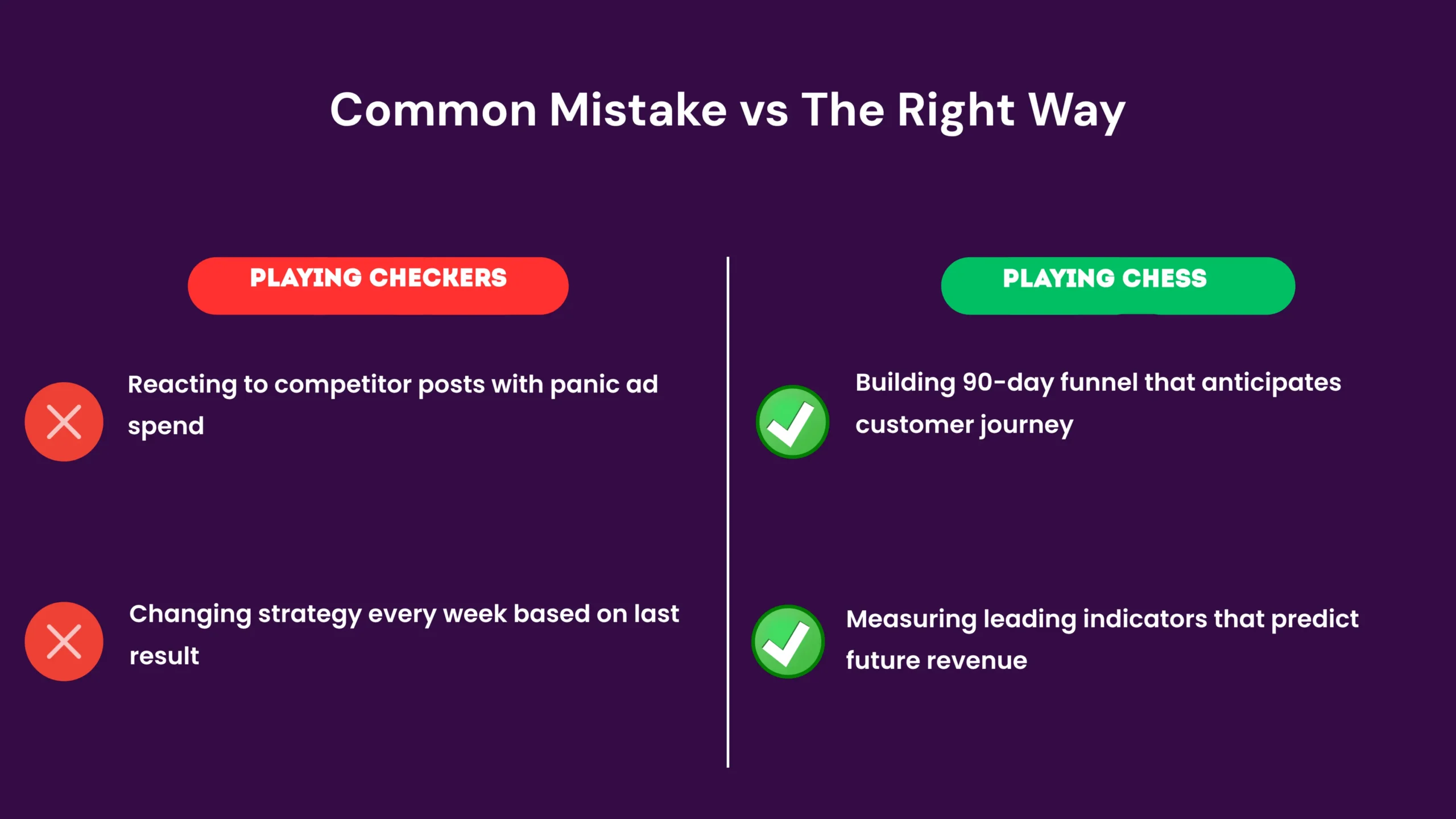
You see a competitor post something on Instagram, so you immediately post something similar. Your Facebook ads perform well one week, so you triple your budget the next week without understanding why they worked.
A customer complains on Twitter, so you launch a discount campaign to stop the bleeding.
Every move is reactive. You’re responding to the board state right now, with no consideration for how today’s move affects next month’s position.
The Chess Marketing Mindset
Chess marketing is completely different.
Different pieces have different roles. You’re planning three to five moves ahead.
You launch a Google Business Profile optimization campaign in January, knowing it will start generating leads in March. You build a WhatsApp nurture sequence in February, anticipating the leads that Google will send in April.
You create thought leadership content on LinkedIn in March, positioning yourself for the B2B deals that close in June.
Each move sets up the next move. You’re not reacting to what happened yesterday.
You’re executing a plan you mapped out 90 days ago.
Why This Metaphor Matters in Nairobi
Kenya’s digital marketing landscape rewards chess players.
Our market moves fast, but not randomly. There are patterns.
M-Pesa payment cycles happen monthly. Google Business Profile rankings take 60 to 90 days to stabilize.
WhatsApp Business adoption is growing predictably among Kenyan SMBs seeking customer communication channels.
If you understand these patterns and plan around them, you win. If you react to them after they happen, you waste money.
Checkers Marketing: Reacting to What’s in Front of You
Let me show you what checkers marketing actually looks like in Nairobi businesses. These are real patterns I see every month.
Daily Panic Adjustments
You check your Facebook ads every morning.
One day the cost per click is Kes 12, the next day it’s Kes 18. You panic and pause the campaign.
You restart it two days later when you see your competitor still running ads.
You never let anything run long enough to reach statistical significance. Your data is useless because you changed three variables before the first test finished.
Competitor Mimicry
Your competitor launches a new service, so you immediately launch the same service. They post a video on Instagram, so you scramble to make a video too.
You have no idea if their strategy is working. You just know they’re doing something and you’re not.
This is pure reactive thinking. You’re letting your competitor set your strategy, which means you’ll always be one move behind.
Budget Whiplash
One month you spend Kes 50,000 on Google Ads because you read an article about SEO being dead. The next month you spend Kes 50,000 on Facebook because your Google Ads didn’t generate immediate sales.
The month after that you hire an influencer because Facebook didn’t work either.
You never commit to a channel long enough to optimize it. Your customer acquisition cost stays high because you’re constantly starting over.
The Real Cost of Checkers Marketing
Here’s what this approach actually costs Kenyan businesses.
A Westlands e-commerce retailer came to me after spending Kes 2.1 million on marketing in 18 months with almost nothing to show for it. They had tried Facebook ads, Google Ads, Instagram influencers, email marketing, SMS campaigns, and WhatsApp broadcasts.
Every channel was tested for 4 to 6 weeks, then abandoned when it didn’t immediately generate profit.
They had no brand equity built, no email list worth nurturing, no Google Business Profile optimized, no content that ranked. Every shilling spent was a checkers move.
Reactive, isolated, and forgotten. Nothing compounded.
Chess Marketing: Playing 3 Moves Ahead
Now let me show you what strategic marketing looks like in practice. These are the patterns that separate growing businesses from stagnant ones.
90-Day Planning Horizons
Chess players plan in quarters, not days.
In January, you map out your Q1 content calendar based on customer journey stages. You know that awareness content published in January will generate consideration-stage traffic in February and decision-stage conversions in March.
You’re not reacting to last week’s traffic. You’re executing a plan you built 90 days ago.
This is how content marketing generates far higher conversion rates compared to reactive posting. content marketing conversion rates
Channel Integration as Strategy
Chess marketing treats channels as pieces on a board, each with a specific role.
Your Google Business Profile is your opening move. It captures high-intent local searches.
Your WhatsApp Business account is your mid-game. It nurtures leads who aren’t ready to buy today.
Your LinkedIn thought leadership is your endgame. It closes high-value B2B deals that take 90 to 180 days.
Each channel sets up the next channel. You’re not asking “which channel works best.”
You’re asking “how do these channels work together to move a customer from awareness to purchase?”
Leading Indicators Over Lagging Results
Checkers players measure last week’s sales. Chess players measure this week’s leading indicators that predict next month’s sales.
You track Google Business Profile views because you know views convert to calls in 14 to 21 days. You track email open rates because engaged subscribers convert at a much higher rate than cold traffic. email open rate benchmarks
You track LinkedIn profile views because you know B2B decision-makers research for 60 days before reaching out.
You’re measuring the inputs that create future outputs, not just counting yesterday’s outputs.
Nairobi SaaS Company Example
A Kilimani B2B SaaS company shifted from checkers to chess thinking in Q3 2023.
Their old approach was pure reaction. Post a job on BrighterMonday every week, send cold emails to lists bought online, boost random LinkedIn posts when engagement dropped.
We mapped out a 90-day chess strategy instead.
Month 1: Publish 8 thought leadership articles on LinkedIn targeting CFOs and operations managers. Month 2: Launch a WhatsApp Business account and create a 5-message nurture sequence for warm leads.
Month 3: Optimize their Google Business Profile and launch a referral program for existing customers.
Each move set up the next move. The LinkedIn content generated profile views in Month 1, which converted to WhatsApp conversations in Month 2, which converted to demos in Month 3.
Their customer acquisition cost dropped from Kes 87,000 to Kes 52,000 in one quarter. Same budget, different strategy.
Why Most Kenyan Businesses Play Checkers (And Lose)
If chess marketing is so much better, why doesn’t everyone do it? Because it requires three things most Nairobi founders don’t have.
Cash Constraints Create Short-Term Thinking
Most Kenyan SMBs are cash-constrained.
You need sales this month to make payroll next month. Strategic marketing that pays off in 90 days feels like a luxury you can’t afford.
So you play checkers. Reacting to immediate opportunities, chasing quick wins, changing tactics every week.
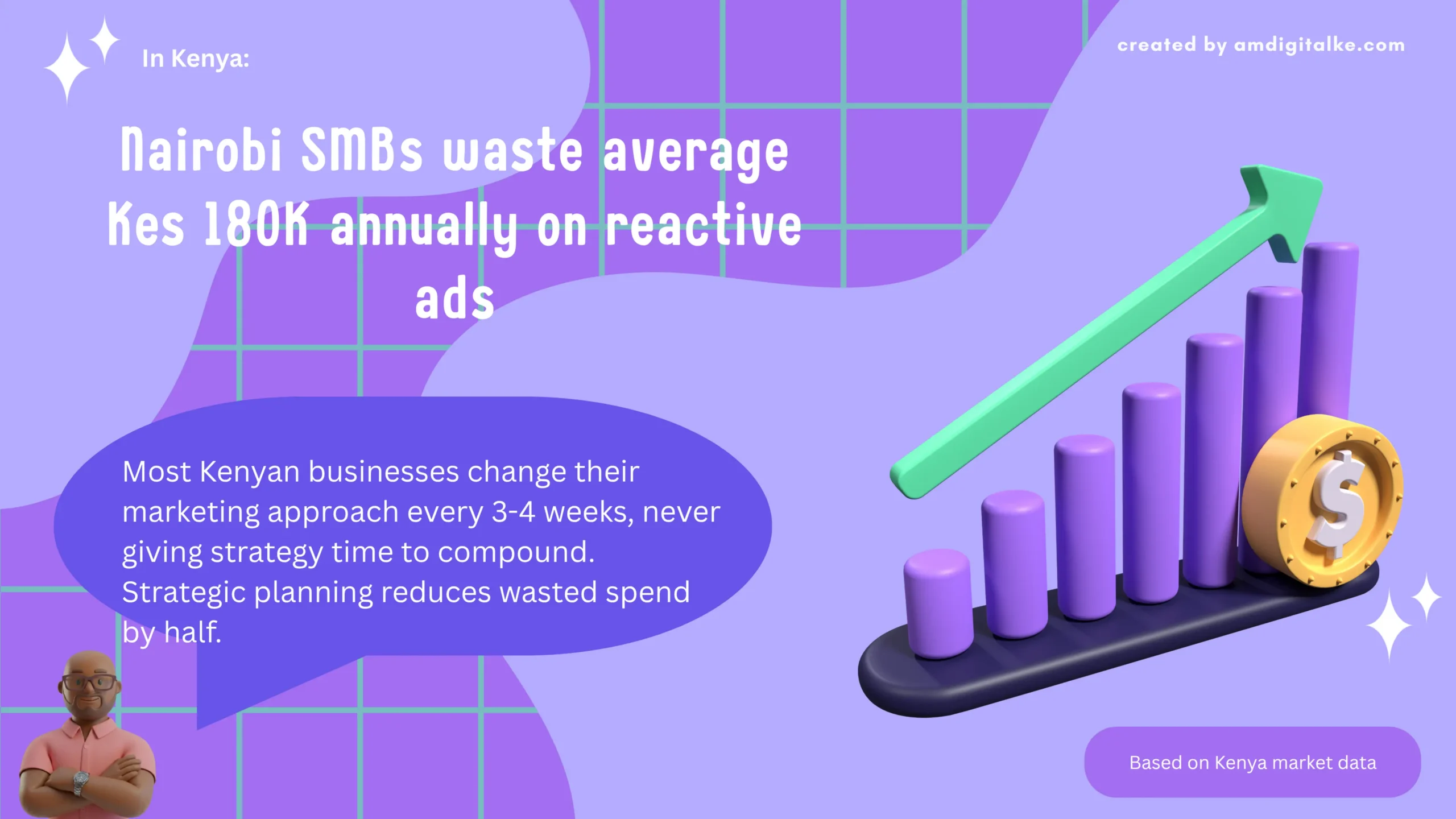
The irony is that checkers marketing costs more than chess marketing. You waste money on tactics that don’t compound, so you’re always starting over.
Fear of Commitment to One Strategy
Chess marketing requires commitment.
You pick a strategy and execute it for 90 days, even when results are slow in Week 3. Most Kenyan business owners panic and switch strategies in Week 4.
They’re terrified of being wrong, so they never commit long enough to be right.
This fear is expensive. Every time you switch strategies, you abandon the compounding effects you were building.
No System for Measuring Leading Indicators
Checkers players measure lagging indicators. Sales, revenue, profit.
Chess players measure leading indicators. Google Business Profile views, email list growth, WhatsApp conversation starts.
Most Kenyan businesses don’t have systems to measure leading indicators. They only look at last week’s sales, so they can’t see the future taking shape.
Without leading indicators, strategic planning feels like guessing.
The Education Gap
Nobody teaches Kenyan business owners to think strategically about marketing.
Most marketing advice in Kenya is tactical. 10 tips for Instagram growth, how to run Facebook ads, 5 ways to boost engagement.
Tactics without strategy is just expensive checkers. You’re learning individual moves without understanding how they fit into a larger game.
5 Ways to Shift from Checkers to Chess Strategy
Here’s the practical framework to stop reacting and start planning. I use this with every AM Digital KE client who comes to me playing checkers.
1. Extend Your Planning Horizon to 90 Days
Stop planning week to week.
Sit down on the last week of every quarter and map out the next 90 days. What content will you publish?
What channels will you optimize? What customer journey stages will you address?
Write it down in a calendar and commit to executing it even when results are slow in Week 3.
2. Map Your Customer Journey Across Channels
Draw out how a customer moves from awareness to purchase in your business.
What channel do they discover you on? Where do they go to research you?
What triggers them to finally buy?
Now assign each channel a role in that journey. Google Business Profile captures awareness.
WhatsApp Business nurtures consideration. Your website converts decision-stage buyers.
Each channel is a chess piece with a specific job.
3. Build a Leading Indicator Dashboard
Stop only measuring last week’s sales.
Identify the 3 to 5 metrics that predict future sales in your business. For most Kenyan businesses, these are: Google Business Profile views, email list growth, WhatsApp conversation starts, website returning visitors, and LinkedIn profile views.
Track these weekly. When leading indicators go up, you know sales will follow in 14 to 30 days.
4. Commit to One Strategy for 90 Days Minimum
Pick your chess strategy and execute it for a full quarter.
No panic adjustments in Week 3. No switching tactics in Week 5.
Commit to 90 days of consistent execution, then evaluate. This is how you build compounding effects that checkers players never achieve.
5. Document Your Strategy So You Can Teach It
Chess players can explain their strategy to someone else. Checkers players just react and hope.
Write down your 90-day marketing strategy in a document you could hand to a new hire. If you can’t explain it clearly, you don’t have a strategy.
You just have tactics.
📊 How AM Digital KE Helps You Play Chess
We don’t just execute tactics for you. We teach you to think strategically so you’re not dependent on any agency, including us.
90-Day Strategy Mapping Sessions
We sit down with you quarterly and map out your chess strategy.
We identify your customer journey, assign roles to each channel, and build your leading indicator dashboard. You walk out with a written plan you can execute or hand to your team.
Channel Integration Planning
We show you how Google Business Profile, WhatsApp Business, email, and LinkedIn work together as a system.
You stop asking “should I do SEO or social media?” and start asking “how do these channels set each other up?”
Leading Indicator Training
We teach you to measure the inputs that create future outputs.
You stop obsessing over last week’s sales and start tracking the metrics that predict next month’s revenue. This is the difference between reactive panic and strategic confidence.
Real Nairobi Example: The Fintech Shift
A Nairobi fintech startup came to us after wasting Kes 1.8 million on Google Ads with no funnel. Pure checkers thinking.
They saw competitors running ads, so they ran ads too.
We shifted them to chess strategy.
Month 1: Optimize Google Business Profile for high-intent local searches. Month 2: Build WhatsApp Business nurture sequence for leads not ready to buy.
Month 3: Launch referral program for existing customers.
Each move set up the next move. Their customer acquisition cost dropped 43% in one quarter, and their customer lifetime value increased because the WhatsApp nurture built relationship before the sale.
Same market, same competition, different strategy.
Your Chess Marketing Checklist
Here’s the comparison between checkers and chess thinking in Kenyan digital marketing.
| Element | Checkers Marketing (Reactive) | Chess Marketing (Strategic) |
|---|---|---|
| Planning Horizon | Week to week, based on last week’s results | 90-day quarters with clear milestones |
| Channel Approach | Pick the “best” channel and go all-in | Integrate channels as a customer journey system |
| Measurement Focus | Lagging indicators (last week’s sales) | Leading indicators (future sales predictors) |
| Budget Allocation | React to what worked last month | Invest based on customer journey stages |
| Content Strategy | Post when you have something to say | Calendar mapped to awareness/consideration/decision |
| Competitor Response | Copy what competitors do immediately | Analyze competitor moves, respond strategically |
| Results Timeline | Expect immediate ROI or panic | Understand 30-90 day compounding timelines |
✅ Quick Action Checklist
- ☐ Block 2 hours this week to map your customer journey from awareness to purchase across all channels
- ☐ Identify your 3-5 leading indicators that predict future sales and set up weekly tracking
- ☐ Write down your 90-day marketing strategy in a document clear enough to hand to a new hire
- ☐ Audit your current marketing spend and identify checkers moves that don’t compound
- ☐ Choose one channel to optimize strategically for the next 90 days instead of reacting daily
- ☐ Set up a WhatsApp Business account if you don’t have one, it’s Kenya’s most effective nurture channel
- ☐ Create a Google Business Profile leading indicator dashboard tracking views, clicks, and calls
- ☐ Schedule quarterly strategy sessions with your team or AM Digital KE to plan the next 90 days
Ready to Improve Your Digital Marketing Strategy?
Strategic marketing costs less than reactive marketing, but it requires thinking most Kenyan business owners haven’t been taught.
We help you shift from checkers to chess so you stop wasting money on tactics that don’t compound. Contact AM Digital KE today to map your 90-day chess strategy.
Frequently Asked Questions
How long does it take to see results from chess marketing strategy?
Most Kenyan businesses see leading indicators improve within 30 days and revenue impact within 60 to 90 days. The difference is that chess marketing compounds. Month 4 is better than Month 3, which was better than Month 2. Checkers marketing resets every month, so you’re always starting over with the same results.
What if I can’t afford to wait 90 days for results?
Chess marketing actually generates faster results than checkers marketing because you’re not wasting money on random tactics. A Westlands retailer cut their customer acquisition cost significantly in the first 60 days by stopping reactive Facebook boosting and building a strategic funnel. Strategic doesn’t mean slow. It means intentional.
Which channels should I focus on for chess marketing in Kenya?
The three highest-ROI channels for Kenyan SMBs are Google Business Profile for high-intent local searches, WhatsApp Business for nurturing warm leads, and LinkedIn for B2B thought leadership. The key is integrating them as a system, not picking one and ignoring the others. Each channel plays a specific role in your customer journey.
How do I know if I’m playing checkers or chess with my marketing?
Ask yourself: Can I explain my marketing strategy for the next 90 days to someone else right now? If no, you’re playing checkers. Chess players have written plans.
Checkers players react to whatever happened yesterday. If you changed your marketing approach in the last 30 days because something didn’t work immediately, that’s checkers thinking.
Do I need an agency to shift from checkers to chess strategy?
No, but most Kenyan business owners need someone to teach them strategic thinking because it’s not intuitive when you’re cash-constrained and scared. AM Digital KE helps you build the chess strategy, then you can execute it yourself or with your team. We’re educators first, executors second. The goal is to make you strategically independent.
Additional Resources
- Why no amount of SEO can fix a broken brand – Before you invest in chess marketing strategy, understand why brand foundation matters more than tactical execution in Nairobi’s competitive market.
- Why Hiring A Cheap SEO Agency In Kenya Costs You More In The Long Run – Checkers marketing often starts with hiring the cheapest agency, but this article shows you the hidden costs of reactive, low-quality SEO work.
- The Review Velocity Strategy-Outranking Competitors Fast – A chess marketing tactic that compounds over time: building review velocity to dominate local search rankings in Nairobi.
- Strategic Partnerships – Co-Marketing for Mutual Link Benefits – Chess players build strategic partnerships that create compounding link equity, while checkers players chase one-off guest post opportunities.
- Digital PR for Kenyan Businesses – Getting Media Coverage That Links – Learn how to plan PR campaigns 90 days ahead to generate media coverage that builds authority and drives traffic in Kenya’s market.
- B2B SEO for Logistics – Long Sales Cycles and Content Strategy – B2B marketing requires chess thinking by definition, and this guide shows you how to map content to 90-180 day sales cycles in Kenya.
Take the Next Step
Want to know which chess piece business quiz kenya your business is playing as right now?
I built a free assessment that shows you whether you’re playing checkers or chess with your marketing, and gives you a custom 90-day strategy based on your current position.
Take the Which Chess Piece Is Your Business quiz and get your personalized chess strategy for Kenya’s market.