Table of Contents
- Key Takeaways
- Content Marketing Strategies That Help Kenyan Law Firms Dominate Google
- Your Legal Content Marketing Checklist
- Frequently Asked Questions
- Why should Kenyan law firms use blogs?
- What are good blog topics for Kenyan lawyers?
- How often should Kenyan law firms blog?
- How do blogs help Kenyan lawyers get more cases?
TL;DR: Write blogs answering common legal questions to attract Kenyan clients online.
Last Updated: March 2026
Key Takeaways
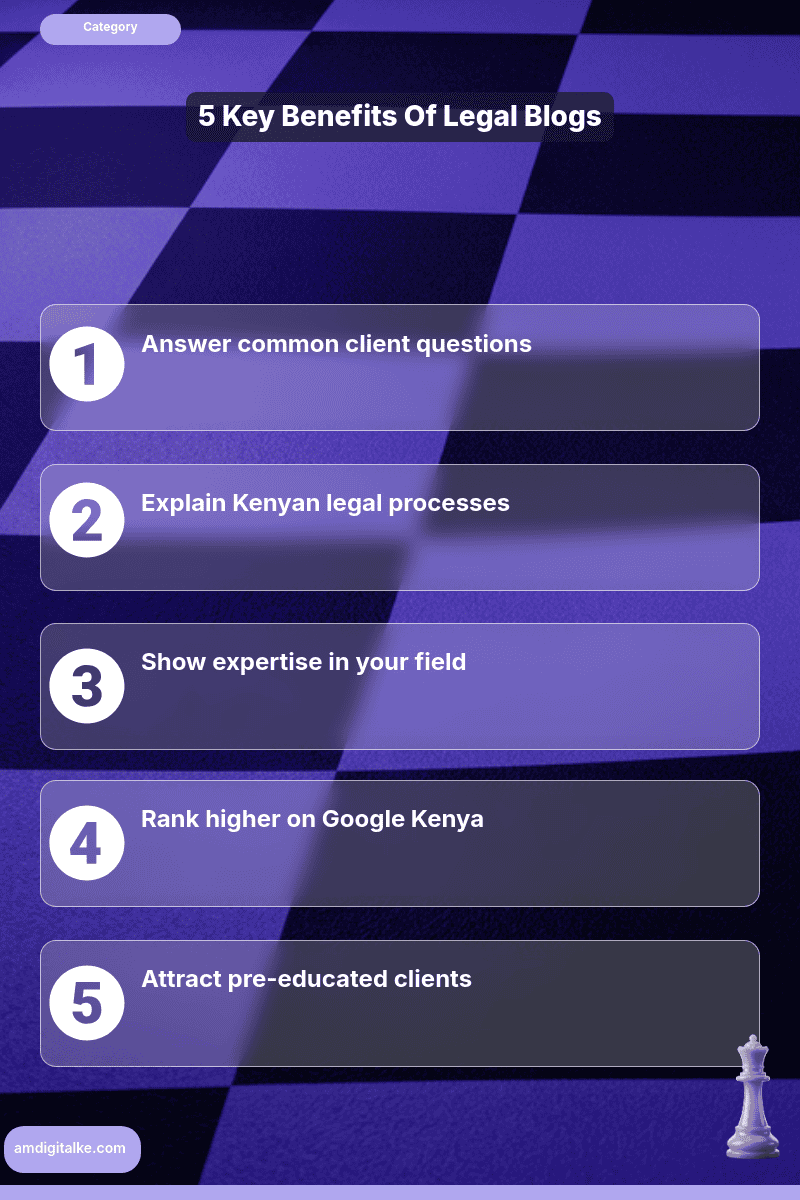
- Answer real client questions
- Explain complex legal processes
- Cover new laws quickly
- Focus on local legal issues
- Show expertise to build trust
Your Nairobi law firm has decades of experience, brilliant lawyers, and satisfied clients.
But when potential clients search “employment lawyer Nairobi” or “how to register a company in Kenya,” your competitors’ websites show up with helpful blog posts while your site only has a stiff “About Us” page and contact form.
Here’s the reality: Legal expertise means nothing if your ideal clients can’t find you online.
Most Kenyan law firms treat their websites like digital brochures.
They’re static, formal, and rarely updated.
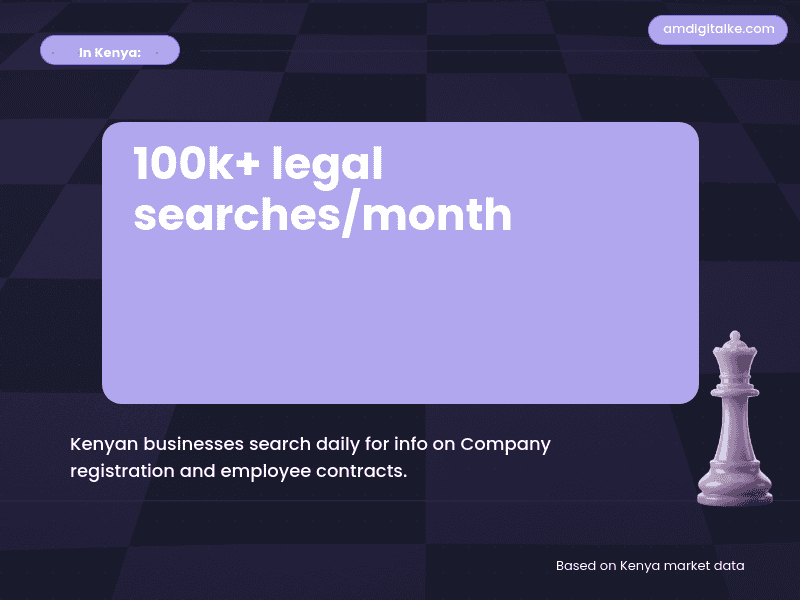
Meanwhile, potential clients are asking thousands of questions about the law on Google every day.
“Can my landlord evict me without notice?” “What documents do I need for a divorce in Kenya?” “How do I trademark my business name?”
When your firm publishes content that answers these questions, you accomplish three things.
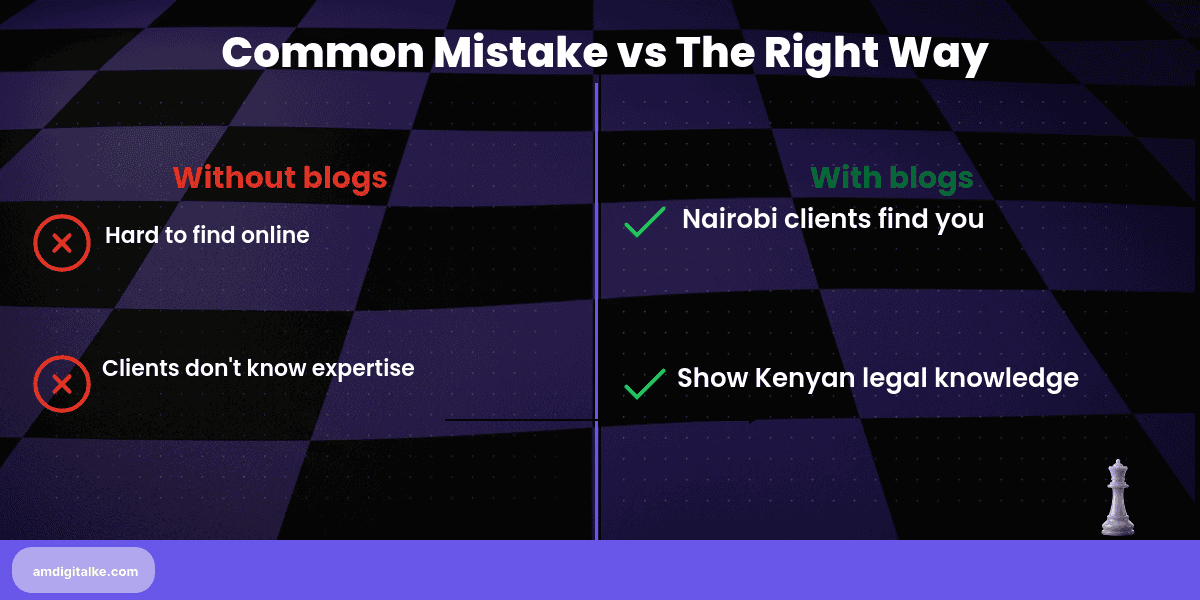
You get found on Google, you demonstrate expertise, and you build trust before the consultation even happens.
Most Kenyan clients research lawyers online before making contact.
Those who read your blog content are already pre-qualified and educated about their legal situation.
Content Marketing Strategies That Help Kenyan Law Firms Dominate Google
1. Answer Real Client Questions
Your best content ideas are sitting in your email inbox and consultation notes.
What do clients ask during initial consultations? Turn each common question into a blog post.
“Understanding Employment Termination Rights in Kenya” consistently outperforms “Our Employment Law Services” in terms of SEO and client value.
2. Break Down Complex Legal Processes
Kenyan legal procedures intimidate potential clients.
Write step-by-step guides that demystify processes: “7 Steps to Registering Your Company at the Business Registration Service” or “What to Expect During Divorce Proceedings in Kenya.”
Use simple language. You’re educating, not writing a legal brief.
3. Cover Legislation Changes and Legal Updates
When new regulations pass, like amendments to the Employment Act or changes to data protection laws, Kenyan businesses scramble to understand the implications.
Publish timely content within 48 hours of major legal updates.
This positions your firm as the go-to authority and captures urgent search traffic.
4. Create Location-Specific Content
Don’t just write “Child Custody Laws in Kenya.”
Write “Navigating Child Custody Cases in Nairobi Family Courts: A Practical Guide.” This targets location-specific searches and demonstrates your understanding of local court systems, from Milimani Law Courts to Mombasa’s judiciary.
5. Use Case Studies (Anonymised)
Share real scenarios without identifying details: “How We Helped a Westlands Restaurant Owner Resolve a Partnership Dispute” or “Protecting a Client’s Intellectual Property: A Copyright Infringement Case.”
These demonstrate expertise while respecting confidentiality and targeting industry-specific keywords.
6. Optimise for Featured Snippets
Structure content to win Google’s featured snippet (position zero).
Use clear definitions, numbered lists, and direct answers to questions. When someone searches “how long does probate take in Kenya,” your blog post saying “Probate in Kenya typically takes 6-12 months depending on estate complexity” could appear in the coveted answer box.
Your Legal Content Marketing Checklist
- ☐ Audit client questions – Review 3 months of consultations and list the top 10 questions (2 hours)
- ☐ Create an editorial calendar – Plan 2 blog posts per month addressing these questions
- ☐ Optimise for local search – Include “Kenya,” “Nairobi,” or specific locations in titles and content
- ☐ Add legal disclaimers – Include “This is general information, not legal advice. Consult a lawyer for your specific situation”
- ☐ Promote published content – Share on LinkedIn, add to email signatures, mention in consultations
- ☐ Monitor performance – Track which posts drive traffic and consultations using Google Analytics
- ☐ Update regularly – Review and refresh content quarterly as laws change
Content marketing isn’t just about writing.
It’s about strategic positioning that captures search traffic and converts readers into clients.
At AM Digital KE, we help Kenyan law firms develop content strategies that build authority, dominate search results, and attract high-value clients.
Ready to turn your legal expertise into content that ranks?
Explore our Legal Content Marketing Services in Kenya and discover how we help law firms build authority through strategic, SEO-optimised blogs.
Not sure if your current content strategy is working?
Get a free SEO audit where we’ll analyse your blog’s performance against competing firms, identify content gaps in your practice areas, and show you which topics could bring qualified leads.
Have more SEO questions? Our SEO FAQs Kenya page answers the most common ones.
Frequently Asked Questions
Why should Kenyan law firms use blogs?
Blogs help Kenyan clients find your firm online and prove your legal expertise before meeting.
What are good blog topics for Kenyan lawyers?
Write about Nairobi eviction laws, registering a Kenyan business, or recent data protection changes.
How often should Kenyan law firms blog?
Post weekly on common client questions and immediately after major Kenyan law updates.
How do blogs help Kenyan lawyers get more cases?
Based on AM Digital KE client data across Kenyan accounts, clients who read blog content before contacting a firm are already pre-qualified.
They understand their legal situation better and convert faster.