Table of Contents
- Key Takeaways
- Why Category Pages Matter for Kenyan eCommerce
- The Category Page Optimisation Framework
- Your Category Page SEO Checklist:
- Frequently Asked Questions
- Why are category pages important for Kenyan eCommerce?
- How many keywords should a category page target?
- What content length is best for category pages?
- How do category pages improve search rankings?
- Can category pages outrank competitors in Kenya?
TL;DR: Category page SEO boosts Kenyan eCommerce stores by targeting high-volume keywords and improving Google rankings for local searches.
Last Updated: March 2026
Key Takeaways
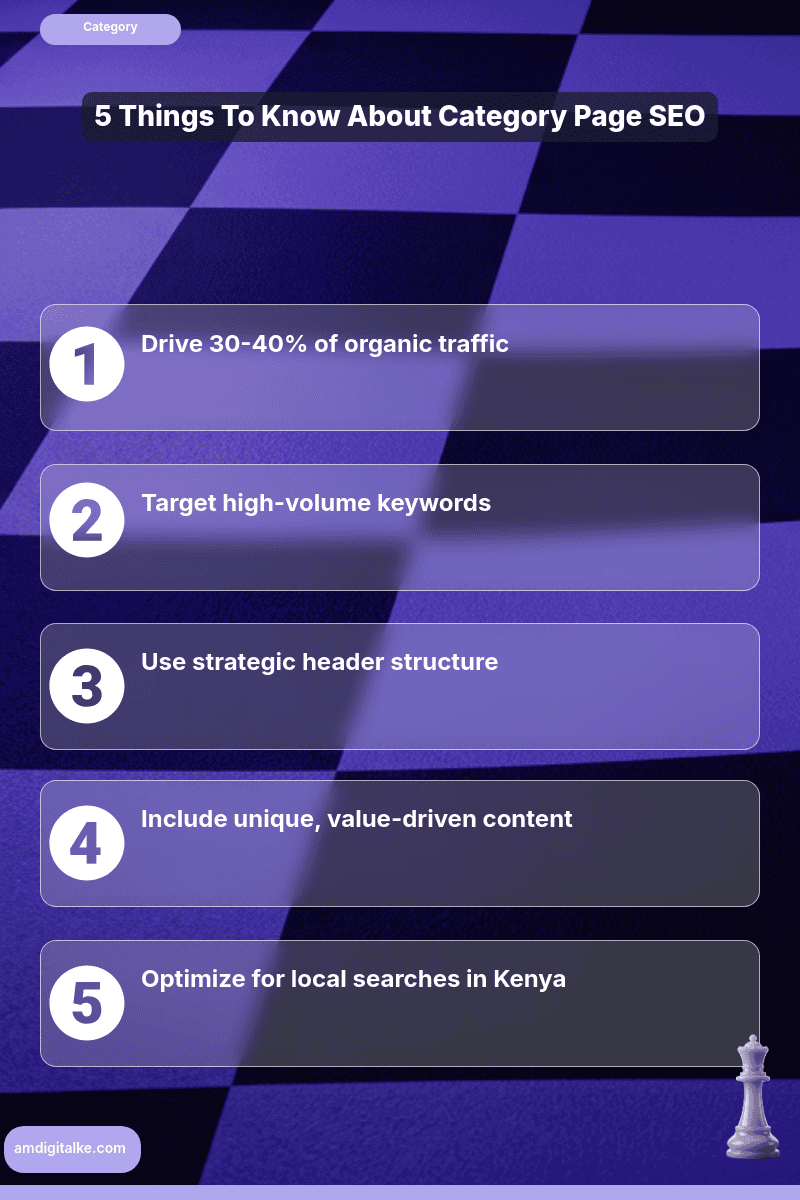
- Target one primary keyword per page
- Use strategic header structure
- Include 300-500 words of unique content
- Optimize title tags and meta descriptions
- Drive 30-40% of organic traffic
Your online store has 500 products. Amazing selection.
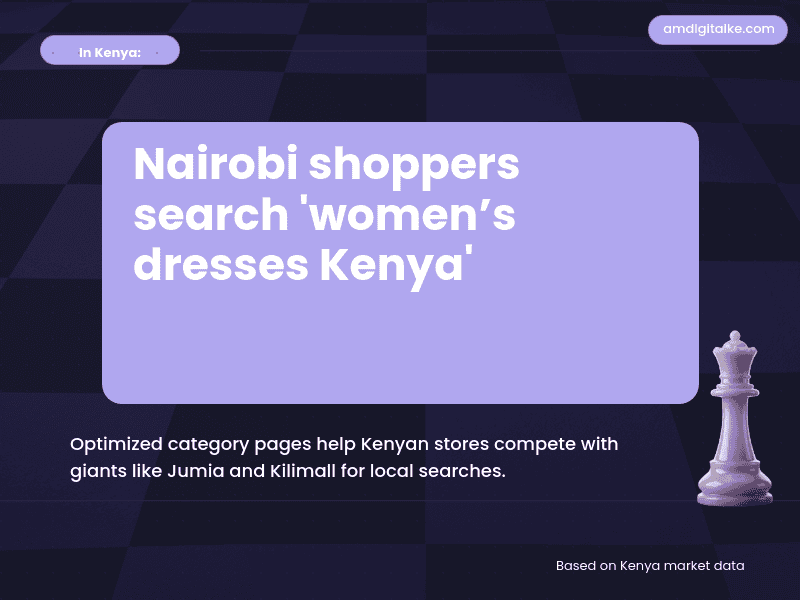
But when a Nairobi shopper searches “women’s dresses Kenya” or “office furniture Nairobi,” they find your competitors instead.
Why? While you were obsessed with individual product pages, you ignored the pages that actually drive the most traffic: your category pages.
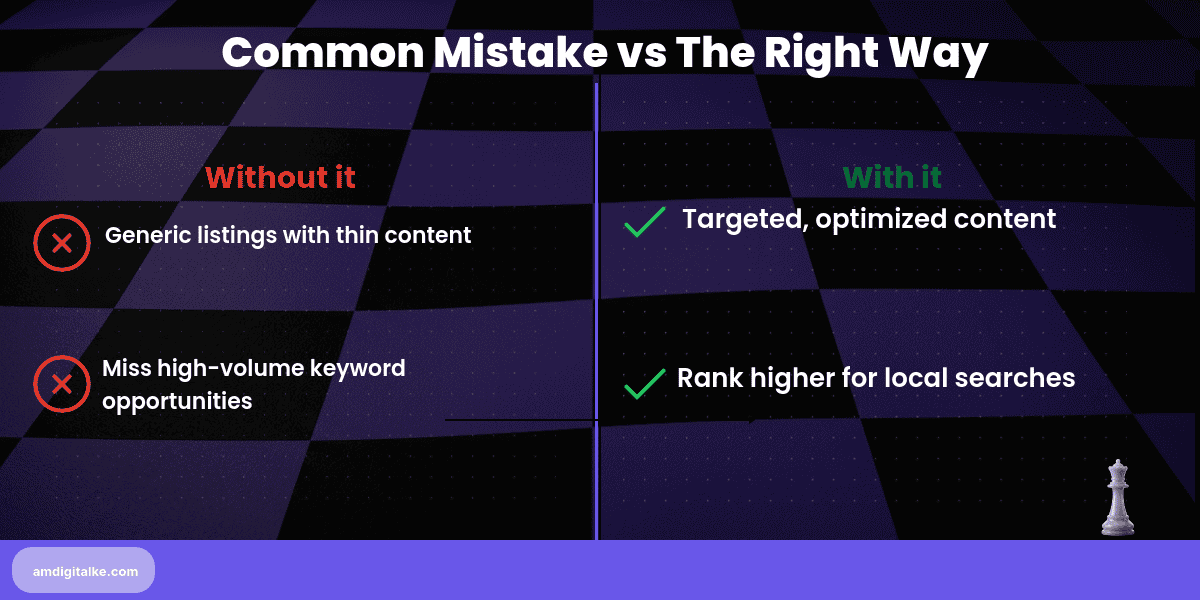
Category pages are the workhorses of eCommerce SEO. They target high-volume commercial keywords, better satisfy search intent than product pages, and provide the structure Google needs to understand your store.
Yet most Kenyan online stores treat them like afterthoughts. Generic listings with thin content and zero optimisation.
Why Category Pages Matter for Kenyan eCommerce
Think about how people shop online. Someone searching “running shoes Kenya” isn’t looking for one specific product.
They want options to browse, compare, and filter. Your category page is the perfect answer to this search intent.
Category pages typically drive 30-40% of organic traffic for successful eCommerce sites. They rank for broader, higher-volume keywords that individual product pages can’t compete for.
For Kenyan stores competing with Jumia and Kilimall, optimised category pages level the playing field. Your well-optimised categories can outrank them for specific searches like “organic skincare Nairobi” or “handmade furniture Kenya.”
The Category Page Optimisation Framework
1. Strategic Keyword Targeting
Each category page should target one primary keyword and 3-5 related variations. For “Men’s Watches,” that’s:
- Primary: “men’s watches Kenya”
- Variations: “watches for men Nairobi,” “affordable men’s watches Kenya”
2. Compelling Title Tags & Meta Descriptions
Use this formula: [Primary Keyword] – [Benefit] | [Store Name]
Example: “Men’s Watches Kenya – 500+ Styles, Free Nairobi Delivery | YourStore”
3. Strategic Header Structure
- H1: “Men’s Watches in Kenya”
- H2s: “Affordable Men’s Watches,” “Luxury Watch Brands”
- H3s: “Digital Watches,” “Smartwatches”
This hierarchy helps Google understand your page. It also helps mobile shoppers scan quickly.
4. Unique, Value-Driven Content
Aim for 300-500 words of unique content that helps shoppers decide:
- Explain product benefits and use cases
- Address common questions
- Highlight what makes your selection special
- Include local context (“All watches shipped from our Nairobi warehouse”)
Place this content BELOW product listings on mobile. This prevents pushing products down the page.
5. Optimised Product Listings
- Product images: Compress for Kenya’s internet speeds
- Product titles: Front-load keywords: “Casio Men’s Silver Watch – Water Resistant”
- Filtering: Let shoppers filter by price, brand, and features
6. Internal Linking Architecture
Link to parent categories, sibling categories, subcategories, and related blog posts. This builds topical authority and helps Google understand your site structure.
7. Schema Markup for Rich Results
Implement Product Schema and BreadcrumbList Schema to earn rich snippets. Star ratings, prices, availability.
These rich results increase click-through rates by up to 30%.
A Nairobi electronics store rebuilt its category pages with buying guides, proper headers, and schema. Within 5 months, organic traffic to category pages increased 185%.
Their ranking for “gaming laptops Kenya” jumped from position 24 to position 4.
Your Category Page SEO Checklist:
- ☐ Audit top 5 categories using Google Search Console (15 minutes)
- ☐ Rewrite title tags using the formula above (30 minutes)
- ☐ Add 300-500 words of unique content per category (2 hours each)
- ☐ Implement breadcrumb navigation with schema markup (1 hour)
- ☐ Create internal links to related content (30 minutes)
- ☐ Compress product images to under 100KB each (1 hour)
- Monitor performance in Google Search Console (ongoing)
Start with your highest-traffic categories. These optimisations compound quickly.
Category page optimisation is technical, strategic, and ongoing. At AM Digital KE, we’ve helped Kenyan eCommerce stores build category architectures that rank, convert, and scale.
Want category pages that outrank Jumia and Kilimall? Check out our eCommerce SEO Services in Kenya and learn how we build category architectures that drive consistent traffic and sales for Kenyan online stores.
Get a free SEO audit where we’ll review your category page structure, identify missing optimisation elements like schema markup, and pinpoint content improvements that could boost your visibility.
Have more SEO questions? Our SEO FAQs Kenya page answers the most common ones.
Frequently Asked Questions
Why are category pages important for Kenyan eCommerce?
They target high-volume keywords like ‘running shoes Kenya’ and help stores compete with Jumia and Kilimall.
How many keywords should a category page target?
Each page should focus on one primary keyword and 3-5 related variations, like ‘men’s watches Kenya’.
What content length is best for category pages?
Aim for 300-500 words of unique content that helps shoppers make informed decisions.
How do category pages improve search rankings?
They better satisfy search intent and provide the structure Google needs to understand your store.
Can category pages outrank competitors in Kenya?
Yes, optimized categories can rank higher for searches like ‘organic skincare Nairobi’ or ‘handmade furniture Kenya’.