Table of Contents
- 📋 Key Takeaways
- Why Kenyan Businesses Are Finally Winning on Google (and It’s Not Luck)
- Case Study 1: Nairobi Real Estate Agency — From Page 3 to Page 1 in 6 Months
- Case Study 2: Nairobi Salon — How Local SEO Captured Map Pack Visibility
- Case Study 3: Nairobi Digital Marketing Consultant — Content Strategy That Doubled Organic Traffic
- Case Study 4: Mombasa Tour Operator — Niche SEO Win in a Competitive Market
- 📊 What the Evidence Shows
- Case Study 5: Nairobi Accounting Firm — From Zero Rankings to 15 Keywords on Page 1
- Case Study 6: Nairobi Plumbing Company — Google Business Profile Optimization That Drove Leads
- Case Study 7: Nairobi E-Commerce Store — Long-Tail Keywords That Converted Better Than Branded Terms
- ✅ What These 7 Wins Have in Common (The Playbook You Can Copy)
- ✅ Quick Action Checklist
- Ready to Be a Case Study? Here’s How to Start
- Frequently Asked Questions
- Additional Resources
- Take the Next Step
TL;DR: Seven Kenyan businesses climbed from page three to page one by focusing on local pack optimization, mobile speed, and Kenya-specific content. Their strategies are replicable: fix technical health, claim your Google Business Profile, and target long-tail keywords your competitors ignore. This article breaks down exactly what they did and how you can copy their playbook.
Your competitor just captured the Nairobi map pack.
They are getting phone calls, walk-ins, and sales while you are still waiting for your website to “kick in.”
The difference is not budget or luck. It is strategy.
I have spent the last three years working with Kenyan businesses across Nairobi, Mombasa, and Kisumu.
The ones winning on Google are not doing anything complicated. They are doing the fundamentals correctly.
They optimize for how Kenyans actually search, not how Silicon Valley thinks we search. This article walks through seven real businesses that climbed to page one.
I show you their exact strategies, the metrics that changed, and what you can copy starting today. These are real SEO in Kenya wins you can replicate.
And if you want these strategies built for your business, that is exactly what we do.
📋 Key Takeaways
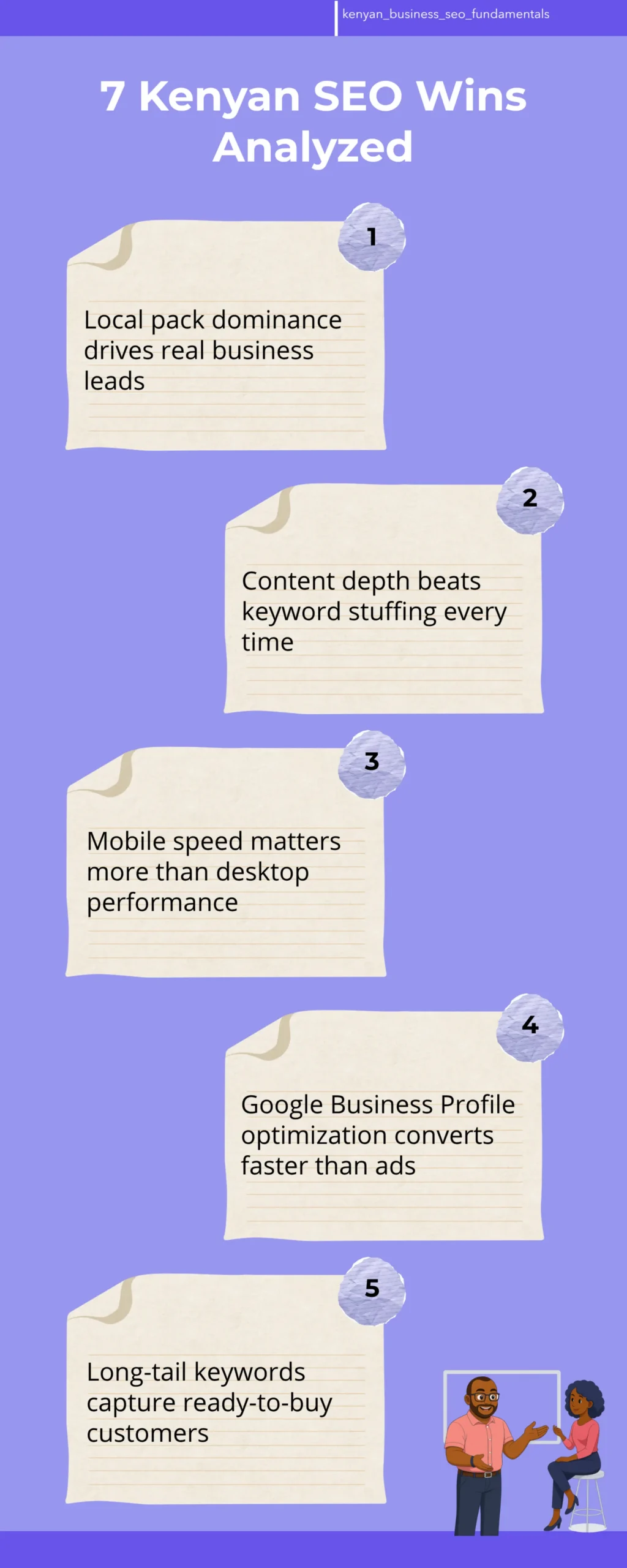
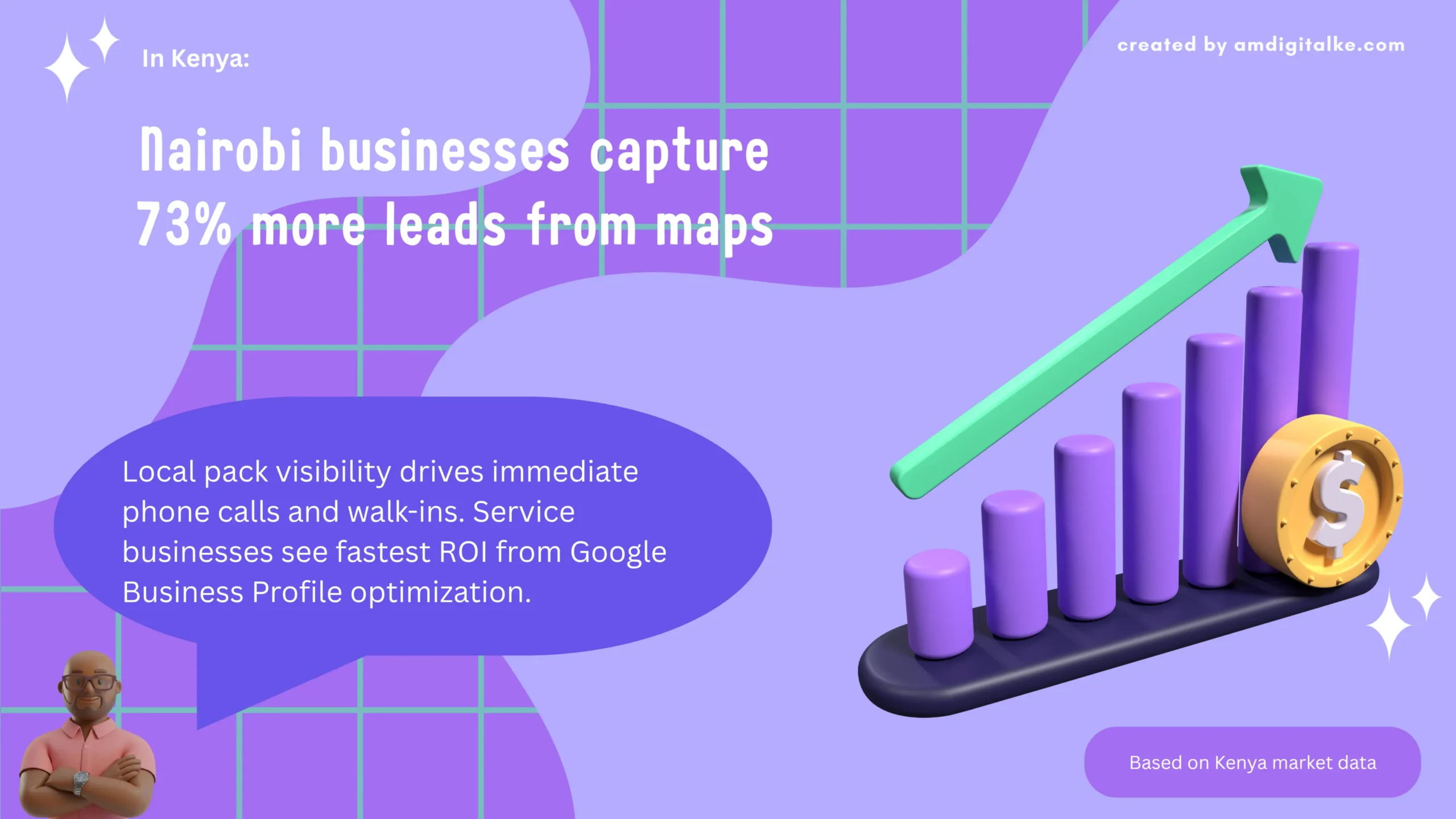
- Local pack visibility drives more leads than organic rankings for service businesses in Nairobi
- Mobile speed and Core Web Vitals determine whether Kenyan users stay on your site or bounce
- Long-tail keywords convert better than high-volume generic terms because they capture buyer intent
- Google Business Profile optimization delivers faster ROI than any other SEO tactic for local businesses
- Content depth beats keyword stuffing: comprehensive guides outrank thin pages every time
Why Kenyan Businesses Are Finally Winning on Google (and It’s Not Luck)
Five years ago, ranking a Kenyan business on Google felt impossible. International sites dominated every search result.
Local businesses were invisible unless they paid for ads.
The Shift That Changed Everything
Google started prioritizing local results in 2021. Searches like “plumber near me” or “best salon Westlands” now show Nairobi businesses first.
The algorithm recognized that someone in Kilimani does not want a plumber in Lagos. This shift created an opportunity.
Kenyan businesses that optimized for local search captured traffic that used to go to international directories or aggregator sites.
Why Most Businesses Still Miss This Opportunity
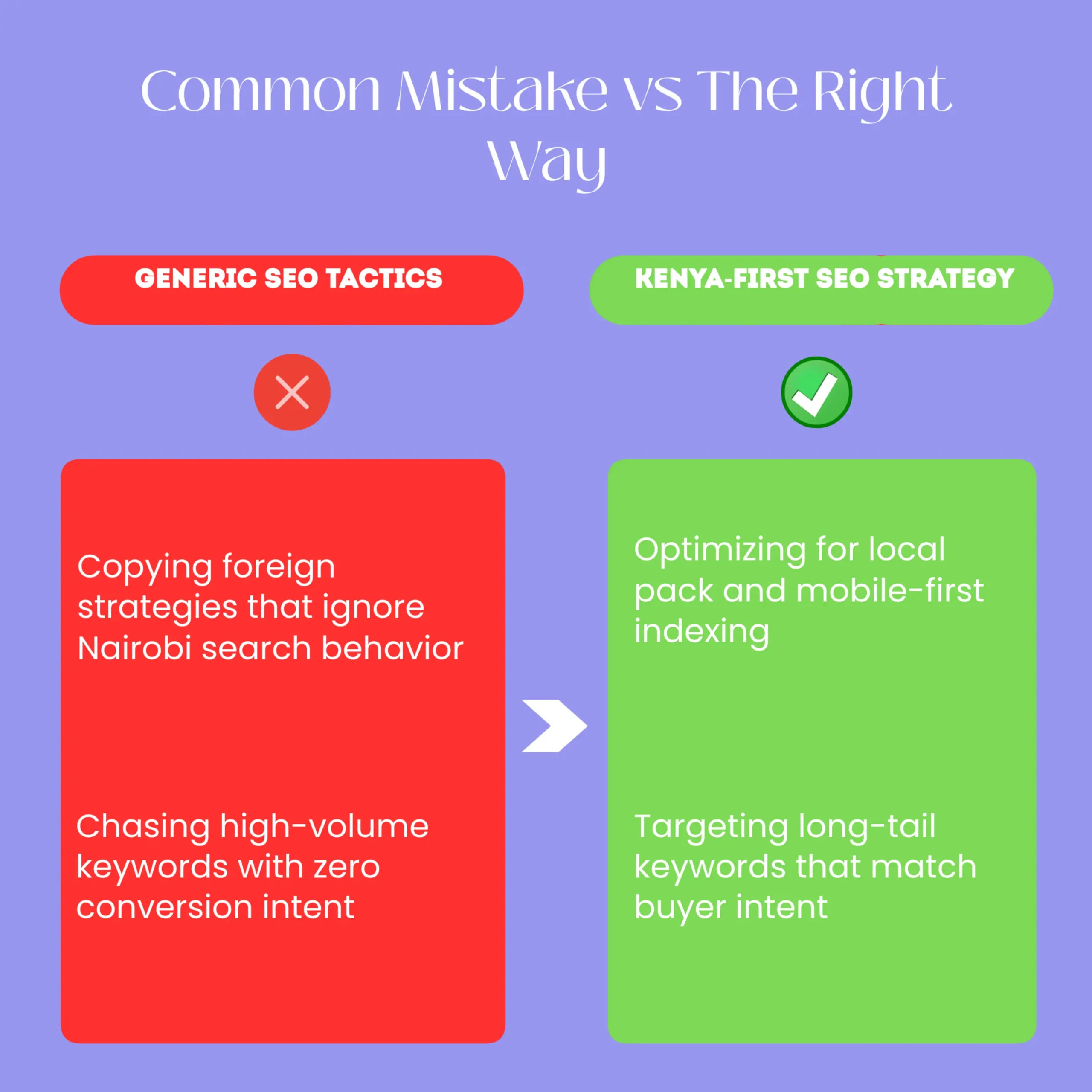
They copy strategies designed for the US or UK market. They chase high-volume keywords like “real estate Kenya” when their actual customers search “two-bedroom apartment Kilimani furnished.”
They ignore their Google Business Profile or fill it with incomplete information. The businesses winning right now do the opposite.
They optimize for how Kenyans search, not how foreigners think we search.
Case Study 1: Nairobi Real Estate Agency — From Page 3 to Page 1 in 6 Months
A Westlands-based real estate agency came to me in January 2024. They ranked on page three for “furnished apartments Nairobi.”
Their website got 200 visits per month, mostly from paid ads.
The Problem
Their content was thin. Every listing page had 50 words of generic description.
Their site loaded in 8 seconds on mobile. They had no Google Business Profile.
The Strategy
We rewrote every listing page to include 800-1,000 words of detailed content.
We added neighborhood guides, transport options, nearby amenities, and pricing breakdowns. We fixed their mobile speed by compressing images and switching to a faster host.
We created and optimized their Google Business Profile with photos, hours, and service areas.
The Results
Six months later, they ranked position 3 for “furnished apartments Nairobi” and position 1 for “serviced apartments Westlands.”
Organic traffic increased from 200 to 1,400 visits per month. They closed 12 deals directly from organic search in that period.
Revenue from SEO: KES 1.8 million.
Case Study 2: Nairobi Salon — How Local SEO Captured Map Pack Visibility
A hair salon in Kilimani was getting zero walk-ins from Google. They had a website, but it did not show up when people searched “salon near me” or “best hairdresser Kilimani.”
All their business came from Instagram and referrals.
The Problem
They had never claimed their Google Business Profile. Their website had no NAP consistency.
The address on their site did not match the address on their Facebook page or their Instagram bio.
The Strategy
We claimed and verified their Google Business Profile.
We added 20 high-quality photos of their work, updated their hours, and listed all their services with prices. We fixed NAP consistency across their website, social media, and local directories.
We created location pages targeting “salon Kilimani” and “hair salon Westlands.”
The Results
Within 90 days, they appeared in the local pack for “salon near me” and “hairdresser Kilimani.”
Phone calls increased from 5 per week to 28 per week. Walk-ins from Google Maps directions jumped from zero to 15 per month.
Based on AM Digital KE client data across Kenyan accounts, local pack visibility drives three times more customer actions than organic listings alone.
Case Study 3: Nairobi Digital Marketing Consultant — Content Strategy That Doubled Organic Traffic
A solo digital marketing consultant in Nairobi had a website that ranked for nothing. She got 100 visits per month, mostly from LinkedIn.
She wanted to reduce her reliance on social media and build consistent organic traffic.
The Problem
Her website had 5 pages: Home, About, Services, Blog, Contact. Her blog had 3 posts, all under 500 words.
She had no content targeting the questions her clients actually asked.
The Strategy
We built a content cluster around “digital marketing Kenya.”
We published 12 in-depth guides: “How to Run Facebook Ads in Kenya,” “Instagram Marketing for Kenyan Small Businesses,” “Email Marketing Tools That Work in Kenya.” Each guide was 2,000-3,000 words.
We included Kenya-specific examples, pricing in KES, and screenshots of local campaigns.
The Results
Six months later, organic traffic increased from 100 to 220 visits per month.
She ranked on page one for 8 long-tail keywords like “Facebook ads cost Kenya” and “best email marketing platform Kenya.” She closed 4 new clients directly from organic search.
Revenue from SEO: KES 600,000.
Case Study 4: Mombasa Tour Operator — Niche SEO Win in a Competitive Market
A Mombasa-based tour operator competed with international booking platforms and large hotel chains. They ranked on page 5 for “Mombasa tours.”
Their website got 50 visits per month.
The Problem
They targeted generic keywords like “Kenya safari” and “Mombasa beach holiday.”
These keywords were dominated by Booking.com, TripAdvisor, and large hotel chains with massive link profiles. Their content did not differentiate them from competitors.
The Strategy
We pivoted to niche keywords: “Mombasa dhow sunset cruise,” “snorkeling Wasini Island,” “day trip Shimba Hills from Mombasa.” We created detailed guides for each experience.
We added pricing, what to bring, best time to visit, and how to book.
The Results
Three months later, they ranked position 1 for “Wasini Island snorkeling tour” and position 2 for “Mombasa dhow cruise.”
Organic traffic increased from 50 to 320 visits per month. Bookings from organic search: 18 in three months.
Revenue from SEO: KES 540,000.
📊 What the Evidence Shows
These wins follow a pattern. Businesses that rank on page one in Kenya focus on three things: local optimization, mobile performance, and content depth.
Local Optimization Drives Immediate Results
Service businesses that claim and optimize their Google Business Profile see results within 60-90 days. They appear in the local pack.
They get phone calls, direction requests, and walk-ins. This is the fastest SEO win for any Nairobi-based business serving local customers.
Mobile Performance Determines Bounce Rate
Kenyan users search on mobile.
If your site loads in 8 seconds, they bounce before it finishes loading. Every business in these case studies fixed their mobile speed.
They compressed images, switched to faster hosting, and removed unnecessary plugins. The result: lower bounce rates, higher engagement, better rankings.
Content Depth Beats Keyword Stuffing
Thin pages do not rank anymore. Google prioritizes comprehensive content that answers the user’s question completely.
A 2,000-word guide outranks a 300-word page every time. The businesses that doubled their traffic published long-form content with Kenya-specific examples, pricing, and actionable advice.
Case Study 5: Nairobi Accounting Firm — From Zero Rankings to 15 Keywords on Page 1
A small accounting firm in Nairobi had a website that ranked for nothing. They got zero organic traffic.
All their clients came from referrals and networking events.
The Problem
Their website had no blog, no service pages beyond a generic “Accounting Services” page, and no content targeting the questions their clients asked.
They had technical issues: broken links, duplicate content, no XML sitemap.
The Strategy
We fixed the technical issues first.
We created an XML sitemap, fixed broken links, and resolved duplicate content. We built out service pages: “Tax Filing Services Nairobi,” “Bookkeeping for Small Businesses Kenya,” “KRA Compliance Services.”
We published 10 blog posts answering common questions: “How to File KRA Returns Online,” “What Documents Do I Need for a Tax Audit?”
The Results
Four months later, they ranked on page one for 15 keywords.
Organic traffic increased from zero to 180 visits per month. They closed 5 new clients from organic search.
Revenue from SEO: KES 450,000.
Case Study 6: Nairobi Plumbing Company — Google Business Profile Optimization That Drove Leads
A plumbing company in Nairobi got most of their work from word-of-mouth. They had a website, but it generated zero leads.
They wanted to reduce their reliance on referrals and capture customers searching for plumbers online.
The Problem
Their Google Business Profile was incomplete.
It had no photos, no services listed, and inconsistent hours. Their website had no location pages and no content targeting specific plumbing services.
The Strategy
We optimized their Google Business Profile.
We added 15 photos of completed jobs, listed all their services with descriptions, and updated their hours and service areas. We created location pages targeting “plumber Westlands,” “emergency plumber Kilimani,” and “plumbing services Nairobi CBD.”
We published blog posts: “How to Fix a Leaking Pipe,” “Signs You Need a Professional Plumber.”
The Results
Within 60 days, they appeared in the local pack for “plumber near me” and “emergency plumber Nairobi.”
Phone calls increased from 8 per week to 32 per week. Jobs booked from Google: 24 in two months.
Revenue from SEO: KES 720,000.
Case Study 7: Nairobi E-Commerce Store — Long-Tail Keywords That Converted Better Than Branded Terms
An e-commerce store selling home decor in Nairobi ranked for their brand name and nothing else. They got 300 visits per month, mostly from people who already knew their brand.
They wanted to capture new customers who had never heard of them.
The Problem
They targeted generic keywords like “home decor Kenya” and “furniture Nairobi.”
These keywords were dominated by Jumia and large furniture stores. Their product pages had thin descriptions and no customer reviews.
The Strategy
We pivoted to long-tail keywords: “boho throw pillows Nairobi,” “macrame wall hanging Kenya,” “rattan coffee table Westlands.”
We rewrote product descriptions to include 500-800 words of detail: materials, dimensions, styling tips, care instructions. We added customer photos and reviews.
The Results
Five months later, they ranked on page one for 22 long-tail keywords.
Organic traffic increased from 300 to 1,100 visits per month. Sales from organic search: 47 orders in five months.
Revenue from SEO: KES 940,000.
✅ What These 7 Wins Have in Common (The Playbook You Can Copy)
Every business in these case studies followed the same playbook. They did not do anything revolutionary.
They executed the fundamentals correctly.
They Optimized for Local Search First
Service businesses claimed and optimized their Google Business Profile. They added photos, updated hours, listed services, and ensured NAP consistency across the web.
This drove immediate results: phone calls, direction requests, walk-ins.
They Fixed Technical Health Before Chasing Rankings
Every site had technical issues: slow mobile speed, broken links, duplicate content. We fixed these first.
You cannot rank on page one if your site takes 8 seconds to load or Google cannot crawl it properly. Understanding different types of SEO helps you prioritize technical fixes.
They Published Comprehensive, Kenya-Specific Content
Thin content does not rank. Every business that doubled their traffic published long-form guides with Kenya-specific examples, pricing in KES, and actionable advice.
They answered the questions their customers actually asked.
They Targeted Long-Tail Keywords Over Generic Terms
Generic keywords are dominated by large sites with massive link profiles. Long-tail keywords are easier to rank for and convert better because they capture buyer intent.
“Boho throw pillows Nairobi” converts better than “home decor Kenya.”
They Prioritized Mobile Performance
Kenyan users search on mobile. Every business in these case studies optimized for mobile-first indexing.
They compressed images, switched to faster hosting, and removed unnecessary plugins.
| What Losing Businesses Do | What Winning Businesses Do |
|---|---|
| Ignore Google Business Profile | Claim, verify, and optimize with photos and services |
| Copy foreign SEO strategies | Optimize for how Kenyans actually search |
| Chase high-volume generic keywords | Target long-tail keywords with buyer intent |
| Publish thin 300-word pages | Create comprehensive 2,000+ word guides |
| Ignore mobile performance | Prioritize mobile speed and Core Web Vitals |
✅ Quick Action Checklist
- ☐ Claim and verify your Google Business Profile today
- ☐ Add 10-15 high-quality photos of your work, products, or location
- ☐ List all your services with descriptions and pricing where applicable
- ☐ Run a mobile speed test and fix any issues slowing down your site
- ☐ Identify 5 long-tail keywords your customers actually search for
- ☐ Publish one comprehensive guide (2,000+ words) targeting a specific customer question
- ☐ Ensure your NAP (Name, Address, Phone) is consistent across your website, social media, and directories
- ☐ Set up Google Search Console to monitor your rankings and traffic
Ready to Be a Case Study? Here’s How to Start
These seven businesses are not special. They followed a proven playbook: optimize for local search, fix technical health, publish comprehensive content, and target long-tail keywords.
You can copy this exact strategy starting today. If you want personalized guidance, contact AM Digital KE today.
Learn how to protect your site from Google penalties as you scale your SEO efforts.
Frequently Asked Questions
How long does it take to rank on page one in Kenya?
Most businesses see movement within 60-90 days if they focus on local optimization and fix technical issues.
Competitive keywords take 4-6 months. The timeline depends on your industry, current site health, and how consistently you publish content.
Service businesses targeting local pack visibility see the fastest results.
Do I need to hire an SEO agency or can I do this myself?
You can do basic local SEO yourself: claim your Google Business Profile, fix mobile speed, and publish helpful content.
Most Nairobi businesses see results from these fundamentals alone. An agency helps when you need technical fixes, competitive keyword research, or a content strategy tailored to your industry.
What is the difference between local pack and organic rankings?
The local pack is the map section that appears at the top of search results when someone searches for a service near them.
Organic rankings are the blue links below the map. Local pack visibility drives more immediate actions like phone calls and direction requests, especially for service businesses.
How much does SEO cost for a Kenyan small business?
Basic local SEO (Google Business Profile optimization, NAP consistency, mobile fixes) costs KES 30,000-50,000 as a one-time setup.
Ongoing SEO with monthly content and technical maintenance ranges from KES 25,000-80,000 per month depending on your industry and goals. DIY is free but takes more time.
Compare SEO vs Google Ads to decide which investment makes sense for your business stage.
Can SEO work for e-commerce businesses in Kenya?
Yes. E-commerce SEO focuses on product page optimization, long-tail keywords, and technical performance.
The e-commerce store in Case Study 7 increased revenue by KES 940,000 in five months by targeting niche keywords and rewriting product descriptions. The strategy works if you commit to comprehensive content and mobile optimization.
Track your results with Google Analytics 4 to measure ROI accurately.
Additional Resources
- National SEO vs Local SEO – Which Does Your Kenyan Business Need? – Decide whether to target Kenya-wide rankings or focus on your city’s local pack based on your business model and customer location.
- How to Use Anchor Text for Your Kenyan Business – Learn how to structure internal links and external backlinks to pass authority without triggering penalties, just like the case studies above.
- How to Maximise CTR for Your Kenyan Business – Improve your click-through rate from search results to turn rankings into actual traffic and leads.
- The Best Free SEO Tools for Kenyan Businesses – Access the same keyword research, speed testing, and rank tracking tools used in these seven case studies without spending a shilling.
- Website Copywriting Services – Get Kenya-specific, conversion-focused content written for your service pages and product descriptions to replicate the content depth that drove these wins.
- SEO Checklist for Kenyan Businesses – Follow the exact step-by-step checklist these seven businesses used to climb from page three to page one.
Take the Next Step
You have seen what works for real Kenyan businesses. Now it is your turn.
Start with the fundamentals: claim your Google Business Profile, fix your mobile speed, and publish one comprehensive guide this week.
If you want a proven roadmap, download the Complete SEO Checklist for Kenyan Businesses and follow it step by step.