Table of Contents
TL;DR: Avoid black hat SEO by using ethical practices like quality backlinks, natural keyword use, and unique content to keep your Kenyan business visible and safe.
Last Updated: March 2026
Key Takeaways
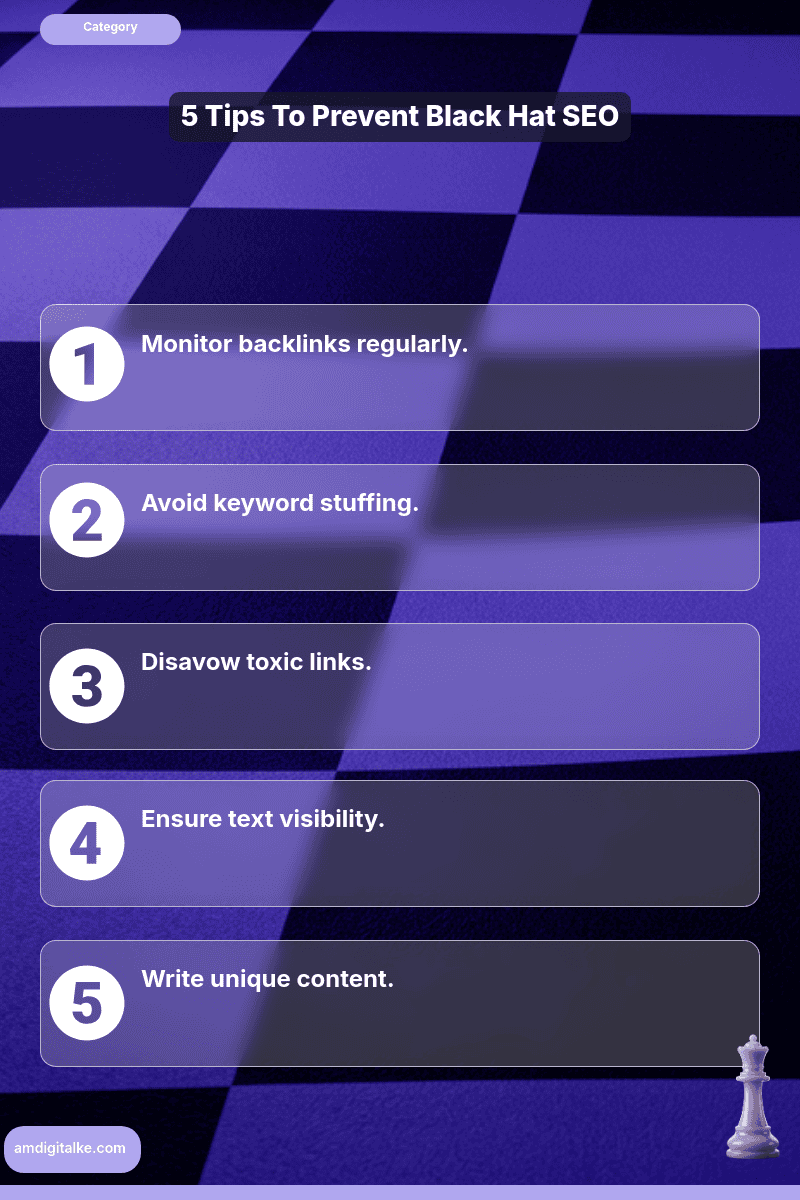
- Audit backlinks monthly for quality.
- Remove or disavow toxic links.
- Keep keyword density below 3%.
- Ensure all text is visible.
- Create unique content for pages.
Black hat SEO tactics can get your website penalised or banned from Google.
This destroys months of hard work overnight.
Protecting your Kenyan business from these risky shortcuts ensures sustainable growth.
It maintains your reputation and keeps you visible to customers searching for your services.
Imagine you run a law firm in Nairobi offering corporate legal services.
A freelancer approaches you promising “page 1 Google rankings in 2 weeks” for “lawyers in Nairobi.”
They use hidden text, buy links from spammy directories, and stuff your pages with keywords.
Three months later, your site vanishes from Google entirely.
Potential clients searching for “business registration Kenya” or “conveyancing services Nairobi” can’t find you.
You’ve lost your primary lead source.
Steps to Prevent Black Hat SEO for Your Kenyan Business
Step 1: Audit your current backlink profile using Google Search Console
Check for suspicious links from irrelevant sites, foreign domains, or obvious link farms.
Understanding what a backlink is and how quality backlinks work helps you identify toxic links that could trigger penalties.
Step 2: Disavow toxic backlinks immediately through Google’s Disavow Tool
Remove connections to gambling sites, adult content, or low-quality directories that harm your credibility.
This protects and improves your off-page SEO efforts by ensuring only quality signals reach Google’s algorithm.
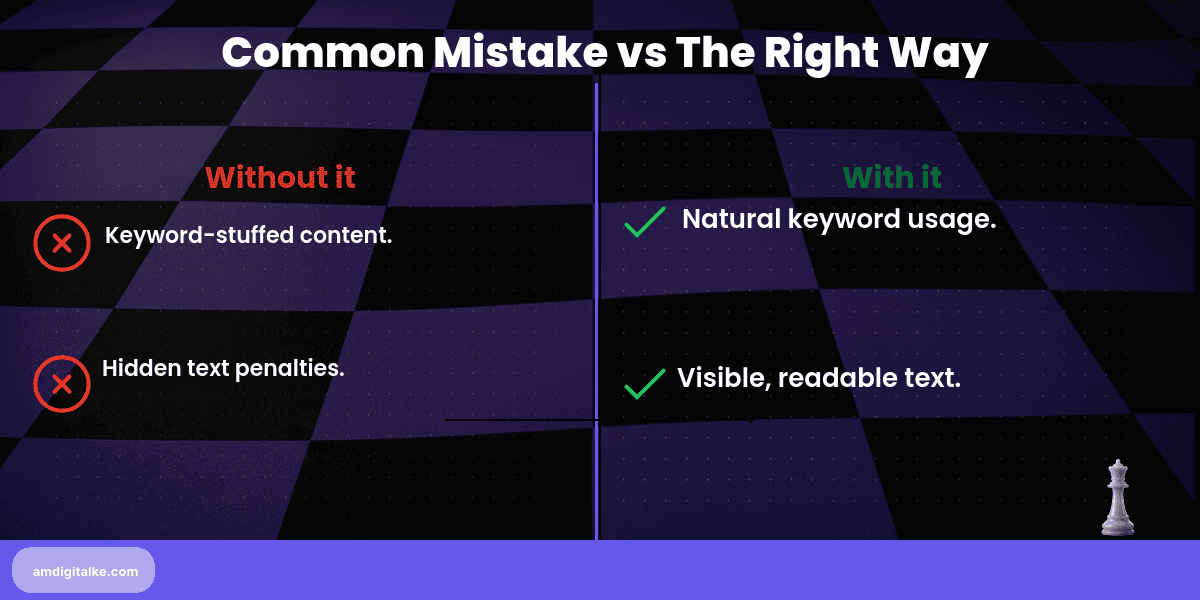
Step 3: Review your content for keyword stuffing
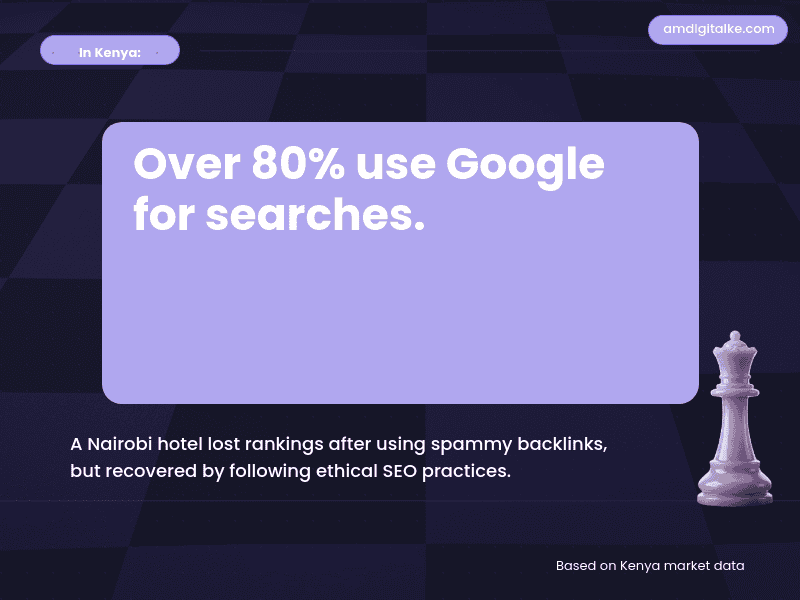
Based on AM Digital KE client data across Kenyan accounts, keyword density above three percent triggers penalties.
Natural writing wins.
If “lawyers Nairobi” appears every other sentence, rewrite for readability.
Get keyword density right and optimise on-page SEO principles for natural, helpful content.
Step 4: Verify all text on your site is visible and readable
Hidden text triggers instant penalties.
White text on white background or text behind images violates Google’s guidelines.
When implementing technical SEO fundamentals, ensure every element serves a legitimate user experience purpose.
If you need clarification on any SEO terminology, check out my SEO FAQs page for definitions and best practices.
Step 5: Check that every page has unique, original content
Duplicate content across your service pages or copied competitor text gets flagged.
Properly executing content marketing strategies means creating unique value on every page that serves your audience’s specific needs.
A Mombasa hotel copied room descriptions from a competitor’s site.
Google dropped them from page one to page five for “beachfront hotels Mombasa” within two weeks.
Step 6: Monitor your site weekly using Google Search Console
Watch for manual actions, crawl errors, or sudden ranking drops that signal problems.
Regular monitoring helps you catch issues early and maintain an understanding of what SEO really means in practice.
Step 7: Vet any SEO agency thoroughly before hiring
Ask for case studies and verify their methods.
Avoid shortcuts and ensure they follow Google’s Webmaster Guidelines.
Make sure they practice winning with white hat SEO tactics that build sustainable rankings rather than risky schemes.
✅ Your Black Hat Prevention Checklist:
- ☐ Audit backlinks monthly
- ☐ No keyword stuffing (under 3%)
- ☐ All text is visible and readable
- ☐ Unique content per page
- ☐ Check Search Console weekly
- ☐ Vet agencies before hiring
- ☐ Follow Google Webmaster Guidelines
Before implementing changes, download this complete SEO Checklist to verify you’re following all white hat best practices.
Run this audit today and fix any issues within the week.
Your site will maintain steady rankings and avoid devastating penalties.
This protects the digital foundation of your legal practice for years to come.
Let’s run a free SEO analysis on your website right now.
I’ll identify any black hat risks that could get you penalised and show you exactly what to fix first.
Related Content
Curious to learn more about protecting your site from penalties? Check out the posts below
- What is Black Hat SEO (By Kenya’s SEO Authority) – Understanding black hat tactics helps you recognise and avoid them in your own strategy.
- What is White Hat SEO (from a Kenyan Expert) – Learn the ethical alternative that builds sustainable rankings without risk.
- What is a Google Penalty (As Seen From a Kenya SEO) – This explains what happens when black hat tactics get caught and how penalties devastate rankings.
- What is Google Search Console (from a Kenya SEO Specialist) – Learn to use Search Console for monitoring your site’s health and catching problems early.
- Legal SEO Services in Kenya – See how Kenyan law firms protect their online presence from black hat risks while ranking competitively.
These articles will help you maintain a clean, penalty-free SEO strategy.
Have more SEO questions? Our SEO FAQs Kenya page answers the most common ones.
Frequently Asked Questions
What is black hat SEO?
Black hat SEO refers to unethical practices like keyword stuffing or hidden text that can get your Kenyan website penalised by Google.
How do I remove bad backlinks in Kenya?
Use Google’s Disavow Tool to remove links from spammy sites and protect your Kenyan business’s SEO.
Why does keyword stuffing hurt SEO?
Keyword stuffing makes content unnatural, leading to penalties, especially for Kenyan businesses targeting local searches.
Can duplicate content affect my Kenyan site?
Yes, duplicate content across pages can lower your rankings for Kenyan users searching for local services.