Table of Contents
TL;DR: Use header tags to organize content. They make pages clearer for Kenyan visitors and help Google rank them higher.
Last Updated: March 2026
Key Takeaways
- Headers guide readers through your content.
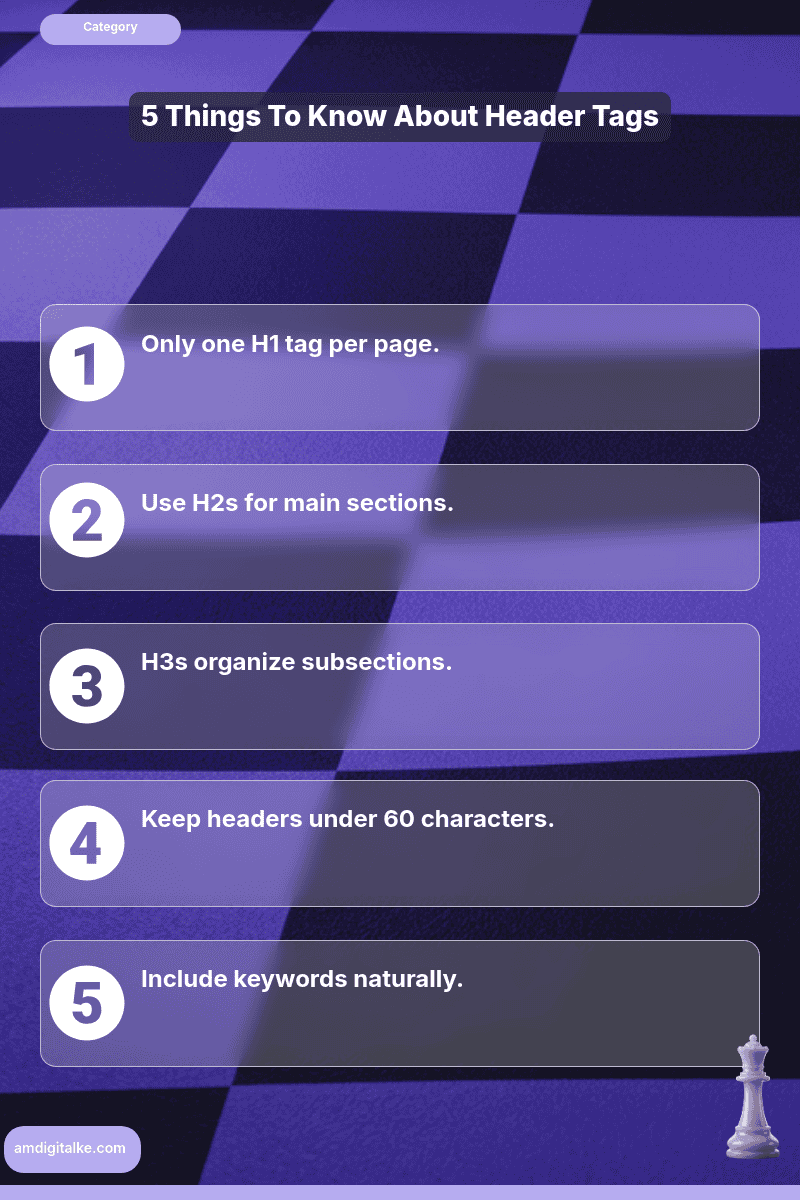
- Only one H1 tag per page is needed.
- Use H2s for main sections, H3s for subsections.
- Include keywords naturally in headers.
- Keep headers short and specific.
Header tags structure your content.
That structure is part of the on-page layer of technical SEO.
They help Google and visitors quickly understand what each section covers.
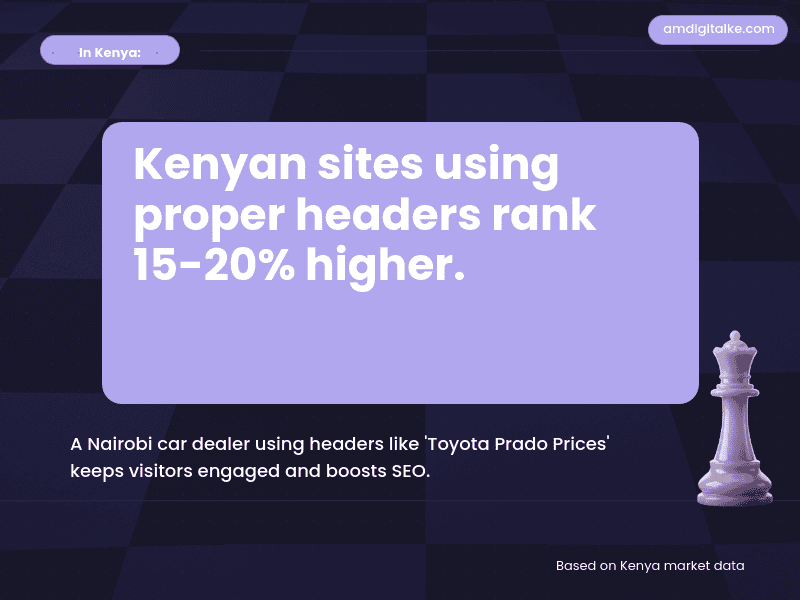
For Kenyan businesses competing in crowded search results, proper header usage can improve your rankings.
It keeps visitors reading instead of bouncing back to Google.
Imagine you run a car dealership in Nairobi.
You sell used Toyota SUVs.
A buyer searches “used Toyota Prado Nairobi.”
They land on your page.
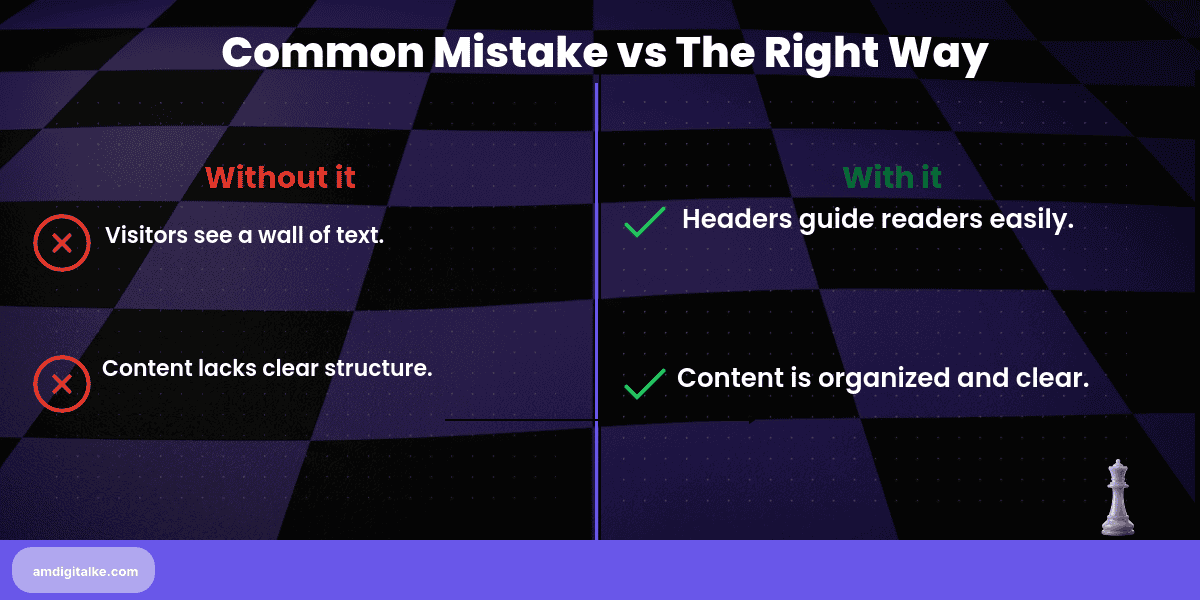
Without clear headers, they see a wall of text.
They leave immediately.
But with headers like “Toyota Prado 2020 Models – KSh 4.5M” and “Why Buy From Our Westlands Showroom,” they instantly find pricing and location details.
That’s exactly what they need to visit or call.
Understanding what header tags accomplish helps you organise content that converts.
Steps to Apply Header Tags for Your Kenyan Business
Step 1: Use only one H1 tag per page as your main headline
Make it your primary keyword plus compelling benefit.
Try “Used Toyota Prado SUVs in Nairobi | Verified & Affordable.”
Optimising your on-page SEO foundation starts with this single, clear H1 declaration.
Step 2: Break content into sections with H2 tags for major topics
Examples: “Available Models,” “Pricing & Financing,” “Why Choose Us,” “Visit Our Showroom.”
Each H2 introduces a distinct section.
Creating valuable content marketing requires this logical structure.
Step 3: Use H3 tags for subsections under each H2
Under “Available Models,” add H3s for “2020 Prado TX,” “2019 Prado VX,” etc.
This creates a clear hierarchy.
Understanding what SEO really involves includes proper content organisation.
Step 4: Include your target keyword naturally in 2-3 headers
Don’t force it.
“Prado Financing Options” works better than “Toyota Prado Financing for Toyota Prado Buyers.”
Implementing proper keyword research shows you which terms to prioritise.
Want more guidance on keyword placement?
Check out my SEO FAQs page for detailed explanations.
Step 5: Keep headers under 60 characters and descriptive
“Affordable Pricing” is vague.
“Prado Prices: KSh 3.5M – 6M” tells searchers exactly what to expect.
Understanding what search intent means helps you write headers that match user expectations.
Step 6: Never skip heading levels (don’t jump from H2 to H4)
Google reads hierarchical structure.
Skipping levels confuses search bots and screen readers.
Optimising your on-page SEO strategy includes maintaining proper heading hierarchy.
✅ Your Header Tags Checklist:
- ☐ One H1 with the main keyword
- ☐ H2s for major sections
- ☐ H3s for subsections only
- ☐ Keyword in 2-3 headers
- ☐ Headers under 60 characters
- ☐ No skipped heading levels
- ☐ Descriptive, not generic
Download this complete SEO Checklist to verify header tag implementation across all your pages.
Update your top product or service pages this week.
Based on AM Digital KE client data across Kenyan accounts, you’ll see improved Google rankings within two to three weeks.
Search engines re-crawl your clearer content structure.
Longer visitor sessions follow naturally.
Need help restructuring your content?
Let’s run a free SEO analysis to identify header tag opportunities to improve your rankings.
Related Content
Curious to learn more about header tags and content structure? Check out the posts below:
- What is a Meta Description (Through a Kenyan Lens) – Meta descriptions work with header tags to communicate your page’s value in search results and within the content itself.
- How to Optimise On-Page SEO – A Kenyan Expert’s Guide – This shows the complete on-page strategy where header tags combine with title tags, content, and links for rankings.
- What is Keyword Density (For the Kenya Market) – Keyword density in headers should feel natural, not forced, to avoid over-optimisation while maintaining topical relevance.
- Why Search Intent Beats Search Volume: The Strategic SEO Move – Header tags should match search intent by clearly answering the questions users ask at each funnel stage.
These articles will walk you through the basics of structuring content for rankings.
Have more SEO questions? Our SEO FAQs Kenya page answers the most common ones.
Frequently Asked Questions
What are header tags?
Header tags like H1 and H2 organize content into sections, making it easier for readers and search engines to understand.
How many H1 tags should I use?
Only one H1 tag per page, as it’s the main headline.
Why are headers important for Kenyan businesses?
Header tags help Kenyan businesses like Nairobi car dealers rank higher and keep visitors engaged.
Can I use keywords in headers?
Yes, include your target keyword naturally in 2-3 headers for better SEO.