Table of Contents
TL;DR: To keep rankings with 301 redirects, map old URLs, set redirects correctly, test them, update internal links, and submit your sitemap to Google.
Last Updated: March 2026
Key Takeaways
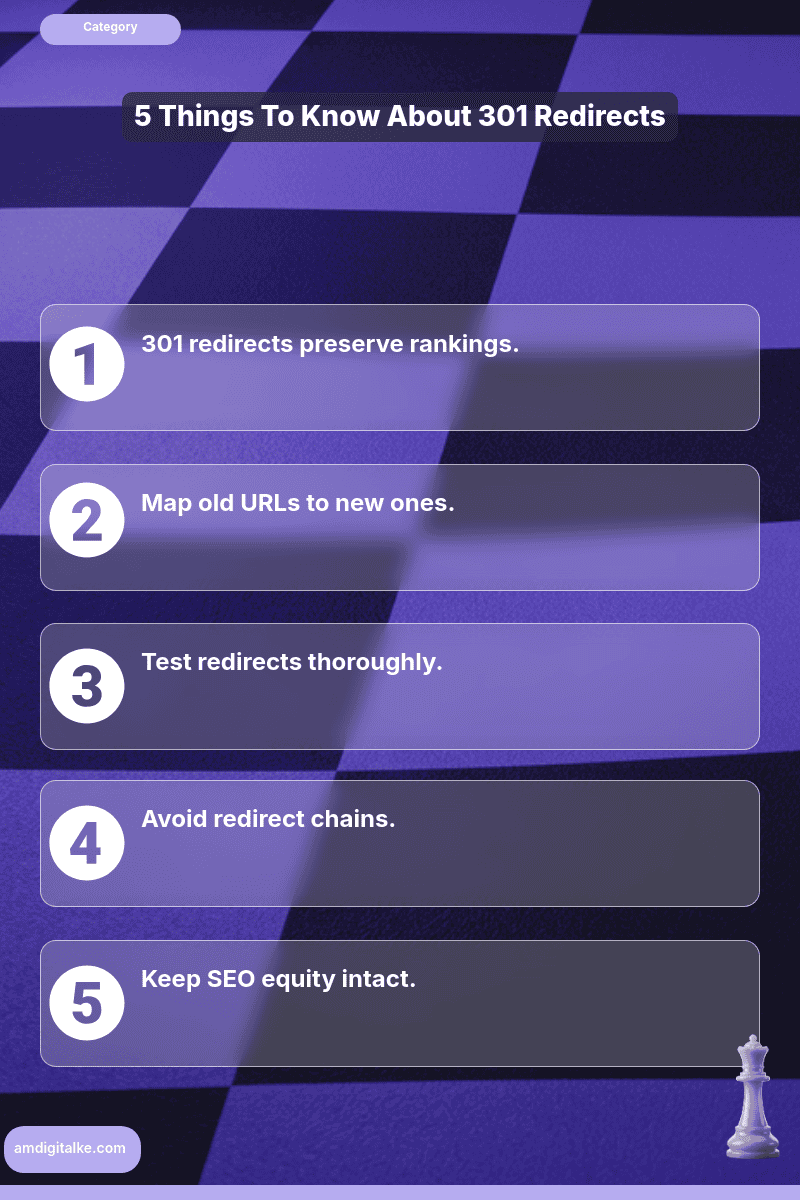
- Map every old URL to the new one.
- Set up 301 redirects correctly.
- Test redirects using a checker tool.
- Update internal links directly.
- Submit sitemap to Google.
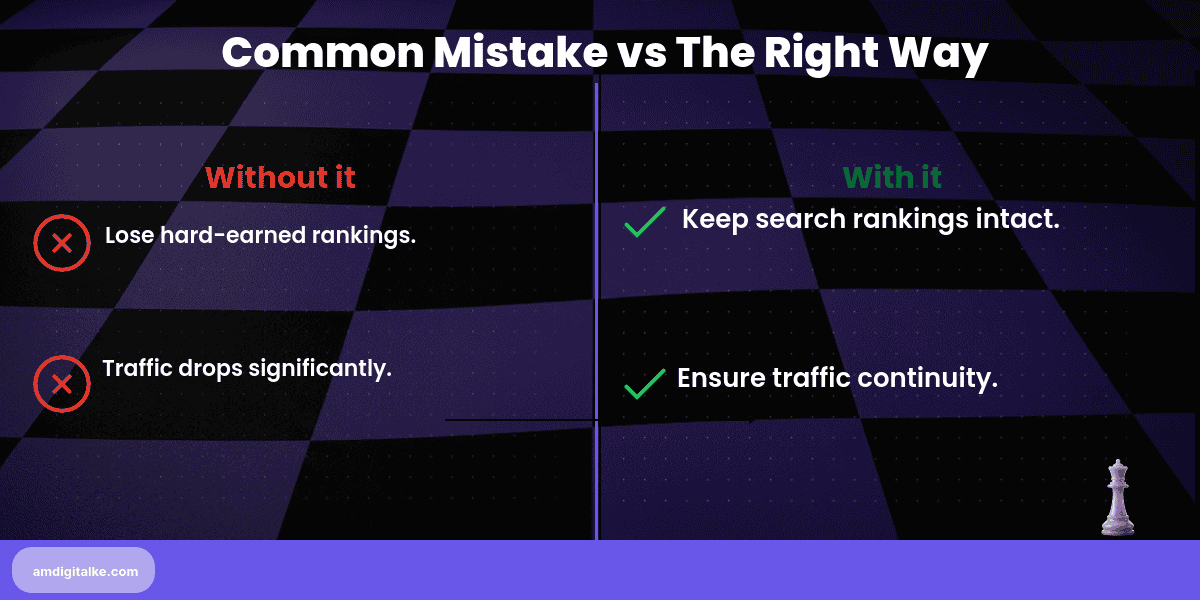
301 redirects ensure you don’t lose hard-earned search rankings when changing URLs.
For Kenyan businesses competing in saturated markets like Nairobi real estate or tourism, understanding what 301 redirects are means protecting your SEO equity during website changes. You keep the traffic and leads you’ve already worked months to build.
Imagine you’re a real estate agency in Westlands redesigning your website. Your old listing page “westlands-apartments-sale.html” ranks #2 for “apartments for sale Westlands” and brings 50 quality leads monthly.
Without a 301 redirect to your new “/properties/westlands-apartments” URL, that page disappears from Google overnight. Traffic drops significantly, and competitors take your spot while you rebuild from scratch.
Steps to Implement 301 Redirects for Your Kenyan Business
Step 1: Map every old URL to its corresponding new URL in a spreadsheet
Include the full old URL, new destination URL, and what content lives there. Nothing gets missed this way.
This perfecting technical SEO fundamentals approach prevents broken links during migrations.
Step 2: Set up 301 redirects in your .htaccess file (Apache) or server configuration
Use “Redirect 301 /old-page.html https://yoursite.com/new-page” format for each URL pair. This permanent redirect tells Google to transfer all ranking power to the new location.
Step 3: Redirect to the most relevant new page, not just your homepage
Each old apartment listing should go to its specific new listing page. Don’t send everything to your generic properties page.
This maintains an understanding of what technical SEO best practices are for user experience and ranking preservation.
Step 4: Test every redirect using a redirect checker tool
Verify each old URL returns a 301 status code and lands on the correct new page. Proper testing ensures mastering web crawling processes can follow your redirects correctly.
Step 5: Update internal links throughout your site to point directly to new URLs
Don’t rely on redirects for your own navigation. Link directly to avoid unnecessary redirect chains.
Clean internal linking helps the indexing of your website pages happen faster.
Step 6: Submit your new sitemap to Google Search Console
Help Google discover and index your new URL structure faster.
Your 301 Redirect Checklist:
- ☐ Map all old-to-new URLs
- ☐ Set up redirects properly
- ☐ Test each redirect works
- ☐ Update internal site links
- ☐ Submit new sitemap
- ☐ Monitor Search Console errors
- ☐ Check rankings after 2 weeks
Implement redirects before launching your new site. Based on AM Digital KE client data across Kenyan accounts, Google will transfer most ranking power within 2-3 weeks.
Your traffic continues while your fresh design attracts new Kenyan customers.
Have more questions about site migrations? Check out my SEO FAQs page for guidance on common technical challenges.
Planning a major website redesign? Download this complete SEO Checklist to avoid losing rankings during the transition.
Ready to protect your search rankings? Let’s run a free SEO analysis before your site migration to identify all critical pages that need redirects.
Related Content
- How to Optimise with Canonical URLs – Kenya’s SEO Authority Guide — Canonical tags handle duplicate content issues while 301 redirects permanently move pages to new locations.
- What is Web Crawling (As Seen From a Kenya SEO) — Understanding how Google crawls your site helps you implement redirects that preserve crawl budget and ranking power.
- How to Set Up Robots.txt File – A Kenyan SEO Specialist’s Guide — Robots.txt works with redirects to guide search engines through your site structure efficiently during migrations.
- What is Page Speed? (A Kenya Business Guide) — Redirect chains slow down your site, so proper 301 implementation protects both rankings and page speed.
- Real Estate SEO Services — See how Kenyan property agencies handle URL migrations during website redesigns without losing valuable listing rankings.
These articles will walk you through the basics of protecting your search equity during site changes.
Have more SEO questions? Our SEO FAQs Kenya page answers the most common ones.
Frequently Asked Questions
What is a 301 redirect?
A 301 redirect permanently moves one URL to another, keeping SEO rankings. For Kenyan websites like Nairobi real estate sites, it ensures traffic continues even after URL changes.
Why are 301 redirects important?
301 redirects keep your rankings and traffic when URLs change. Kenyan businesses like tourism sites in Mombasa rely on these to avoid losing visitors.
How do I test 301 redirects?
Use redirect checker tools online or manually check HTTP headers. Kenyan SEO experts recommend testing every redirect on important pages like Nairobi property listings.
Can 301 redirects hurt SEO?
If done incorrectly, redirects can harm SEO. Kenyan websites, such as those selling Maasai products, must ensure redirects go to relevant pages.
What is redirected to the homepage?
Redirecting to homepage is inefficient. For Kenyan businesses like Nairobi clinics, each old URL should redirect directly to its specific new page.