Table of Contents
- Key Takeaways
- Why It Matters for Your Kenyan Business
- How Internal Links Work (With Local Examples)
- Your Internal Linking Action Checklist
- Frequently Asked Questions
- Why is internal linking important for Kenyan businesses?
- How many internal links should a Kenyan website have?
- Can internal links help Kenyan SEO?
- What are examples of internal links?
TL;DR: Internal linking connects pages on your website to guide visitors and help Google understand your content, like matatu routes connecting Nairobi neighbourhoods.
Last Updated: March 2026
Key Takeaways
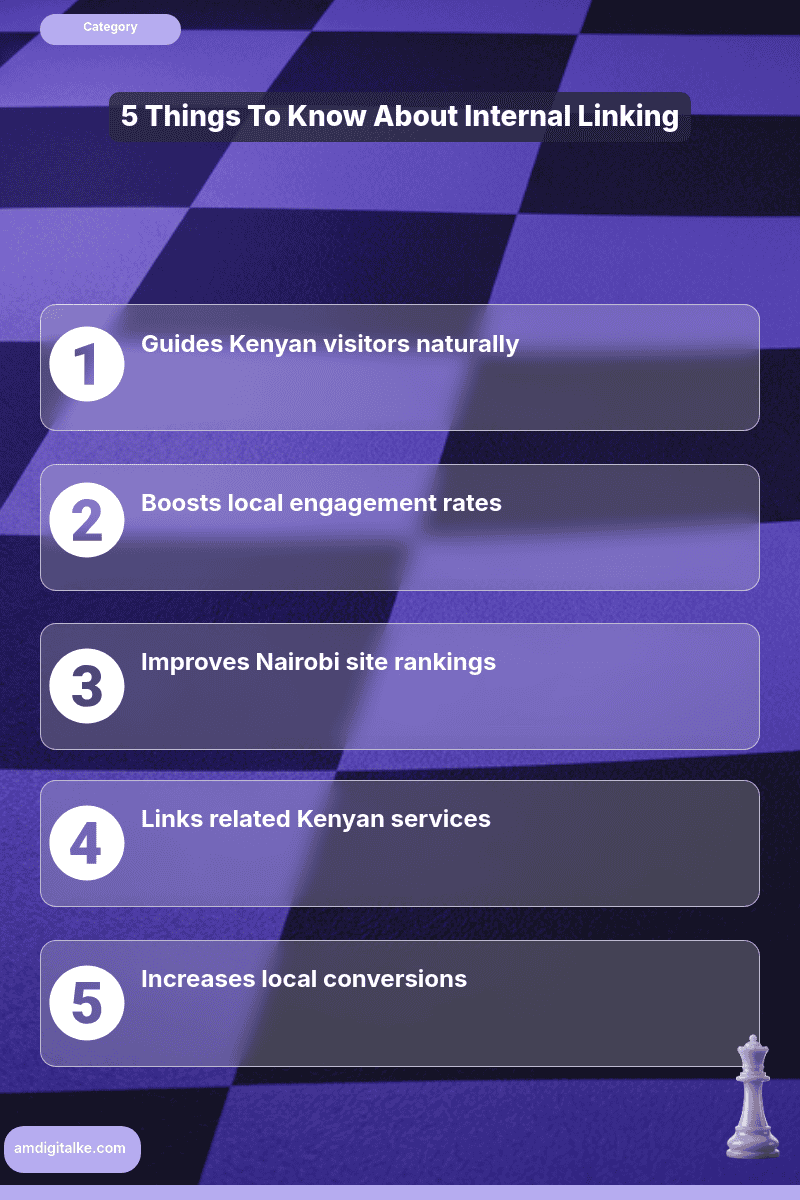
- Links guide Kenyan visitors naturally
- Reduces bounce rates for local sites
- Shows Google your important pages
- Maintains visitors longer on Kenyan sites
- Boosts conversions for local businesses
Internal linking is the practice of connecting different pages within your website using clickable links.
Remember, this is different from link building (backlinking), which is getting links from other sites.
Think of it as creating pathways that guide visitors from one page to another on your site.
It helps both users and search engines understand how your content relates together.
For Kenyan businesses, internal linking is like creating clear signage in your physical store.
It helps customers find what they need while staying longer in your business.
Imagine your website like Nairobi’s matatu network.
Just as matatus connect different routes throughout the city, from CBD to Westlands, Kilimani to Karen, internal links connect your web pages.
When a customer visits your hardware store website in Eastleigh, internal links guide them from your cement page to your construction tools page.
Then they move to your delivery services page.
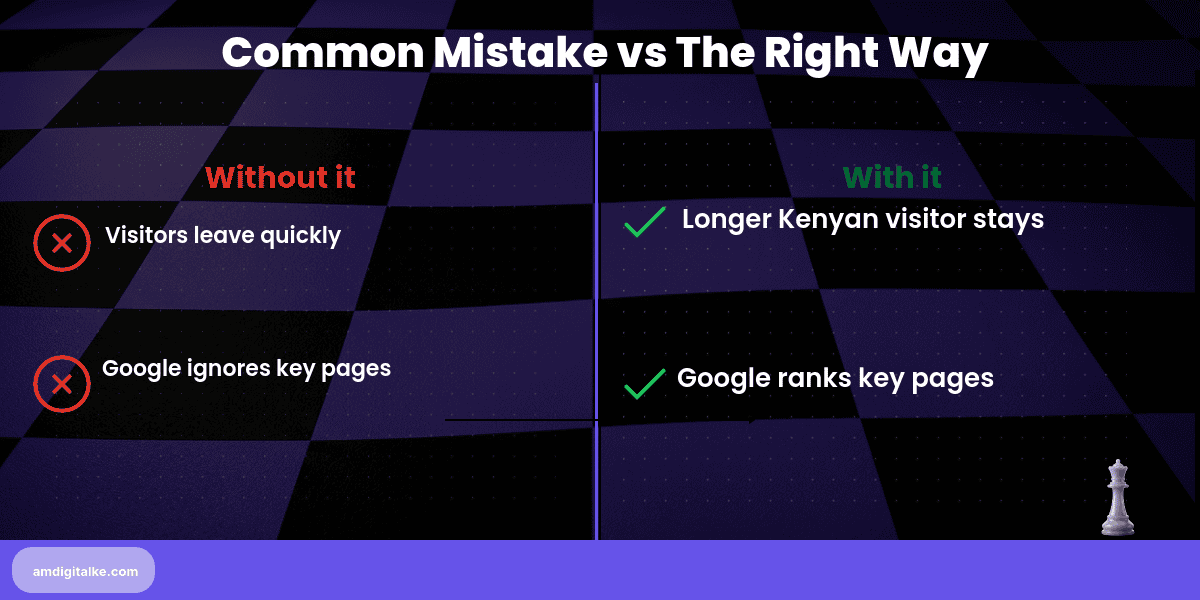
Without these connections, visitors get stuck on one page or leave like passengers stranded at a matatu stage with no routes to their destination.
Why It Matters for Your Kenyan Business
Poor internal linking costs Kenyan businesses thousands of shillings in lost sales monthly.
When your Nakuru restaurant website doesn’t link your menu page to your booking page, customers can’t easily make reservations.
As the top SEO company in Kenya, we help you understand that internal linking keeps visitors engaged longer.
It reduces bounce rates and signals to Google which pages are most important.
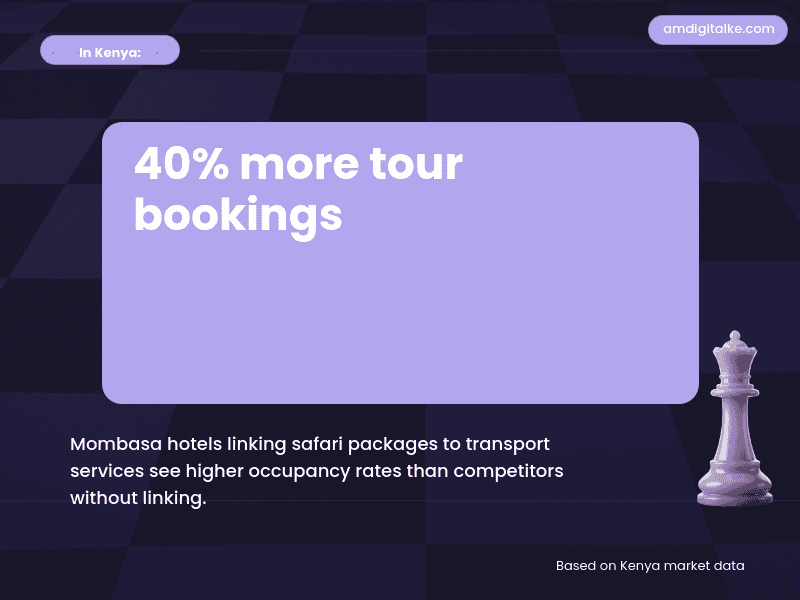
Consider two competing Mombasa tour operators.
One website forces visitors to use the main navigation to find related services.
The other links safari packages directly to accommodation options and transport services.
Based on AM Digital KE client data across Kenyan accounts, the second business converts more inquiries because visitors effortlessly discover additional services.
Internal linking transforms browsers into buyers by creating natural purchasing journeys throughout your site.
How Internal Links Work (With Local Examples)
Internal linking works by strategically connecting related content across your website.
Here’s how Kenyan businesses use it effectively:
- Link from “Nyama Choma Specials” to “Private Dining Rooms”
- Connect “Catering Services” to “Sample Menus” and “Booking Form”
- Bridge “Location Pages” to “Parking Information”
- Link “Accounting Services” to “Tax Preparation” and “Business Registration”
- Connect “About Us” to “Client Testimonials” and “Contact Information”
- Bridge blog posts about business law to “Legal Consultation” service pages
- Link product pages to related accessories and maintenance services
- Connect “Delivery Areas” to “Shipping Costs” and “Payment Options”
- Bridge category pages to featured products and special offers
Good internal linking uses descriptive anchor text like “our Nairobi delivery options” instead of generic “click here” phrases.
To learn more about terms like these, check out my SEO FAQs page for a glossary.
Then, on this post, check how to execute interlinking for your Kenyan business better.
Your Internal Linking Action Checklist
Here’s your internal linking action checklist:
- ☐ Audit your current site – Click through your website and note pages with no internal links
- ☐ Map your customer journey – List the logical flow from awareness to purchase for your business
- ☐ Create topic clusters – Group related pages (services, products, locations) that should link together
- ☐ Add 3-5 relevant links per page – Link to related services, testimonials, and contact information
- ☐ Use descriptive anchor text – Replace “click here” with phrases like “Nairobi office location” or “catering menu options”
- ☐ Track user behaviour – Monitor which linked pages get the most traffic to optimise your strategy
Need a complete walk-through?
Download this complete SEO Checklist for everything you need to do.
Ready to create a website that guides customers naturally toward your services?
With our free SEO audit, let’s analyse your current site structure and build an internal linking strategy that converts Kenyan visitors into loyal customers.
Curious to learn more about similar SEO concepts? Check out the posts below
- Learn what on-page SEO is – Interlinking is one of the key elements of this SEO process
- See what indexing is – See how interlinking can help your site index faster and better
- Understand what technical SEO is – This will help you easily identify internal linking opportunities
- Check out what SEO is – This way, you have a bigger picture of how interlinking affects your site
These posts dive into detail in explaining different concepts that work hand in hand with internal linking.
Have more SEO questions? Our SEO FAQs Kenya page answers the most common ones.
Frequently Asked Questions
Why is internal linking important for Kenyan businesses?
It helps Kenyan customers find related services easily, like linking safari tours to accommodation in Mombasa, increasing sales.
How many internal links should a Kenyan website have?
Use 3-5 relevant internal links per page, like connecting Nairobi tour packages to transport options and nearby attractions.
Can internal links help Kenyan SEO?
Yes, internal links tell Google which pages matter most on Kenyan business websites, improving search rankings locally.
What are examples of internal links?
Like linking Safaricom M-Pesa services to airtime purchase pages or Kenyan hotel bookings to spa packages.