Table of Contents
- Key Takeaways
- Why Indexing Matters for Your Kenyan Business
- How Indexing Works (With Examples)
- Your Indexing Action Checklist
- Frequently Asked Questions
- What does indexing mean in SEO?
- Why is indexing important for Kenyan businesses?
- How long does indexing take?
- Can indexing affect my Kenyan business revenue?
TL;DR: Indexing is when Google adds your website to its library so Kenyans can find your business online, just like books in Kenya National Library.
Last Updated: March 2026
Key Takeaways
- Indexing makes websites searchable
- Unindexed pages stay hidden
- Kenyan businesses lose customers
- Googlebots crawl then index
- Use Google Search Console
Indexing is the process where search engines like Google discover, analyse, and store your website’s pages in their massive database, a foundation of SEO practice in Kenya.
Think of it as Google creating a detailed filing system of every webpage on the internet. This includes your business website, so it can quickly find and show your pages when Kenyans search for your products or services.
Imagine the Kenya National Library in Nairobi. Librarians must first catalogue every new book, noting the title, author, subject, and location, before anyone can find it.
Google’s indexing works the same way with websites.
Just like a book that isn’t catalogued remains invisible to library visitors, your business website won’t appear in search results if Google hasn’t indexed your pages.
Your beautifully designed website for your Westlands restaurant or Kilimani boutique could be completely invisible to potential customers searching online.
Why Indexing Matters for Your Kenyan Business
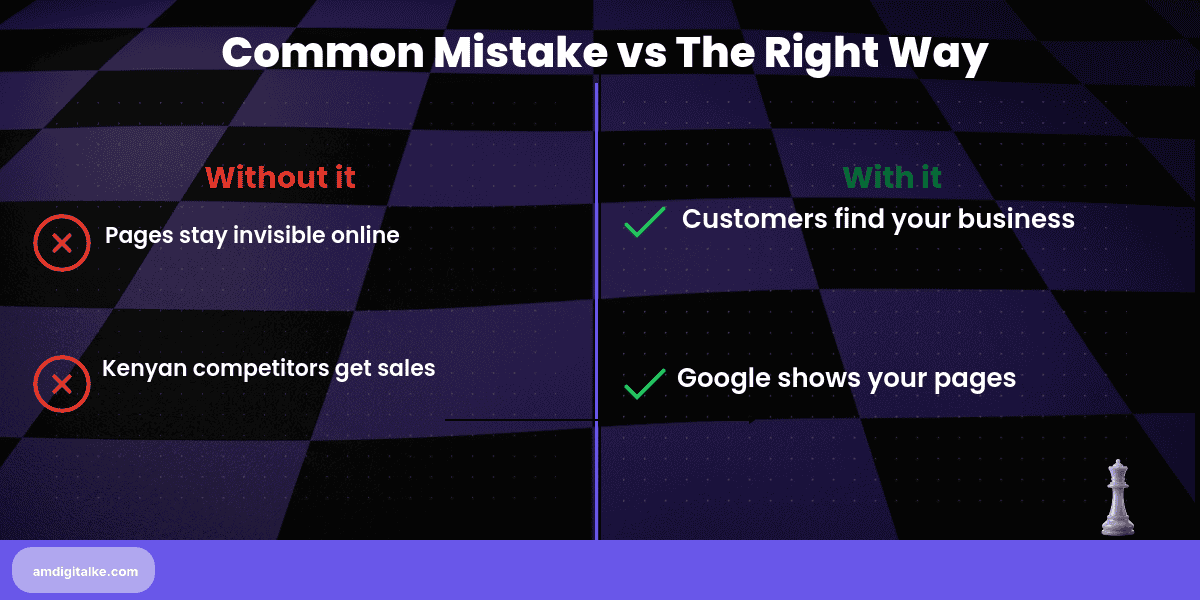
Without proper indexing, your business essentially doesn’t exist online. This is true no matter how much you’ve invested in your website.
Indexing directly impacts your revenue. Unindexed pages mean missed customers, lost sales, and competitors capturing your market share.
Consider a Mombasa tour operator whose new service pages aren’t indexed. Tourists searching for “Mombasa cultural tours” will never find them, sending business straight to indexed competitors.
Similarly, a Nakuru hardware store with unindexed product pages loses customers to Nairobi-based competitors whose pages Google can easily find and display.
This isn’t just technical jargon. It’s the difference between thriving and struggling in Kenya’s competitive digital marketplace.
How Indexing Works (With Examples)
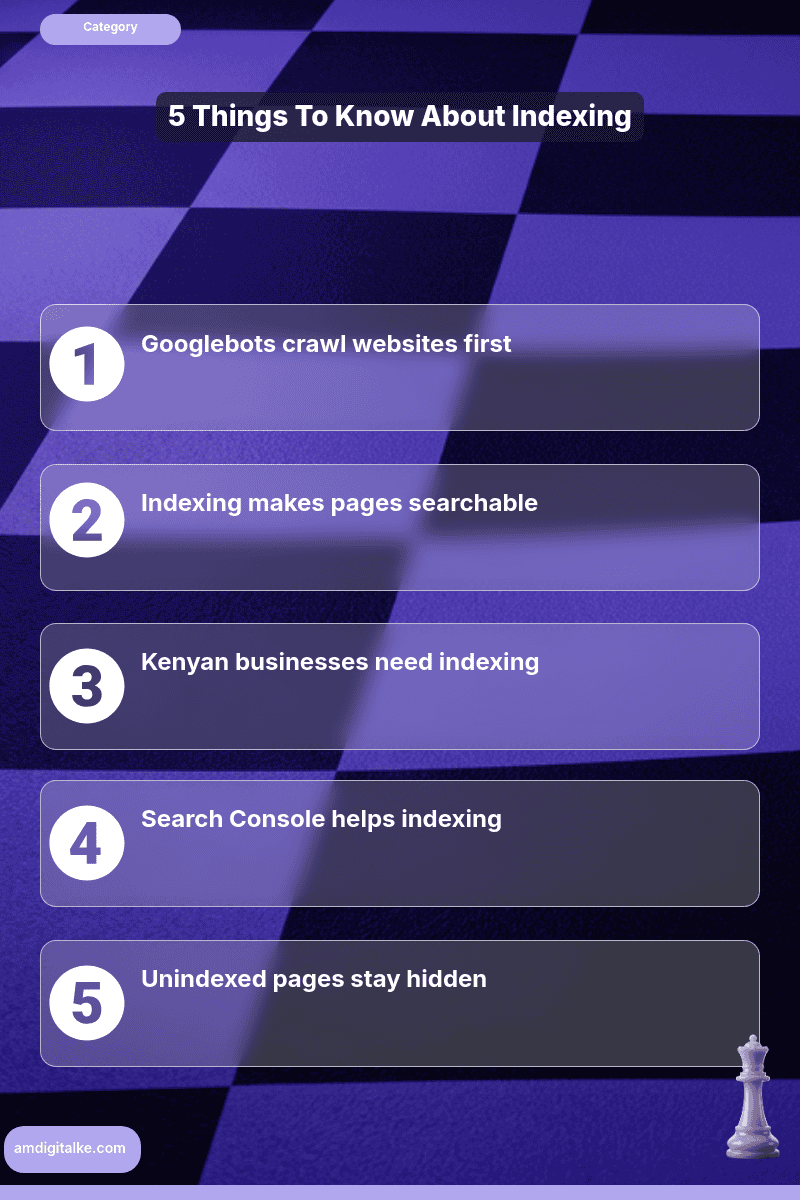
Google’s indexing process follows these key steps:
Discovery: Google’s crawlers (called Googlebots) find your pages through links from other websites, your sitemap, or direct submission through Google Search Console.
Analysis: Google reads your page content, images, and structure to understand what your business offers.
Storage: Approved pages get stored in Google’s index, ready to appear in search results.
Local Examples:
- A Kisumu fish vendor creates a new “fresh tilapia delivery” page. Google must discover and index it before customers searching “Kisumu tilapia delivery” can find it
- An Eldoret cyber cafe adds a “printing services” page. Indexing determines whether it appears when locals search “printing services Eldoret”
- A Thika mechanics workshop launches an “engine repair” service page. Proper indexing means appearing in searches for “car engine repair near me”
To learn more about such SEO terms, check out my SEO FAQs page for a glossary.
Your Indexing Action Checklist
Here’s your indexing action checklist:
- ☐ Check current status: Search “site:yourdomain.com” on Google to see which pages are indexed
- ☐ Create a Google Search Console account and submit your sitemap immediately
- ☐ Review your website structure. Ensure every important page links to other pages
- ☐ Test page loading speed using Google PageSpeed Insights. Slow pages often don’t get indexed
- ☐ Request indexing for new pages directly through Google Search Console
- ☐ Monitor indexing regularly. Set up alerts for when Google discovers new pages
Ready to ensure every page of your business website gets properly indexed? Let’s analyse your current indexing status and create a comprehensive strategy that puts your Kenya business in front of every relevant search.
Have more SEO questions? Our SEO FAQs Kenya page answers the most common ones.
Frequently Asked Questions
What does indexing mean in SEO?
Indexing means Google adds your website to its searchable database, like cataloging books in Kenya National Library.
Why is indexing important for Kenyan businesses?
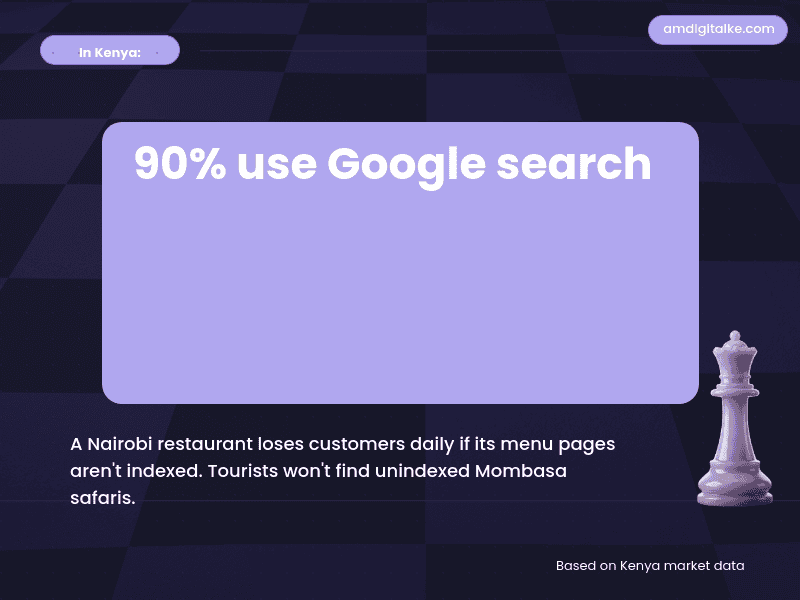
Without indexing, your Nairobi restaurant or Mombasa tour company stays hidden online, losing customers to competitors.
How long does indexing take?
In Kenya, indexing can take days to weeks. Use Google Search Console to speed it up.
Can indexing affect my Kenyan business revenue?
Yes, unindexed pages mean missed sales. Tourists won’t find unindexed Mombasa hotel pages.