Table of Contents
- Key Takeaways
- Why Fintech Content Marketing Is Different in Kenya
- The AM Digital KE Framework for Fintech Content
- Your Fintech Content Strategy Checklist
- Frequently Asked Questions
- Why is fintech content marketing important in Kenya?
- How do I simplify fintech for Kenyan users?
- What tone works for fintech content in Kenya?
TL;DR: Explain fintech products simply using Kenyan examples, clear language and customer-focused benefits.
Last Updated: March 2026
Key Takeaways
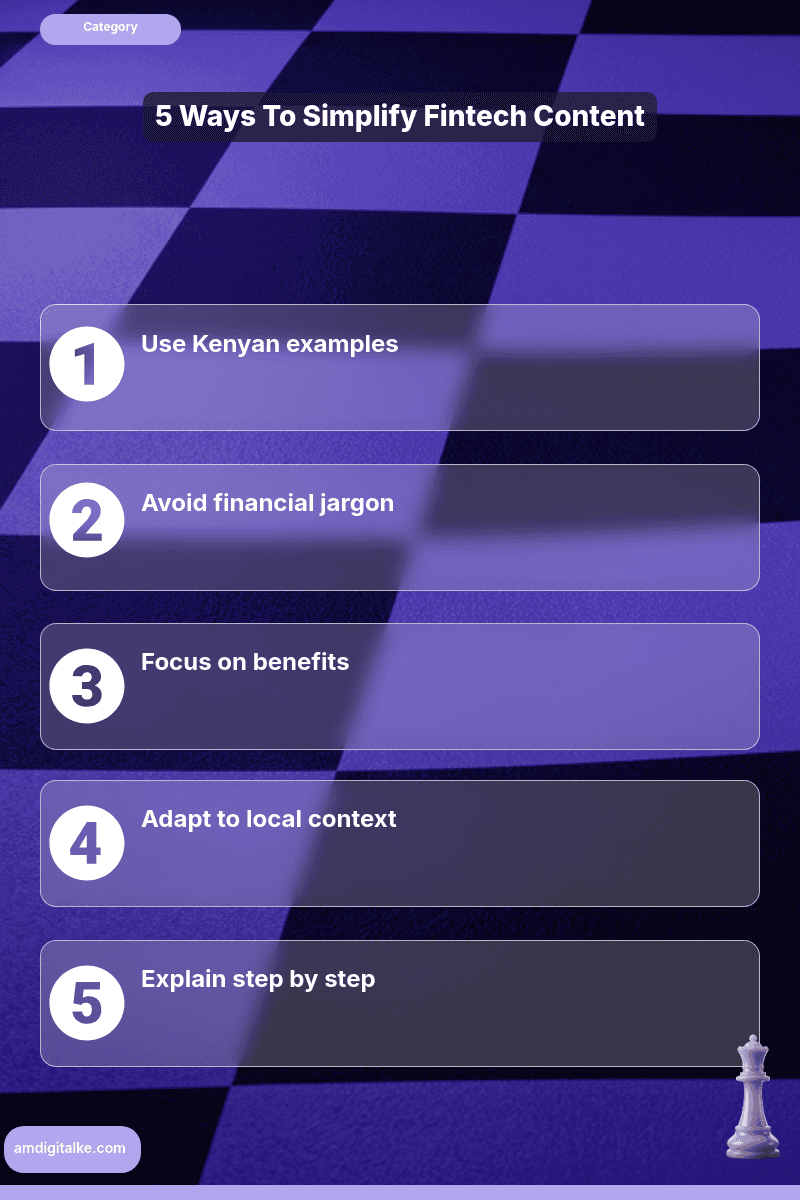
- Use Kenyan examples
- Avoid financial jargon
- Focus on customer pain points
- Explain benefits clearly
- Adapt to local financial literacy
Your fintech app has brilliant features.
Instant loans. Automated savings. Investment portfolios.
But when potential customers visit your website, they leave confused instead of convinced.
The problem isn’t your product.
It’s how you’re explaining it.
In Kenya’s competitive fintech space, the companies that win are those that make complex financial concepts feel simple and accessible.
Why Fintech Content Marketing Is Different in Kenya
Kenyan consumers are increasingly tech-savvy.
But financial literacy varies widely.
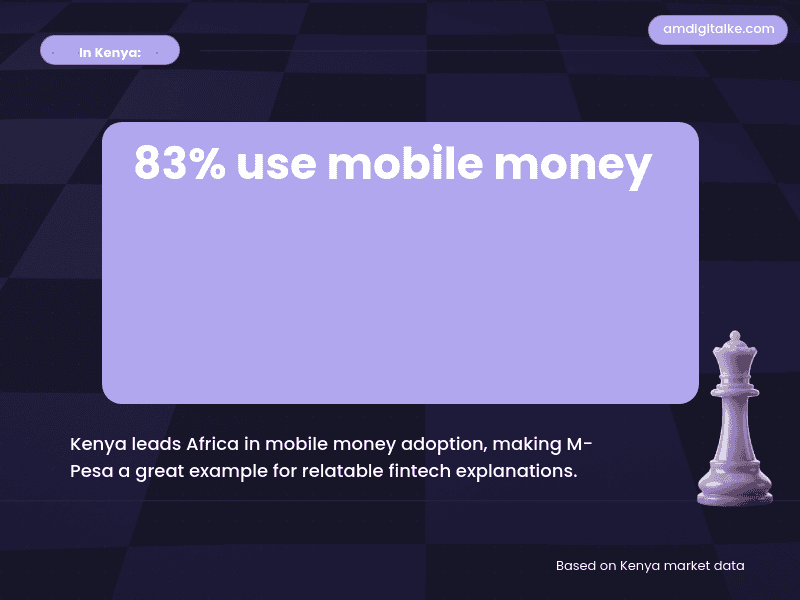
Your audience includes everyone from CBD office workers comfortable with digital banking to mama mbogas in Eastlands who just started using M-PESA for business.
Content that speaks to one group might completely miss the other.
The stakes are high.
Unlike buying shoes or ordering food, financial decisions involve risk, trust, and money people can’t afford to lose.
Before someone commits their savings to your investment platform or applies for your digital loan, they need to understand exactly what they’re getting into.
That’s where strategic content marketing becomes your most powerful conversion tool.
The AM Digital KE Framework for Fintech Content
1. Start With the Problem, Not the Product
Most fintech companies lead with features: “Our AI-powered algorithm analyses 200+ data points for instant loan approval!”
The customer thinks: “What does that mean for me?”
Instead, start with the pain point: “Waited three weeks for a bank loan that got rejected?
Here’s how to get approved in 10 minutes.”
Then explain how your technology solves that specific problem.
Your Westlands audience cares about convenience and speed.
Your Kawangware audience cares about approval rates and flexible repayment.
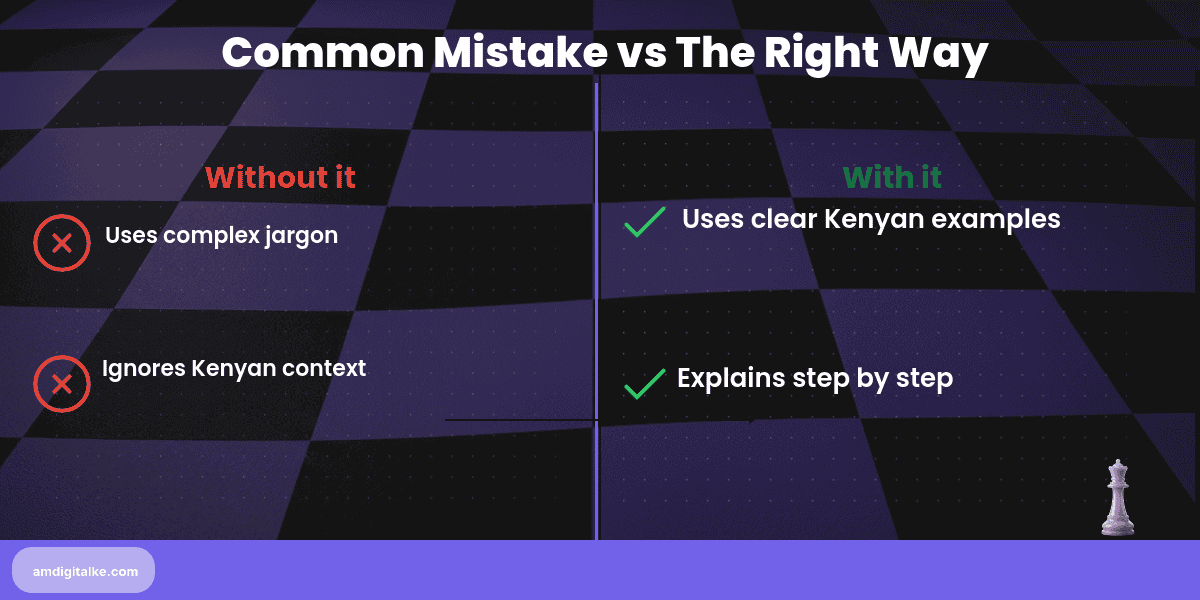
2. Use Everyday Language, Not Financial Jargon
Replace “diversified portfolio allocation” with “spreading your money across different investments, so you don’t lose everything if one fails.”
Replace “compound interest” with “earning money on top of money you already earned.”
Think of explaining financial concepts to a friend over chai.
That’s your writing tone.
Safaricom didn’t explain M-PESA as “a mobile-based money transfer and financial services platform utilising USSD technology.”
They said, “Send money home using your phone.” Simple. Clear. Actionable.
3. Create Content for Every Stage of Financial Confidence
Not everyone is ready to invest Ksh 100,000 in your platform today.
Build a content ladder:
- Awareness Stage: Blog posts like “5 Signs You’re Ready to Start Investing” or “How Digital Loans Actually Work”
- Consideration Stage: Comparison guides, customer success stories, detailed product explainers
- Decision Stage: Video tutorials, FAQ pages addressing specific concerns, transparent pricing breakdowns
A Nairobi-based investment app created a “Start With Ksh 500” beginner’s guide that explained investing using the analogy of buying shares in a matatu SACCO.
That single piece of content drove 3,000+ sign-ups from first-time investors who previously thought investing was “only for rich people.”
4. Leverage Visual Content for Complex Concepts
Some financial concepts are nearly impossible to explain with words alone.
Create:
- Infographics showing how compound interest grows over time (KSh 5,000 monthly for 10 years vs. 20 years)
- Short videos demonstrating your app interface. Show, don’t just tell
- Calculator tools where users can input their numbers and see personalised results
- Before/after scenarios showing financial outcomes with and without your product
Visual content is especially effective on social platforms where Kenyan fintech customers spend time.
Instagram, Facebook, TikTok, and Twitter.
5. Build Trust Through Transparency
Financial services require enormous trust.
Combat scepticism with radical transparency:
- Clear pricing: No hidden fees buried in terms and conditions. If you charge 15% interest, say so upfront
- Realistic expectations: Don’t promise “get rich quick.” Promise sustainable financial growth
- Regulatory compliance: Mention CBK licensing, data protection compliance, and customer safeguards
- Real customer stories: Video testimonials from actual Kenyans (with permission) explaining how your product helped them
A Kenyan digital lending app published a detailed blog post explaining exactly how they calculate interest rates, what data they use for credit scoring, and what happens if someone can’t repay.
Based on AM Digital KE client data across Kenyan accounts, customer complaints dropped 40% because people understood the process before applying.
6. Answer the Questions They’re Too Afraid to Ask
Create content addressing common fears and objections:
- “Is my M-PESA account safe if I link it to your app?”
- “What happens if I miss a loan repayment?”
- “How do I know this isn’t a scam?”
- “Can I withdraw my money anytime, or is it locked?”
Addressing fears directly shows you understand your customers and have nothing to hide.
These FAQ-style posts also rank incredibly well on Google because they match exact search queries Kenyans type when researching fintech products.
Mobile-First Content Formats
Most Kenyan fintech customers interact with your brand on smartphones.
Optimise everything for mobile:
- Short paragraphs (2-3 sentences max)
- Bullet points and numbered lists for scannability
- Fast-loading images and videos (data costs matter)
- WhatsApp-friendly content formats (infographics sized for sharing)
Localised Financial Education
Create content that respects Kenyan financial contexts:
- Salary-day content (25th-30th of the month when most Kenyans get paid)
- Chama investment strategies (financial literacy for group savings)
- Side-hustle financial management for the gig economy
- School fees planning content (January, April, August)
A Nairobi fintech company published a “School Fees Savings Calculator” every November, driving massive traffic from parents planning for the January school term.
They positioned their savings product as the solution, resulting in their highest conversion month of the year.
Your Fintech Content Strategy Checklist
- ☐ Audit existing content. Identify jargon-heavy pages and rewrite in simple language (weekend project)
- ☐ Create a “Financial Literacy” blog section with beginner-friendly explainers (start with 5 core topics)
- ☐ Develop 3 visual assets (infographics or short videos) explaining your main products
- ☐ Write a transparent FAQ page addressing the top 10 customer concerns you hear in support
- ☐ Publish monthly customer success stories showing real results (with permission and anonymity options)
- ☐ Set up Google Search Console to identify financial questions Kenyans search for before finding your site
- ☐ A/B test landing page copy. Simple language vs. technical language. Measure conversion rates
Making the Complex Simple
The fintech companies dominating Kenya’s market aren’t necessarily those with the most sophisticated technology.
They’re the ones that explain their value in terms anyone can understand.
At AM Digital KE, we help Kenyan fintech brands build content strategies that educate, build trust, and convert cautious visitors into confident customers.
Your product is brilliant.
Let’s make sure your content is too.
Struggling to explain your fintech product in a way that converts? Visit our Financial Services SEO page and see how we help fintech brands turn complex features into simple, trust-building content that drives sign-ups.
Not sure if your messaging resonates with Kenyan users? Schedule a free SEO analysis where we’ll review your current messaging, identify jargon barriers, and show you content gaps preventing cautious visitors from becoming customers.
Have more SEO questions? Our SEO FAQs Kenya page answers the most common ones.
Frequently Asked Questions
Why is fintech content marketing important in Kenya?
Kenya’s diverse population needs simple explanations to navigate complex financial products like M-Pesa.
How do I simplify fintech for Kenyan users?
Use Kenyan examples like mama mbogas and Nairobi office workers to make concepts relatable.
What tone works for fintech content in Kenya?
Explain concepts like you’re sharing them over chai. Simple, clear and friendly.